






 Portuguese
  Spanish


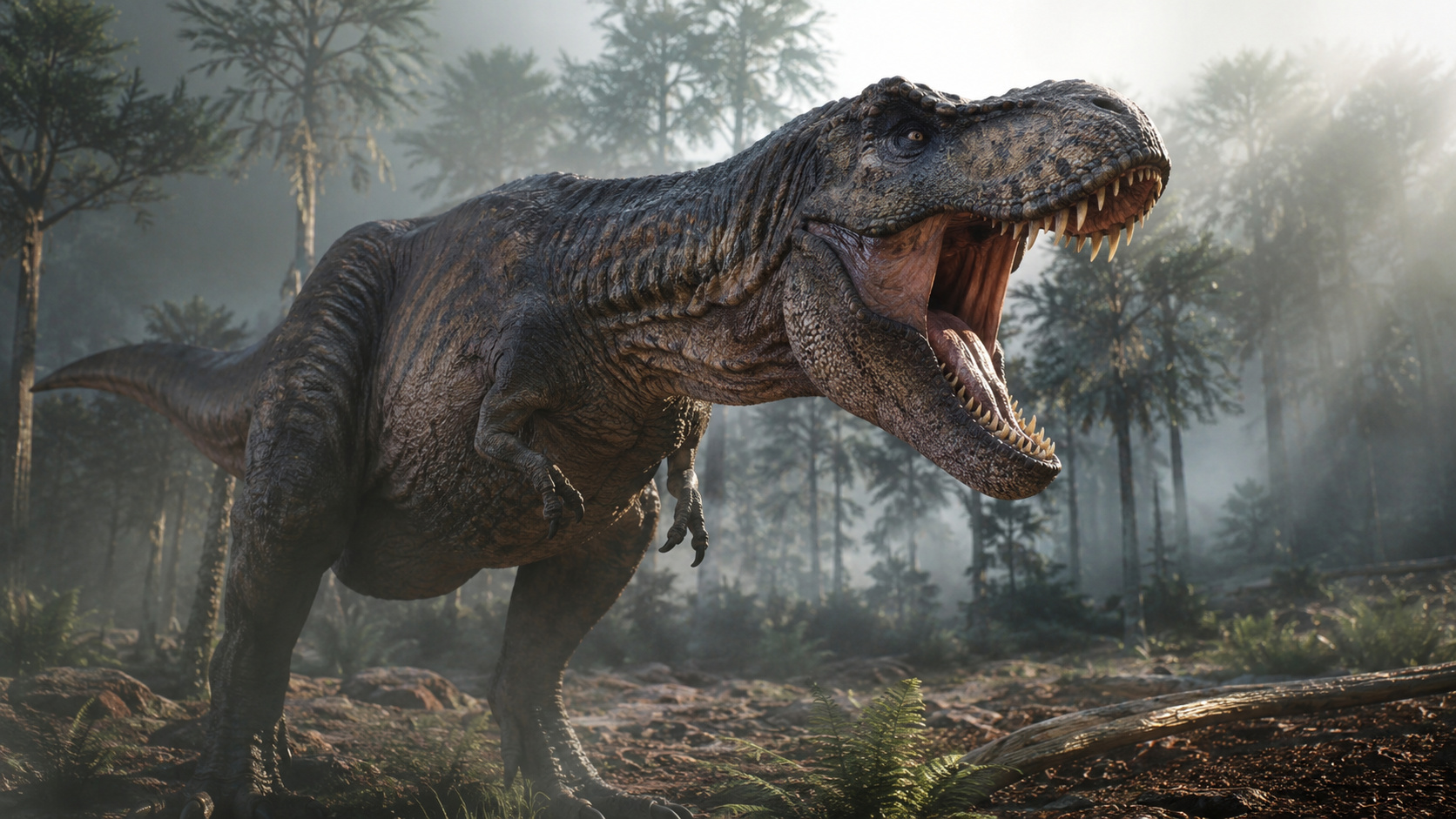

New international research shows that bite force may explain why the Tyrannosaurus rex and other large predators developed such small arms
A scientific discovery has reignited one of the most curious debates in modern paleontology. The short arms of the T-Rex, associated for decades with doubts, theories, and jokes about evolution, have gained a new explanation from a study conducted by researchers from University College London and the University of Cambridge.
The research, published on May 20, 2026, in the journal Proceedings of the Royal Society B, indicates that large carnivorous dinosaurs increasingly relied on jaw strength to capture and kill prey. As a result, the forelimbs lost importance over millions of years and ended up diminishing during the evolutionary process.
Scientific investigation reveals repeated pattern in different groups
The study analyzed dozens of species of theropods, a group of bipedal dinosaurs that includes the Tyrannosaurus rex itself. The analysis showed that the shortening of the arms occurred independently in at least five distinct lineages of carnivorous predators.
-
Asian fruit related to lychee gains popularity on a São Paulo farm, attracting attention for its sweet taste and unique appearance, turning a little-known crop in Brazil into a distinctive rural investment.

-
Brazilian Company Known for Brooms Grew for 95 Years to Become One of Latin America’s Largest Brush Manufacturers, with Over 300,000 Sales Points and Revenue of $150 Million
-
World’s Largest Piano Manufacturer Produces Over 100,000 Units Annually in China, Each with 12,000 Parts

-
Meet the HMS Eagle: A Colossal 34,000-Ton Aircraft Carrier of the British Royal Navy with a 247m Length, Capacity for 55 Aircraft, and 2,750 Personnel


Among the identified groups are tyrannosaurs, abelisaurids, carcharodontosaurs, megalosaurs, and ceratosaurs. Even living in different eras and regions of the planet, these animals exhibited a similar characteristic: very reduced forelimbs.
One of the most impressive examples is the Carnotaurus, which had even smaller arms than the T-Rex. This pattern reinforces the idea that the reduction was not an isolated accident, but a repeated evolutionary response in different lineages.
Relationship between robust skull and smaller arms caught researchers’ attention
The research identified a strong link between arm size and skull robustness. The more powerful the animal’s bite, the smaller its forelimbs tended to be.
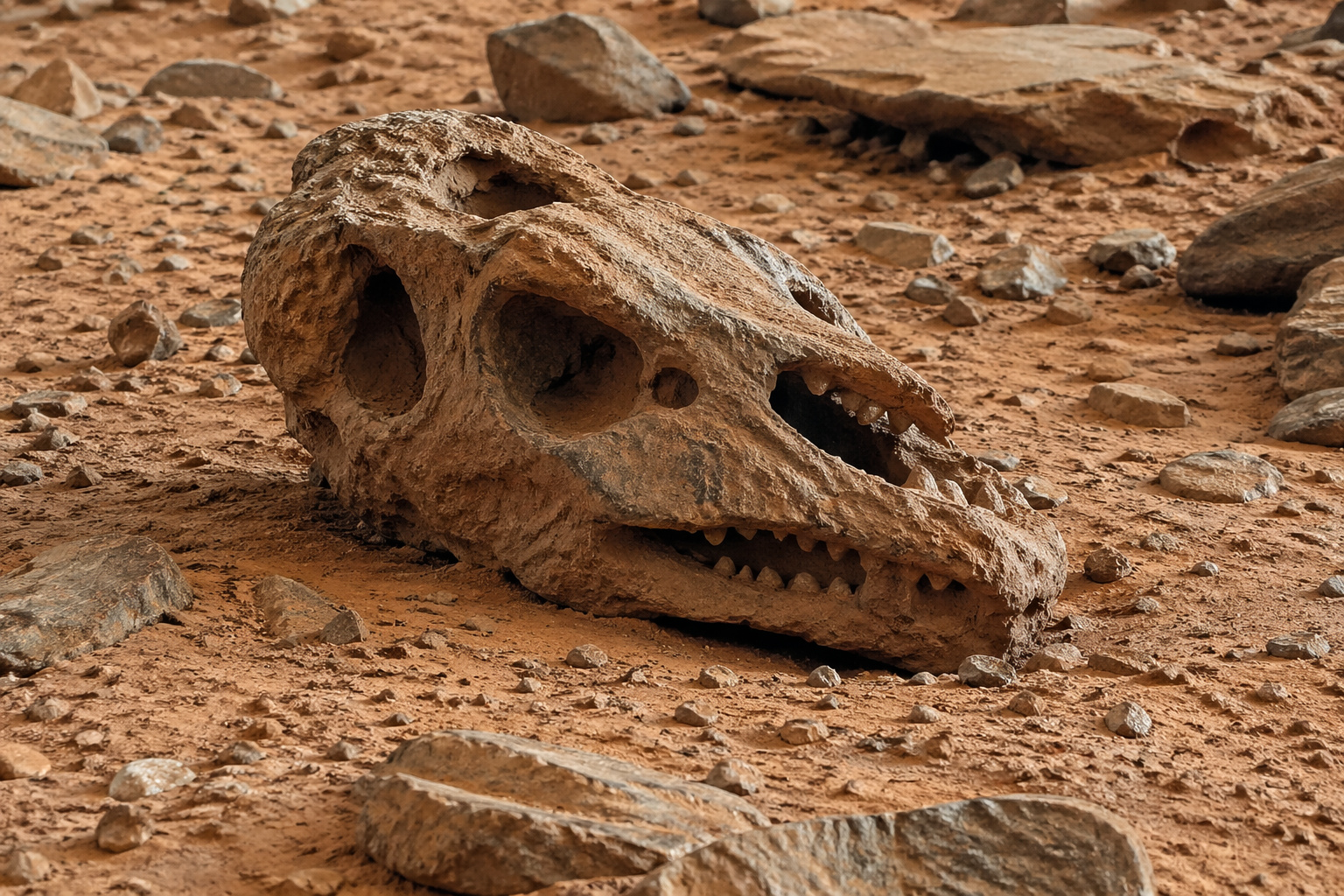
To reach this conclusion, the scientists developed an analysis method that considered the skull shape, the resistance of bone joints, and the estimated bite force. The result placed the T-Rex at the top of the cranial robustness score among all the species evaluated.
Right behind was the Tyrannotitan, a gigantic predator that lived in the territory of present-day Argentina millions of years earlier. The same trend was also observed in smaller species, such as the Majungasaurus, which inhabited Madagascar about 70 million years ago.
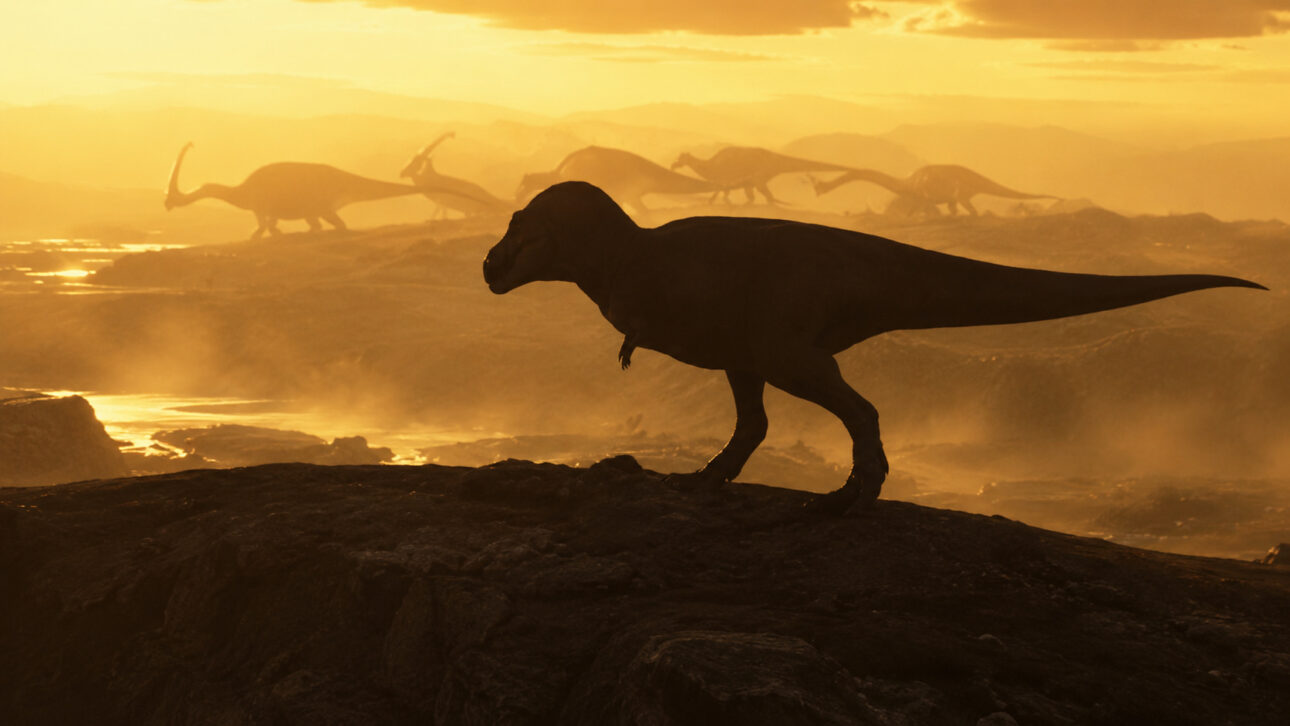
Giant herbivores may have influenced the evolution of predators
The size of the prey available in ancient ecosystems may have been decisive for this transformation. Large predators shared space with giant sauropods, long-necked herbivores that could reach dozens of meters in length.
Faced with such large animals, an extremely powerful bite would be more efficient than the use of the foreclaws. The attempt to control a sauropod only with the arms probably did not offer a real advantage during the hunt.
In this scenario, the jaws began to play a central role in the survival of these predators. The strength of the bite would have become a more useful, direct, and efficient tool than large forelimbs.
Energy efficiency helps to explain the reduction of arms
Researchers also consider the possibility that energy expenditure influenced this change. Maintaining both an extremely robust head and large arms could demand a high cost for the organism.
Natural selection would have favored individuals with stronger bites, while the arms gradually lost importance. This process approaches the evolutionary principle known as “use it or lose it,” in which less used structures tend to decrease over generations.
Small arms did not mean useless arms
Despite the fame of disproportionate limbs, the arms of the T-Rex were probably not entirely useless. Previous studies indicate that they still had considerable strength and could lift more than 100 kilograms.
Not all large predators followed this same trajectory. Spinosaurids and megaraptorans maintained long and functional arms, associated with narrower skulls and different strategies.
The new research reinforces that evolution does not follow a single path. In the case of the Tyrannosaurus rex, everything indicates that nature favored a direct strategy: less dependence on arms and more strength in one of the most powerful bites that ever existed on Earth.
What this discovery reveals about the dinosaurs
The study by University College London, the University of Cambridge, and the Proceedings of the Royal Society B expands the understanding of the evolution of large prehistoric predators. The research also shows that characteristics considered strange may have functions related to survival, hunting, and energy expenditure.
In light of this new evidence, do you believe that other curious characteristics of dinosaurs may still gain surprising explanations in the coming years?


