Portuguese
  Spanish


Condor started in 1929 producing toothbrushes in São Bento do Sul and only later expanded its portfolio to combs, brushes, and brooms. According to FIESC and institutional data, the company reached R$ 790 million in 2023, with 300,000 points of sale and a strong national presence in retail.
The brooms became one of the products most associated with Condor by Brazilian consumers, but the industrial history of the company began in another segment: toothbrushes. Founded in 1929, in São Bento do Sul, Santa Catarina, the company was born as Klimmek & Cia, dedicated to the production of toothbrushes and hygiene articles.
The brand completed 95 years in 2024, consolidated as one of the largest toothbrush factories in Latin America. According to institutional information and a publication by FIESC, Condor serves more than 300,000 points of sale, operates in various business lines, and achieved a revenue of R$ 790 million in 2023.
Industrial origin began before brooms
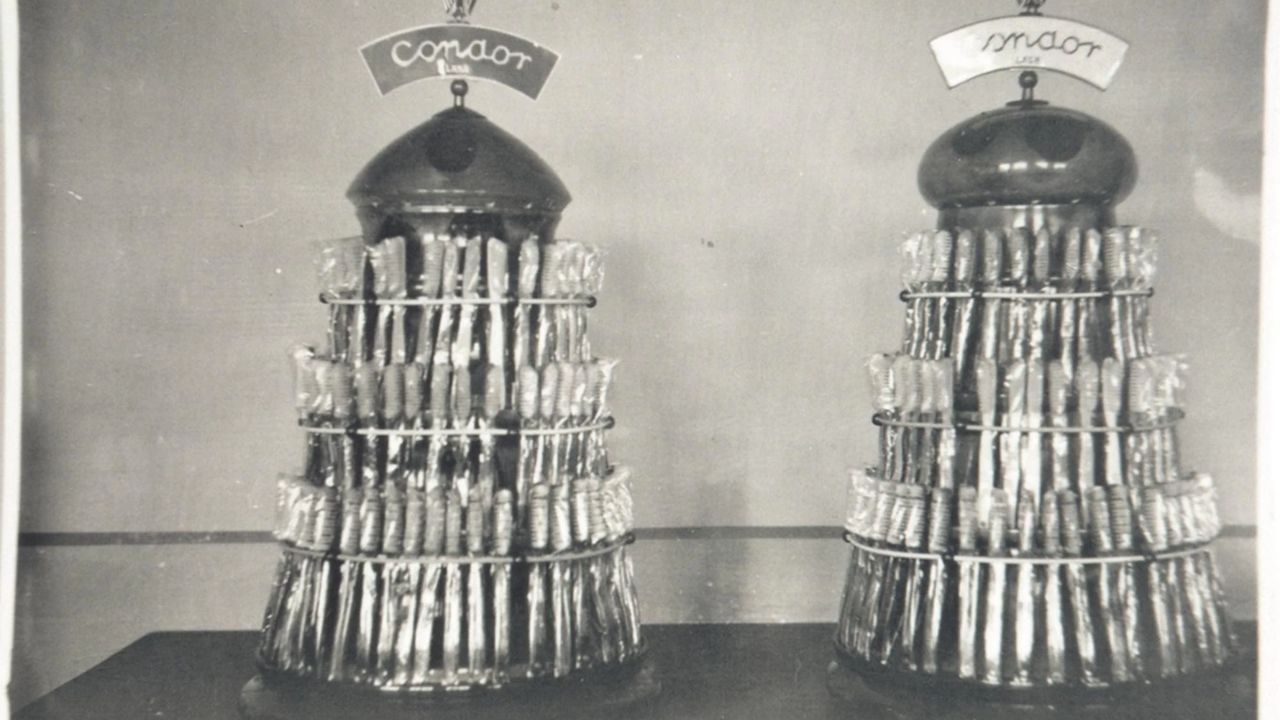
Condor was founded in São Bento do Sul, in the northern plateau of Santa Catarina, in 1929. The initial industrial focus was not on brooms, but on the production of toothbrushes and other hygiene items, according to the company’s own institutional history.
-
World’s Largest Piano Manufacturer Produces Over 100,000 Units Annually in China, Each with 12,000 Parts

-
Meet the HMS Eagle: A Colossal 34,000-Ton Aircraft Carrier of the British Royal Navy with a 247m Length, Capacity for 55 Aircraft, and 2,750 Personnel

-
“Ghost Bird” Thought Extinct for 86 Years Reappears, Disappears Again, but New Recording Sparks Global Effort to Save One of the World’s Most Sought-After Species

-
From Above, This Italian Fortress City Resembles a Giant Star: Discover Palmanova, a UNESCO World Heritage Site Renowned for Its Architecture and Perfect Symmetry



This fact changes the perception of the brand. Although many people associate Condor with household cleaning, the operation began linked to oral hygiene and only later expanded to other consumer categories.
The entry into brooms came as part of a portfolio expansion strategy. In the 1950s, the company began producing combs, brushes, brooms, clothes brushes, nail brushes, and dusters, forming a more diversified base.
This diversification helped Condor to stop being just a toothbrush manufacturer and to occupy different spaces in retail. The movement paved the way for presence in supermarkets, pharmacies, construction stores, stationery stores, digital channels, and distributors.
São Bento do Sul became the base of operations

Condor’s trajectory remains linked to São Bento do Sul, the city where the company was founded and where it maintains its manufacturing base. According to FIESC, the company has two factories in the city and three distribution centers.
The location in the Northern Plateau of Santa Catarina plays a significant role in the industrial identity of the brand. Condor has become one of the companies associated with the productive strength of the region, with national operations and exports.
The company’s growth did not depend on a single product, but on an industrial platform capable of manufacturing different categories. This structure allowed it to advance from brushes to brooms, brushes, beauty products, oral hygiene, painting, and professional cleaning.
Today, the company reports operating in areas such as Domestic and Professional Cleaning, Oral Hygiene, Beauty, Real Estate Painting, and Artistic Painting. This places Condor in segments ranging from everyday domestic use to the professional market.
Portfolio expanded from brushes to six business lines

Condor claims to have more than 1,500 utensils and accessories in its portfolio. FIESC reported that the company operates in six businesses: domestic cleaning, professional cleaning, oral hygiene, personal care, painting for civil construction, and products for artists and school use.
The brooms remain a product of great recognition, but they represent only a part of the operation. The brand also manufactures hairbrushes, combs, paint rollers, brushes, dental floss, accessories, and items for professional cleaning.
The diversification reduces dependence on a single category and expands the brand’s presence in retail. If the consumer does not find Condor only in the cleaning section, they can also find it in oral hygiene, beauty, painting, or school supplies.
This design explains how a company known for brooms manages to achieve national scale. The broad portfolio allows entry into different sales channels and meets demands that vary according to home, construction, school, company, and professional use.
Revenue reached R$ 790 million in 2023


The FIESC publication reports that Condor earned R$ 790 million in 2023, the best result recorded by the company up to that point. The data is associated with the modernization of operations, product diversification, and licensed lines.
On the company’s institutional blog, Condor reports that it doubled its sales value in five years, from R$ 393 million in 2018 to R$ 790 million in 2023. For 2024, the company projected double-digit growth.
This progress shows an industrial company with expansion supported by portfolio, distribution, and brand. The revenue does not come only from brooms but from a set of categories present in the consumer’s daily life.
Another data presented by FIESC is that in 2022, Condor sold more than 188 million products. The number helps to measure the operational volume of a manufacturer that serves the national market on a large scale.
More than 300,000 points of sale expand national presence
Condor reports being present in more than 300,000 points of sale in Brazil. This reach is strategic because products like brooms, brushes, paintbrushes, and hygiene items depend on broad distribution to maintain constant turnover.
FIESC also mentions more than 25 sales channels, including supermarkets, pharmacies, bookstores, construction stores, and digital channels. This capillarity allows the brand to circulate in different purchase formats.
For a consumer goods industry, distribution is as important as manufacturing. It’s not enough to produce on a large scale; it’s necessary to place the product in the right channels, with frequency, replenishment, and presence in regions where there is demand.
The company also exports. Institutional data indicates operations in more than 20 countries, while 2024 publications mention exports to more than 30 countries. In both cases, the central point is the international presence of a brand manufactured in Santa Catarina.
Modernization of the manufacturing park marked the broom line
The institutional timeline of Condor cites 2013 as the year of modernization of the manufacturing park for broom production with cutting-edge technology. This data is relevant because it shows that the category continued to receive investment even after diversification.
Brooms seem like simple products to the consumer, but they require an industrial process, choice of materials, automation, quality control, functional design, and production capacity on a large scale.
The modernization of the factory indicates that the cleaning category remains strategic within the portfolio. In competitive markets, small improvements in productivity, durability, ergonomics, and cost can have an impact on millions of units sold.
FIESC also highlighted that Condor invests in automation, integrated systems, and continuous improvement to gain efficiency and productivity. This type of update helps sustain scale, competitive pricing, and regular delivery.
Licensing expanded categories and presence in retail
Among the expansion strategies cited by FIESC are brand licenses like Hot Wheels, Barbie, from Mattel, and Disney. Condor also reported partnerships and lines aimed at hygiene, beauty, and cleaning products with commercial appeal.
These licenses help connect traditional categories to specific audiences. Brushes, accessories, children’s items, and hygiene products can gain visual differentiation and brand appeal when associated with well-known characters or franchises.
Licensing works as a retail tool, not just an aesthetic detail. It can increase visibility on the shelf, create exclusive lines, and increase purchase recurrence in everyday use categories.
This strategy also shows that Condor does not rely solely on the memory linked to brooms. The company uses brand, channels, and portfolio to operate at different moments of the consumption routine.
Sustainability entered the production process
FIESC reported that many Condor items are already produced more sustainably. Alexandre Wiggers, CEO of the company, told the entity that the company has been recycling materials leftover from production processes for decades.
According to the publication, 36 million PET bottles were transformed into brooms in the year prior to the FIESC text. The company also reported the collection and reuse of more than 1.4 million liters of rainwater.
Sustainability, in this case, appears integrated into industrial production. The reuse of PET in brooms links circular economy to a product of large volume and national presence.
The institutional blog of Condor also mentions savings of over 200 MWh per year with automated systems and efficiency measures. These are data that reinforce the attempt to combine manufacturing scale with resource reduction in the production process.
Acquisition of Perfect strengthened professional cleaning
In 2019, Condor acquired Perfect, a company specialized in products for professional cleaning. According to the institutional page, the integration into the group occurred from 2020, uniting the Perfect Pro brand with Condor’s structure.
The Professional Cleaning line reports more than 450 SKUs and distribution to over 3,000 active resellers in Brazil. This expands the company’s reach beyond the domestic consumer.
Professional cleaning changes the product logic because it involves productivity, operational cost, and efficiency in use. In this market, brooms, accessories, and equipment need to meet the needs of commercial establishments, cleaning companies, condominiums, and operations with recurring demand.
The acquisition also shows a strategy of expansion by segment. Condor did not grow only by increasing internal categories but also by incorporating a specialized company to strengthen its presence in professional cleaning.
What Condor’s trajectory shows about the national industry
Condor’s history shows how a manufacturer can move from an initial product, expand lines, invest in brand, modernize factory, and build national presence without abandoning traditional categories. Brooms remain strong but are part of a much larger portfolio.
With 95 years, presence in more than 300,000 points of sale, revenue of R$ 790 million, and operations in different segments, the company from Santa Catarina has become a case of industrial expansion based on diversification and distribution.
The main business insight is: Condor grew because it transformed manufacturing capacity into a broad portfolio, sales channels, and technological updates. The association with brooms helps in popular recall but does not alone explain the company’s dimension.
Did you know that Condor started with toothbrushes before becoming so associated with brooms? Leave your opinion in the comments and tell if traditional Brazilian brands should focus more on diversification, sustainability, or licensed lines to continue growing.