






 Portuguese
  Spanish


The Chinese company Pearl River, from Guangzhou, is the largest piano manufacturer in the world and produces more than 100,000 instruments per year, in a country that has become the largest market on the planet for the instrument
When you think of a piano, you probably imagine a European hall, classical music, and centuries of Western tradition. However, the reality of manufacturing has shifted continents. The largest piano manufacturer in the world is Chinese, located in Guangzhou, and produces over 100,000 pianos per year on its own, a number that makes the rest of the industry seem small.
The company is called Pearl River. According to the specialized magazine Chupp’s Pianos, it is “the largest piano manufacturer in the world,” founded in 1956 and headquartered in Guangzhou. An instrument associated with the European cultural elite has, in practice, become a mass-produced industrial product in southern China, in one of the most curious twists of globalization.
How China Became the World Leader in Pianos
The rise of pianos in China follows the explosion of interest in music in the country. Millions of Chinese children study piano, encouraged by families who see the instrument as a symbol of status and discipline. This enormous internal demand created the perfect ground for a huge industry.
-
Meet the HMS Eagle: A Colossal 34,000-Ton Aircraft Carrier of the British Royal Navy with a 247m Length, Capacity for 55 Aircraft, and 2,750 Personnel

-
“Ghost Bird” Thought Extinct for 86 Years Reappears, Disappears Again, but New Recording Sparks Global Effort to Save One of the World’s Most Sought-After Species

-
From Above, This Italian Fortress City Resembles a Giant Star: Discover Palmanova, a UNESCO World Heritage Site Renowned for Its Architecture and Perfect Symmetry
-
Teenage Boy’s Soap Business Survives Wars and Centuries, Becoming Global Giant



With a hungry domestic market and abundant labor, production skyrocketed. When an entire country decides to learn piano, someone needs to manufacture millions of these instruments, and it was China that took on this role. The South China Morning Post points out that Chinese customers still account for 95% of the company’s sales, proof of how the local market sustained this giant before it supplied the planet.
A Musical Instrument with 12,000 Parts
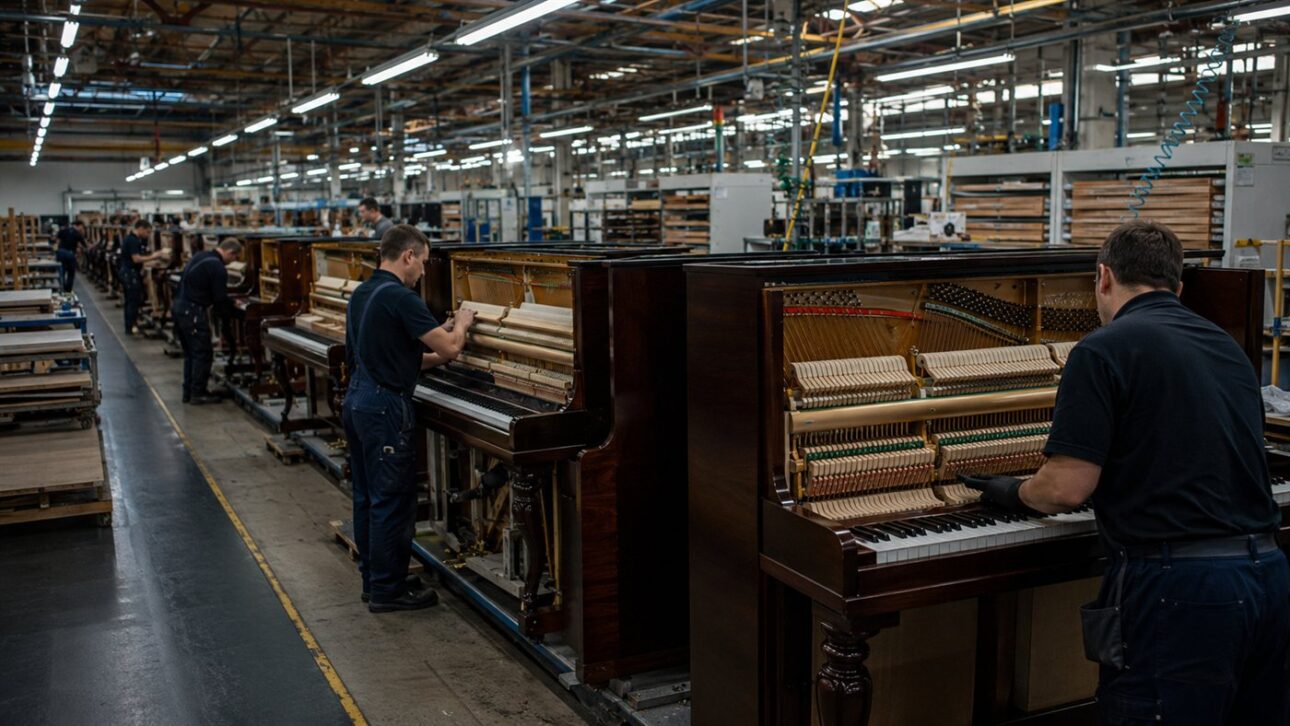
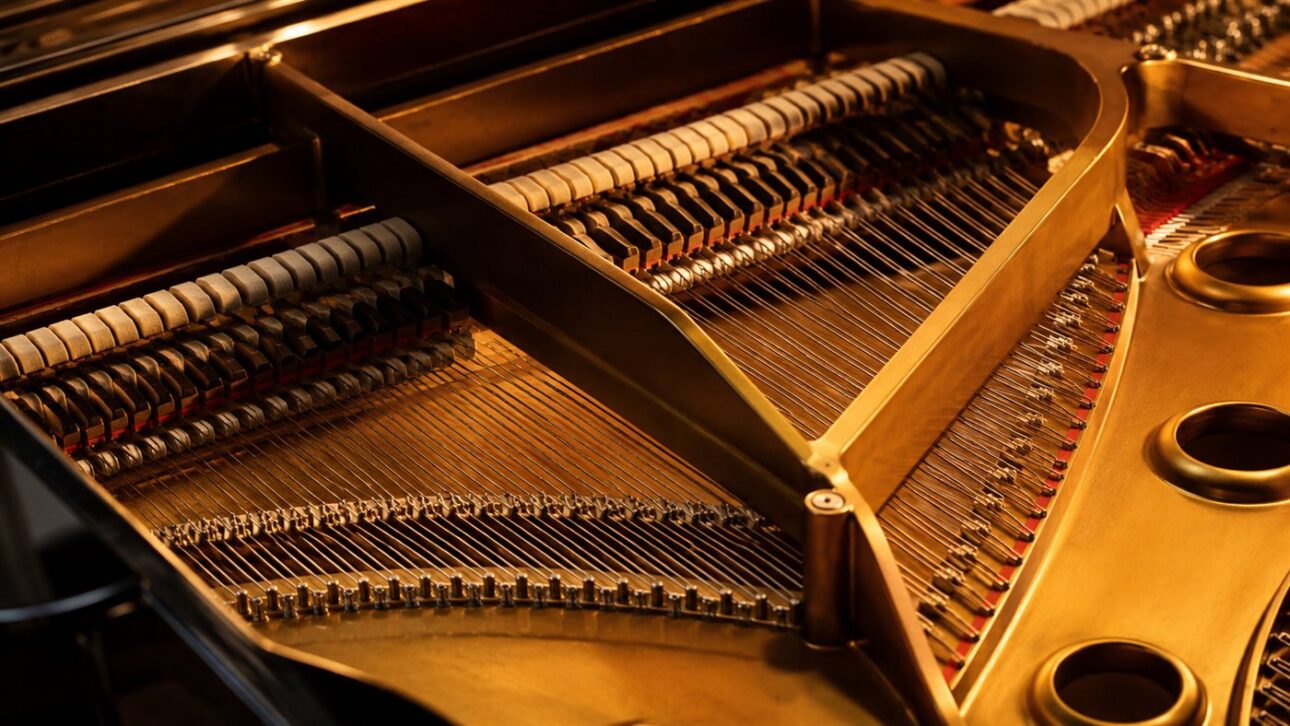
The piano is deceptively complex. Behind the elegant furniture lies a mechanism with thousands of parts. According to the specialized portal Living Pianos, a piano has “about 12,000” components, in addition to 88 keys, more than 200 strings under enormous tension, and a cast iron frame that holds all this force. Assembling all this requires precision and patience.
Each key activates a hammer that needs to hit the string at the exact time and force, thousands of times, without failing. Manufacturing such an intricate musical instrument on an industrial scale, maintaining tuning and touch, is a respectable engineering challenge. It’s not assembling furniture, it’s building an acoustic precision machine, multiplied by hundreds of thousands of units per year.
More than 100,000 pianos per year from a single complex
The scale of production is what impresses the most. According to Chupp’s Pianos, the Pearl River factory produces “more than 125,000 pianos per year” and exports to more than a hundred countries, a volume that no traditional European or American manufacturer reaches. It is the industrialization of a product that, for centuries, was almost artisanal.
This volume allows for much more affordable prices, which has expanded access to the instrument worldwide. A piano has ceased to be a rare item for wealthy families and has become a product that can be found and purchased by the middle class in various countries, largely thanks to this mass production. The democratization of the piano has, without many knowing, passed through Chinese factories.
From 1956 to a global giant
The company’s history is older than the recent boom. Founded in 1956, in Guangzhou, according to the South China Morning Post, it started modestly and grew along with the Chinese economy, incorporating technology and even partnerships with traditional piano brands to learn from the best.
Over time, it stopped being seen just as a cheap manufacturer and started aiming for quality. The path was the same as other Chinese industries: start with volume and price, then rise in quality and prestige. From a musical instrument factory in a developing country, the company became a world leader in quantity and a respected presence also in better models.
Why China embraced the piano
The cultural phenomenon behind this is fascinating. The piano has become, in modern China, a symbol of social ascent, education, and refinement. Parents invest heavily in lessons, and victories of Chinese pianists in international competitions have become a source of national pride.
This enthusiasm has created not only buyers but also musicians. China has formed a legion of students and teachers, transforming the European instrument into part of its own contemporary cultural identity. It is a rare case where the demand for classical music and industrial capacity have grown together, fueling each other and placing the country at the center of the piano world.
From Craftsmanship to Production Line
Making pianos has always been the work of craftsmen, and part of that continues. Even in a giant factory, many stages depend on experienced hands that adjust the touch, tuning, and finish, because a piano is also a sensitive and sonorous object, not just mechanical.
The secret of the Chinese scale was to combine this manual skill with automation and industrial organization. Standardizing what can be standardized and reserving the human touch for what really matters allowed for high production without losing acceptable quality. It’s the same balance that other industries seek, applied to a product that mixes engineering, wood, and music.
What Changes When the Piano Becomes a Mass Product
The industrialization of the piano has two sides. On one hand, it democratizes access, allowing many more people to learn and have an instrument at home, which is great for music. On the other, it raises debates about standardization and the value of the artisanal work of traditional brands.
In essence, it’s the same tension of any product that moves from luxury to mass consumption. Gains are made in access and price, discussions arise about what is lost in exclusivity, but the result is more music in the world. And, for better or worse, a good part of that music today comes from keys manufactured in China.
Why a European Symbol Became Chinese
In the end, the story of this Chinese manufacturer shows how global production can turn even the most entrenched symbols upside down. An instrument that represented European tradition began to be manufactured, mostly, on the other side of the world, driven by an unexpected cultural passion for pianos in China.
It is yet another reminder that the origin of things is rarely what we imagine. The next time you hear a piano, it’s worth remembering that it may have been born in a gigantic Chinese factory. Did you imagine that the country that manufactures the most pianos in the world was China?


