Portuguese
  Spanish


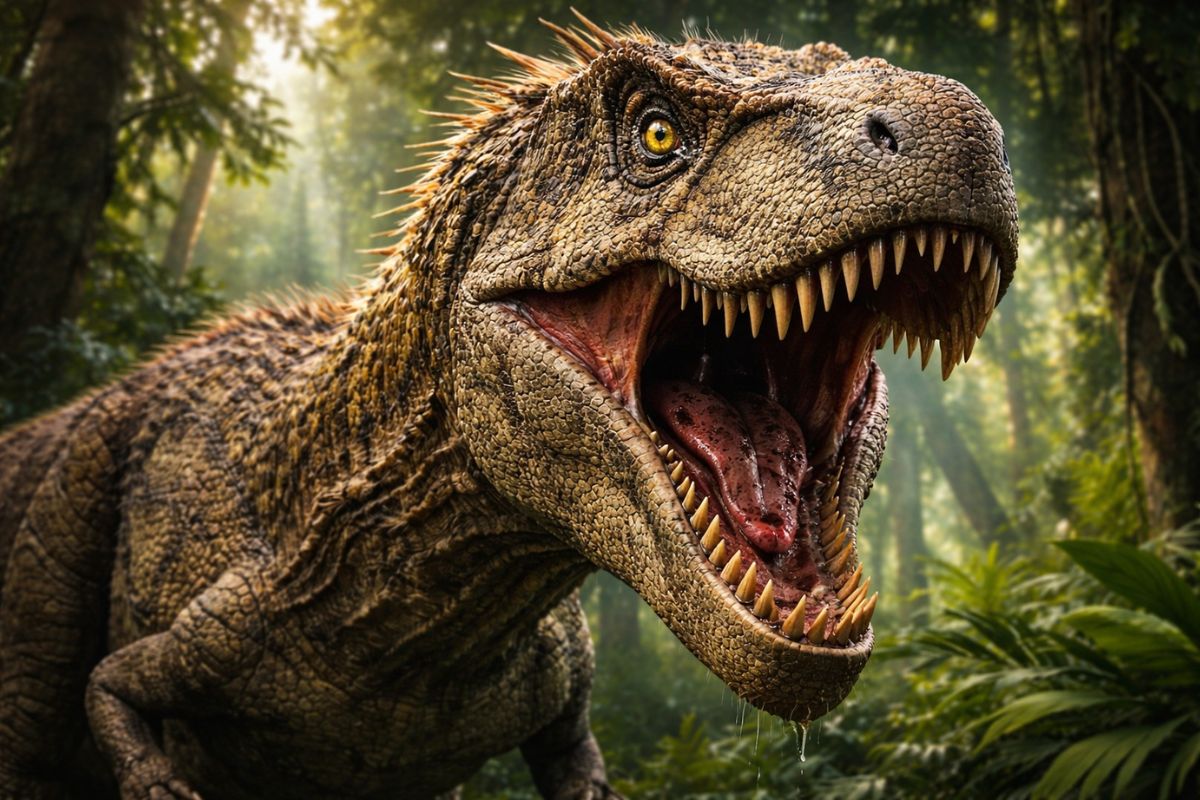


While T. Rex Dominated Laramidia, Dryptosaurus Ruled The Appalachians In The East Between 67 And 66 Million Years Ago. Discovered In The 1860s In New Jersey, Reclassified Until 2005, It Was Up To 7.5 M, 1.5 Tons, And Had 20 Cm Claws To Tear Prey With Serrated Teeth, Smell, And Binocular Vision
The T. Rex is treated as the absolute apex at the end of the Cretaceous in North America, with a colossal body, huge jaws, and teeth associated with deep cuts and shock from blood loss. However, in the same final interval before the asteroid impact, there existed a close relative outside the spotlight, equally dangerous in its own territory: Dryptosaurus.
The key to understanding why almost nobody talks about it lies less in the “star size” and more in the ancient geography of the continent. While T. Rex concentrated its reign in Laramidia, Dryptosaurus lived in the Appalachians in the east, in a setting of isolation imposed by an inland sea, with different prey and competitors.
The Forgotten Rival That Lived At The Same End Of The Cretaceous

Dryptosaurus belongs to the broader group of Tyrannosauroidia, the superfamily that includes T. Rex and other North American predators remembered more frequently, such as Gorgosaurus, Appalachiosaurus, and Daspletosaurus. The difference that changes everything is temporal and geographical: Dryptosaurus appears between 67 and 66 million years ago, placing it practically side by side with T. Rex in the final chapter of the Cretaceous.
-
Bioengineer Develops Microscope That Magnifies Objects Up to 2,000 Times Using Just a Folded Sheet of Paper, a Tiny Lens, and Less Than $1, Bringing Lab Science Anywhere for Less Than the Cost of a Candy

-
Dog Walker in English Forest Uncovers 3,400-Year-Old Bronze Age Axe
-
Texas Blackout Inspires Student to Develop Bionic Leaf Catalyst for Converting Sunlight, Water, and Bacteria into Fuel

-
Brazilian Students Develop Process to Turn Styrofoam Waste into Water-Purifying Charcoal




Even so, it is often overlooked. Not because it was discovered yesterday, but rather the opposite: it was one of the first large theropods to be unearthed in the eastern USA, back in the 1860s, when many North American theropods were known only from fragmented teeth. The discovery included expressive material for the time, such as skull fragments, dentition, various teeth, vertebrae, a humerus, a partial hand, an incomplete pelvis, and a nearly complete left hind limb.
The Discovery In The Eastern USA And The Confusing Path Of Classification

The antiquity of the discovery came at a scientific cost: there was a lack of comparison with large collections of theropods, and classification turned into a back-and-forth process. Initially, scientists noted similarities with the Jurassic Megalosaurus and classified it as a Megalosaurid, naming the animal Leilaps aquilunguis, a mythological reference to a dog that never failed to catch its prey.
The name was discarded due to conflict with another existing designation, and the creature was renamed as Dryptosaurus, linked to the idea of “tearing reptile.” Thereafter, it underwent further reclassifications and was even treated as a type of “solosaur” of uncertain position, due to possessing unusual characteristics for what was known at the time.
The turning point began only in the mid-20th century, when more consistent comparisons emerged with Cretaceous Tyrannosaurids, such as Albertosaurus and T. Rex itself, with parallels in leg and foot morphologies. The strongest confirmation came in 2005, when a more complete specimen solidified the reading that Dryptosaurus was, in fact, a member of Tyrannosauroidia, although likely outside the more restricted Tyrannosaurid family. Among the closest relatives mentioned are Appalachiosaurus and a group referred to as “Bice Hiver.”
Size, Anatomy And The Weapon That T. Rex Did Not Have The Same Way

Dryptosaurus was not a T. Rex, but it was not “small” either. The estimate presented for mature individuals indicates up to 7.5 meters in length, about 1.5 tons, with a build comparable to large ceratosaurids or a medium-sized carnotaur. In a real scenario, it could be mistaken for an adolescent T. Rex by anyone who only observed its overall silhouette.
The differences, however, were clear in detail. Dryptosaurus would have two distinct crests on top of its skull, below the eyes, possibly related to display and mating. The snout and body are described as more “aerodynamic” and agile, with specific anatomical traits mentioned, such as changes in the humerus and metatarsal, in addition to structures described as an ovoid fossa and a flat shaft on the fourth metatarsal.
The most decisive difference, however, lay in the arm-claw set. The arms of T. Rex are small, while those of Dryptosaurus are described as long, large, and muscular, retaining more ancestral characteristics. The central data is the size of the claws: up to 20 cm, capable of grasping and tearing prey efficiently. In addition to this, the teeth were serrated and curved, with notable resemblance to the teeth seen in Allosaurus, suggesting cutting wounds, punctures, significant blood loss, and shock with each attack.
Why T. Rex And Dryptosaurus Almost Never Met
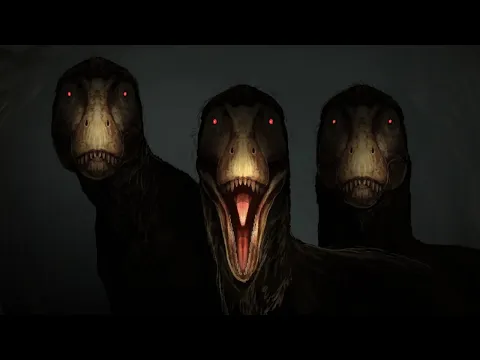

The enigma is not just temporal coexistence, but the fact that the two “co-regents” probably never faced each other. The explanation revolves around a geographical division of North America caused by the western interior seaway, a shallow and warm sea that separated the continent into two large blocks: Laramidia to the west and Appalachians to the east.
Dinosaurs on one side rarely appeared on the other, not just because of the water itself, but due to prolonged ecological isolation, which pushed each region to develop its own sets of species. The Appalachians are described as more enigmatic for producing fewer fossils than Laramidia, which also helps explain why Dryptosaurus became less popular in public narratives.
By the end of the Cretaceous, this inland sea would have shrunk considerably and perhaps allowed for some partial reunification. Still, the Appalachians and Laramidia remained isolated due to effects such as periodic flooding associated with fluctuations in sea level and, even when areas reconnect, migrations can take time. The interpretation presented is that Dryptosaurus did not have time to reach Laramidia, nor did T. Rex to establish itself in the Appalachians, maintaining two separate “apices” in parallel.
What Dryptosaurus Hunted In The Appalachians
Since the Appalachians had different fauna, the menu also changed. Instead of typical Laramidian scenarios, the likely diet of Dryptosaurus is associated with hadrosaurs, including a hadrosaurid mentioned as capable of weighing over 10 tons and measuring over 12 meters. Nodosaurids also appear as potential prey, although the armor is described as a challenge, especially because Dryptosaurus did not have the crushing bite of larger relatives.
Ceratinosaurs and sauropods are largely considered out of the game in the Appalachians of the period, with mention of a single ceratops tooth found in what is now Mississippi, possibly indicating occasional migration, but without direct association with Dryptosaurus finds in the same context.
One point that increases the lethality of the T. Rex rival is the hypothesis of predation on other theropods, especially ornithomimosaurs, described as abundant in the east and, in some cases, very large, nearing a ton. The more agile body and clawed arms are presented as advantages for capturing elusive prey.
Additionally, since many occurrence sites are associated with coastal environments and near water at the end of the Cretaceous, complementary options arise in the ecosystem: cartilaginous and bony fish, marine reptiles such as mosasaurs and plesiosaurs, large amphibians over 1.5 meters, many turtles, lizards, and small mammals, including Daleladon, a metatherian cited as just slightly larger than a Virginia opossum, but still among the largest local mammals.
An Apex With Dangerous Competition, Including From The Sky
Even though it is described as the largest known theropod of the Appalachians in the last days of the Cretaceous, Dryptosaurus did not live in a vacuum. Relevant competition includes crocodilians of various sizes, some large enough to intimidate young individuals.
Another scary competitor enters the scene among the pterosaurs. Besides more “common” forms that could become an occasional meal, there is a group described as particularly impressive, highlighted by a giant named Arambourgian, presented as one of the largest animals to ever fly. The mentioned wingspan reaches 10 meters, compared to that of a Cessna 150, and the neck would have been 3 meters. On the ground, it could reach heights comparable to those of a giraffe, which makes Dryptosaurus hatchlings plausible prey, although an adult is described as potentially capable of taking down even adult individuals of this kind.
There is an important caveat: remains attributed to this genus in the USA are treated as provisional and slightly older than Dryptosaurus. Nevertheless, elsewhere the ages of this pterosaur extend to 66 million years, opening the possibility of coexistence in the same final period involving T. Rex.
A Short Reign, A Real Rival, And The Erasure By Extinction
Dryptosaurus would have emerged around 67 million years ago, and in geological terms, remained for a short interval. About 1 million years later, the Cretaceous-Paleogene extinction event occurred, which also eliminated T. Rex. The result is that one of the most dangerous predators of the eastern North America ended up as a nearly forgotten “co-regent,” despite its size, huge claws, and apex role in the Appalachians.
If the inland sea had not isolated the continents for so long, do you think T. Rex and Dryptosaurus would have fought over the same territory, or would each have continued to reign on its side without ever meeting?