





 Portuguese
  English
  Spanish
  4 min of reading
  0 comments


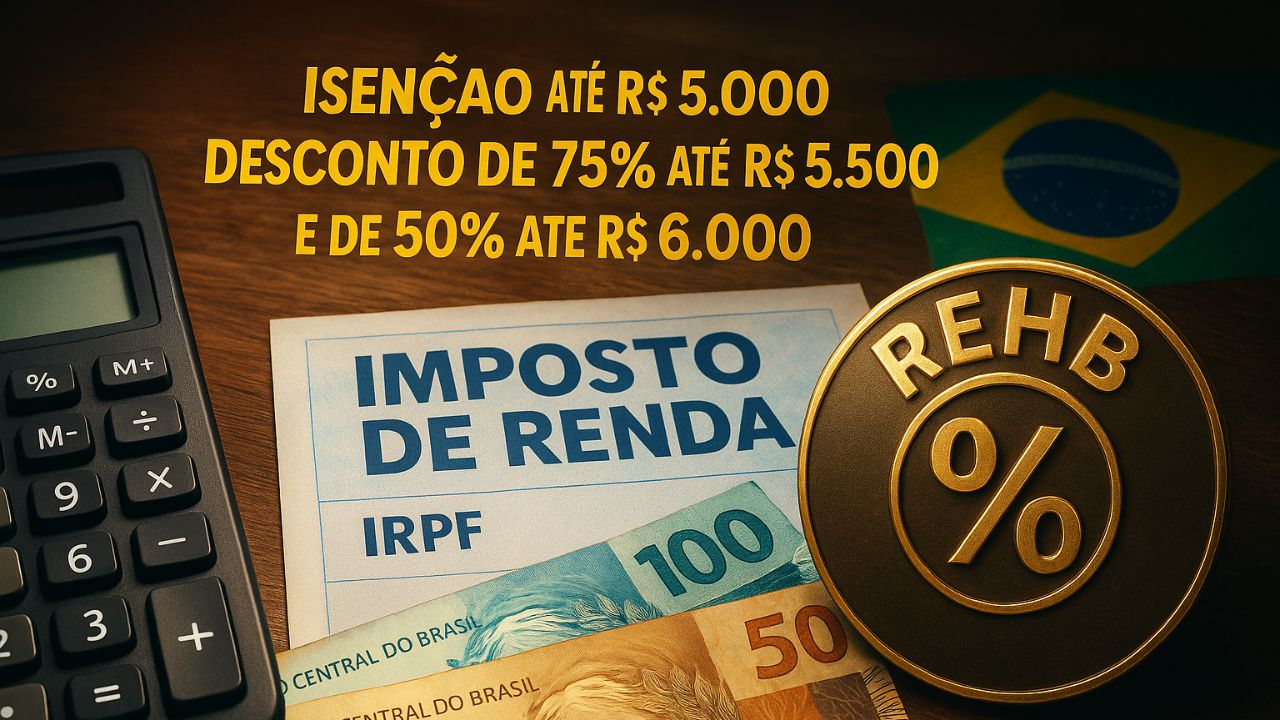
Proposal Approved in the Chamber Provides Discounts of Up to 75% for Salaries of Up to R$ 5,500; Understand How the New Income Tax Table May Impact Your Pocket.
A new bill that changes the income tax table was approved in the Chamber of Deputies and promises to significantly alter the way income tax is collected in Brazil. According to information highlighted by CNN, the proposal raises the exemption threshold for those earning up to R$ 5,000 per month and creates a system of progressive discounts for higher salaries, potentially generating an annual savings of over R$ 4,300 for millions of taxpayers.
The measure, which now goes for analysis in the Federal Senate, represents a long-awaited tax relief, especially for the middle class. The federal government’s justification is that the change aims to correct the lag in the current table and ensure greater tax fairness, allowing workers with modest incomes to have more disposable income. The text voted on Wednesday night (1st) establishes a clear tiering, benefiting a broad segment of the population.
How Does the New Exemption and the Progressive Discounts Work?
The main change proposed in the project is the full exemption from income tax for those earning up to R$ 5,000 per month. This measure, if definitively approved, represents a significant leap compared to the current exemption threshold. In practice, a worker falling under this ceiling will no longer have tax withheld at the source, resulting in an estimated annual savings of R$ 4,356.89, according to CNN.
-
Pharmacy giant is fined R$ 10 million by the Maranhão Court for requiring CPF to grant discounts, pressuring consumers at the checkout, and raising a national alert about the collection of personal data in pharmaceutical retail.

-
Lightning vote in the Senate suspends rule on legal abortion in children, raises alarm at Conanda, and leads organizations to prepare a battle in the Supreme Federal Court against Congress’s decision.
-
Women lead the electorate in Santa Cruz do Sul, singles stand out, and the city concentrates more than a third of the region’s voters.
-
Anvisa suspends batch of Crystal water after detecting bacteria in official analysis and warns consumers in four states not to consume the product.


In addition to the complete exemption, the project creates a mechanism for staggered discounts for those earning above this amount. For incomes of up to R$ 5,500, the discount will be 75%. For those earning up to R$ 6,000, the applied discount will be 50%, generating an annual saving of R$ 2,350.79. The proposal also provides for a discount of 25% for salaries of up to R$ 6,500. This gradual structure aims to make the transition between brackets smoother, preventing a small salary increase from resulting in a disproportionate tax burden.
| Income Bracket | What Will Be Applied | Estimated Annual Savings |
|---|
| Up to R$ 5,000 | Full Exemption | R$ 4,356.89 |
| Up to R$ 5,500 | 75% Discount | R$ 3,367.68 |
| Up to R$ 6,000 | 50% Discount | R$ 2,350.79 |
| Up to R$ 6,500 | 25% Discount | R$ 1,333.90 |
| From R$ 7,350 | Rate of 27.5% | — |
What Is the Impact of the Change in the Income Tax Table on the Taxpayer?
The most direct impact of the new income tax table is the increase in the net income available for a large share of workers. By fully exempting those earning up to R$ 5,000, the project injects more money into the economy, as these funds tend to be converted into consumption, boosting commerce and services. The logic of progressive discounts is also crucial: it prevents a worker earning slightly above the exemption threshold from being penalized with the full rate, making the system fairer and more balanced.
The legislative proposal, widely covered by CNN, also establishes that the maximum rate of 27.5% will be applied more consistently for incomes from R$ 7,350. According to the government, the restructuring of the income tax table was designed to benefit mainly the working class, without drastically compromising revenue. To compensate for the revenue loss from the expanded exemption, the project points to other measures focused on higher incomes, although these details still require more in-depth discussion in the Senate.
Why Is the Income Tax Table Being Changed?
Correcting the income tax table is an old demand from society, as the lack of updates over the years has forced more and more people with modest salaries to pay the tax. Inflation erodes purchasing power, but without table adjustment, nominal wages rise and enter higher tax brackets, even if the worker’s real gain has not increased. This phenomenon is known as “inflationary erosion” of the tax base.
The current proposal seeks to restore a fairer fiscal balance, alleviating the tax burden on those with lower contributory capacity. The initiative voted on in the Chamber, and reported by CNN, is part of a government strategy to reduce the tax burden on consumption and wages, focusing on a more progressive taxation. Approval in the Chamber Plenary was an important step, but the final word will rest with the Federal Senate, where the debate on fiscal impact and compensation sources is expected to intensify.
Do you agree with this change? Do you think this impacts the market? Leave your opinion in the comments, we want to hear from those who experience this in practice.




-

-

-

4 people reacted to this.