Portuguese
  Spanish


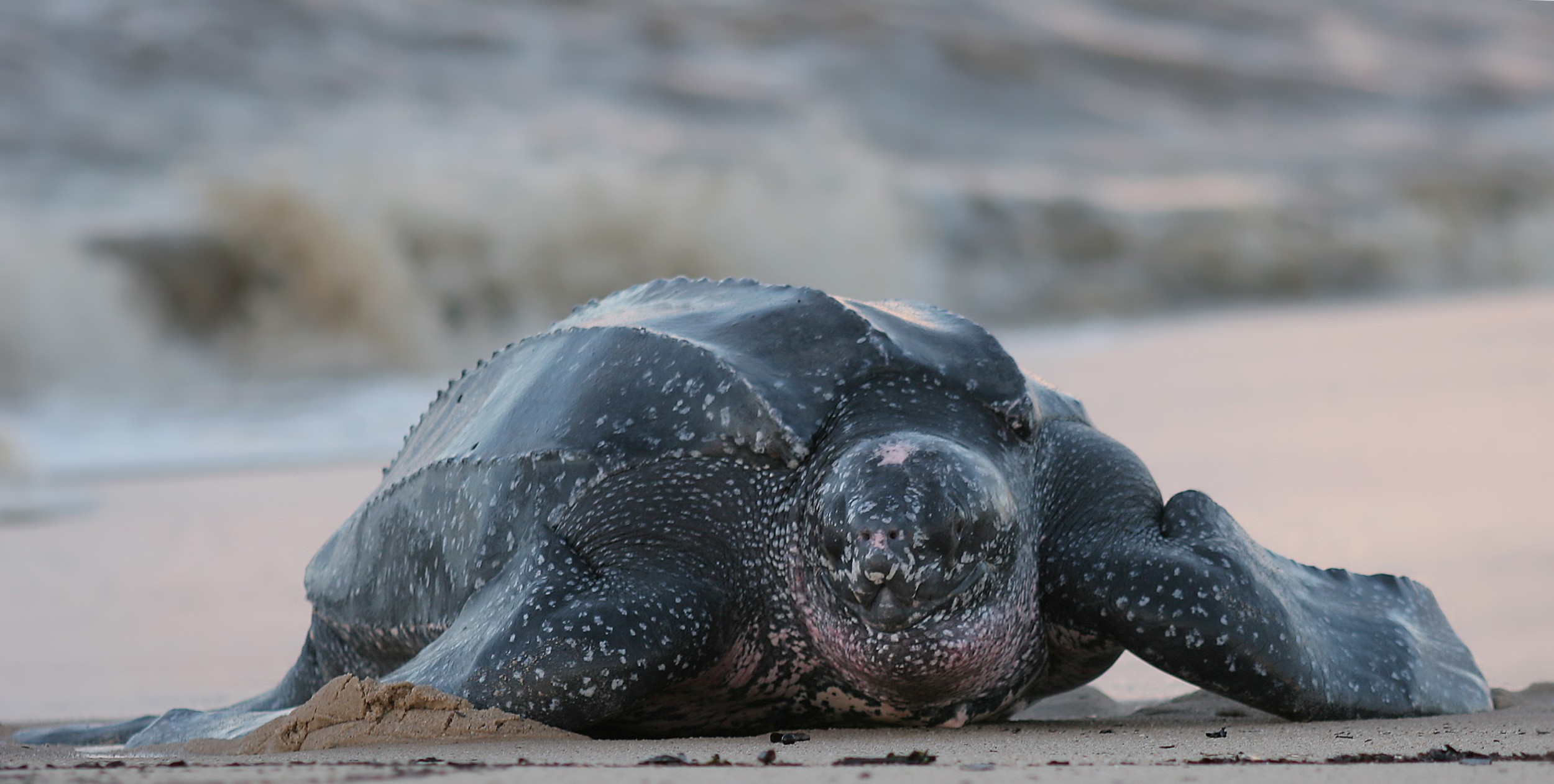


The Leatherback Turtle Reaches 3 Tons, Almost 3 Meters, and Dives Beyond 1,280 M, Making It the Largest Marine Reptile and One of the Greatest Divers in the Ocean.
Anyone observing a common sea turtle at the surface can hardly imagine that there is a reptile capable of uniting gigantism, speed, advanced ocean physiology, and extreme diving. But this combination exists and has a scientific name: Dermochelys coriacea, better known as leatherback turtle.
Official sources such as NOAA, Marine Biology, IUCN, and Marine Mammal Science document that this species can reach up to 3 tons, measures between 1.5 and 2.8 meters, has exceptional hydrodynamics, and dives beyond 1,280 meters deep, an area where the pressure exceeds 130 atmospheres and light disappears completely. This ability places the animal at the top of the records among marine reptiles; no other known living reptile combines body mass, oceanic metrics, and bathymetric range of this magnitude.
How Does a Reptile Manage to Dive More Than 1,200 Meters?
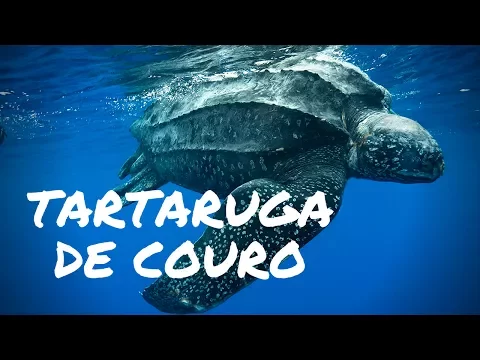

To understand this feat, one must observe the anatomical and biochemical adaptations documented in oceanographic research:
-
AI Data Centers Now Feature Built-In Nuclear Power Plants and Have Ordered Non-Existent Reactors

-
In India, thousands earn about $2.50 an hour cooking and cleaning with a phone strapped to their heads, as every move is recorded to train humanoid robots for jobs they might one day replace.

-
Nuclear Fusion Study Proposes Transforming Mercury into Gold Using Tokamak Neutrons, but Real-World Application Remains Uncertain
-
Brazilian Researchers Develop Floor Tiles That Convert Student Footsteps into Electricity to Reduce University Energy Costs





Collapsible Pulmonary Physiology:
As it begins the dive, the lungs partially collapse, expelling air and reducing the risk of barotrauma and gas embolism, a phenomenon similar to that observed in diving cetaceans.
Blood Rich in Myoglobin:
The species has high concentrations of myoglobin, a protein capable of storing oxygen in muscle tissues, prolonging aerobic activity even without breathing.
Unique Thermal Regulation Among Reptiles:
The Dermochelys coriacea maintains a system known as gigantothermy, which allows it to retain heat thanks to its large body volume, enabling it to swim in polar waters with temperatures ranging from 0 °C to 5 °C — something extremely rare among reptiles.
Highly Flexible Rib Cage:
The leather shell is not rigid like that of other turtles: it flexes, absorbs pressure, and improves hydrodynamics.
This structure reduces structural damage in high-pressure zones.
What Does It Seek So Deep in the Ocean?

The answer lies in its diet. The leatherback turtle is a specialist in deep waters, mainly feeding on jellyfish and tunicates, which concentrate at bathymetric depths.
Studies published by Marine Biology and NOAA Fisheries show that individuals can cross the entire Atlantic driven by:
- seasonal jellyfish cycles,
- cold currents,
- oceanic upwelling.
This explains impressive records such as:
- 40,000 km traveled in a single migration,
- continuous dives between 200 and 1,000 meters,
- documented peaks of ~1,280 meters.
Oceanic Migrator: One Latitude, Several Ecosystems
The Dermochelys is cosmopolitan, recorded in almost all the major seas of the planet, including:
- North Pacific,
- South Pacific,
- North Atlantic,
- South Atlantic,
- Mediterranean Sea.
The IUCN classifies the species as Vulnerable to Critically Endangered depending on the regional population. Among the main threats are:
- bycatch in longlines and driftnets,
- ingestion of plastics mistaken for jellyfish,
- warming of nesting beaches,
- harvesting of eggs for human consumption,
- pollution and chemical contamination.
Why Is It Scientifically So Fascinating?
Because the leatherback turtle violates typical biological expectations of reptiles, such as:
- need for external heat,
- difficulties in cold ecosystems,
- limitations in aerobic capacity.
Instead, it:
- retains heat,
- crosses the Pacific,
- dives further than many cetaceans,
- operates in hadopelagic environments.
This profile makes the species a biological model for study in:
- extreme diving,
- thermal evolution of reptiles,
- oceanic transport,
- deep trophic ecology.
On the Border Between Gigantism and Depth
The Dermochelys coriacea is, in essence, an animal that mixes eras in a single body:
- reptile like dinosaurs,
- migrator like swordfish,
- diver like beaked whales,
- thermoregulated like marine mammals.
For this reason, it remains one of the most enigmatic and impressive pieces of natural biological engineering.