Portuguese
  Spanish



Brazilian Technology Created by a Native Uses Solar Light and Plant Graphene to Revolutionize Green Hydrogen Production
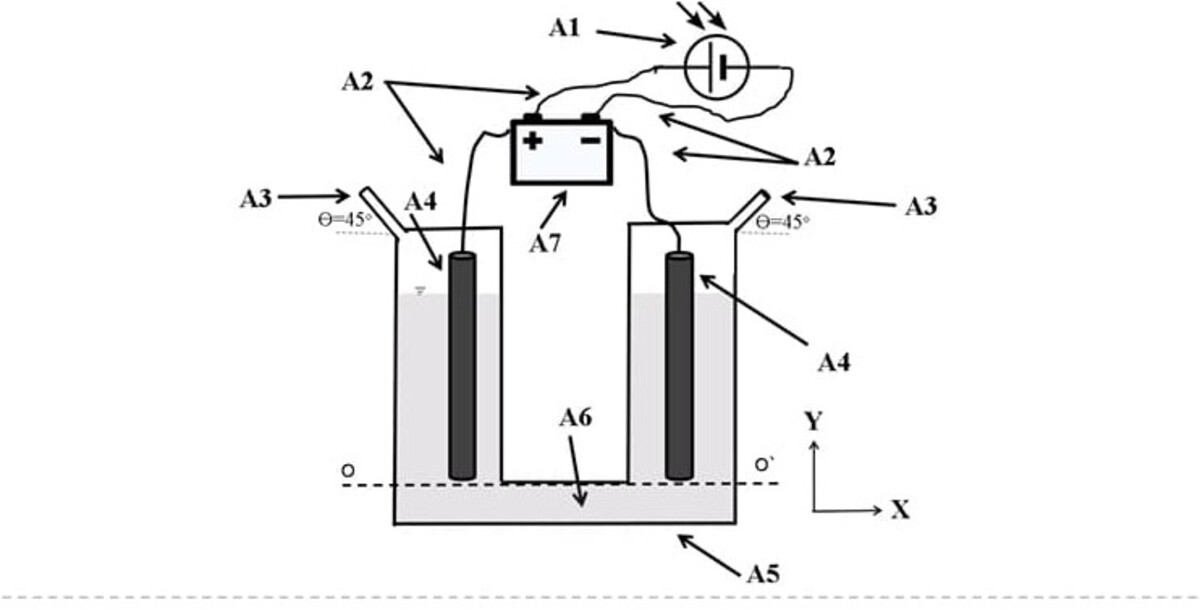
An innovative reactor created in Brazil promises to transform how green hydrogen is produced. The technology was developed by Francislei Santos, a researcher at the Federal Institute of Bahia (IFBA), Salvador Campus, and uses solar light, plant graphene, and low cost as its main differentiators.
National Advancement in Hydrogen Production
Green hydrogen (H2V) is a clean energy source that has gained global attention. According to the World Economic Forum, Brazil is expected to produce between 0.6 and 1.1 million tons annually by 2030, with 60% intended for internal consumption. This scenario has encouraged research, such as that conducted by IFBA.
The reactor developed by Francislei Santos is of the photoelectrochemical type in a U shape. It eliminates the need for membranes, which traditionally separate gases during the reaction and can create waste. It also replaces the use of potassium hydroxide, which is considered unfeasible on a large scale due to generating contaminants.
-
Brazilian scientists are simultaneously advancing two research projects on clean hydrogen and driving solutions that could transform the energy matrix, enhance industrial competitiveness, and accelerate large-scale emission reduction targets.

-
Advancement in renewable energy: A R$ 150 million project launched by Petrobras and Finep aims to create state-of-the-art electrolyzers for green hydrogen, strengthening national research and preparing Brazil to compete in a billion-dollar energy market.
-
Illiterate or semi-literate grandmothers were trained to repair solar systems, open rural workshops, and light up homes that still depended on kerosene.
-
The world has bet on green hydrogen as the fuel of the future, but now faces the side effect: producing 1 kilogram requires about 9 liters of ultrapure water, and the largest projects on the planet are precisely in the driest regions of the Earth, where water is already scarce for people.




Technology Based on Previous Experiences
The researcher notes that in 2015, a curious experiment served as the basis for current advancements. At that time, he used a photovoltaic panel over an electrolyzer with human urine in studies on the reuse of waste in treatment plants. “To my surprise, this panel broke the molecule and released hydrogen. This turned the world,” he recalls.
In 2023, the team launched the new reactor, which does not use membranes or aggressive chemicals. The main energy source is sunlight, which is used to trigger chemical reactions that separate water into hydrogen and oxygen.
Additionally, the equipment employs plant-derived graphene, improving its performance. It is the first H2V technology to use this type of graphene.
Positive Results and Next Steps
According to Francislei Santos, the reactor has shown good results in producing gases. “The reactor is a superior solution in terms of efficiency, sustainability, and safety. It operates at lower costs, utilizes renewable energy sources, dispenses with aggressive chemicals and eliminates the need for membranes.”
Tests under Normal Temperature and Pressure (NTP) demonstrated successful photoelectrochemical reactions. Raman spectroscopic analyses confirmed the properties of the plant catalyst. The next phase of the project will be to analyze the purity of the gases generated through gas chromatography.
Patented Project with National Support
The innovation has already been patented and has the support of the National Institute of Industrial Property (INPI) under the Industrial Property Mentoring Program (PMPI).
The technology is also part of Catalisa ICT, an initiative by Sebrae Nacional that encourages the transformation of scientific knowledge into high-impact solutions.
On National Science and Scientific Researcher Day, July 8, 2019, the State Secretariat of Science, Technology, and Innovation (Secti) launched a series of reports showing how scientists from Bahia contribute to society in areas such as health, education, and security.
With information from Rádio Portal Sudoeste.