






 Portuguese
  Spanish
  3 min of reading
  0 comments


Pioneering Ship With 100 MWth Molten Salt Reactor Promises To Operate Without Refueling and Marks Historic Advance in Clean Maritime Propulsion
South Korean engineers have achieved a groundbreaking feat by presenting the world’s first liquefied natural gas (LNG) carrier powered by nuclear energy.
The vessel uses a modular molten salt reactor (MSR) and received Approval in Principle (AiP) on September 9.
This approval is symbolic yet fundamental, as it certifies the project’s compliance with international safety regulations and standards.
-
Helicopter Drops 180 Tons of Sand and Gravel on Swedish River to Revive Ecosystem Damaged by Decades of Exploitation

-
Brazilian Company Launches Retro Smartphone with 48 MP Camera, T9 Keyboard, and Privacy Features for Social Media-Free Use

-
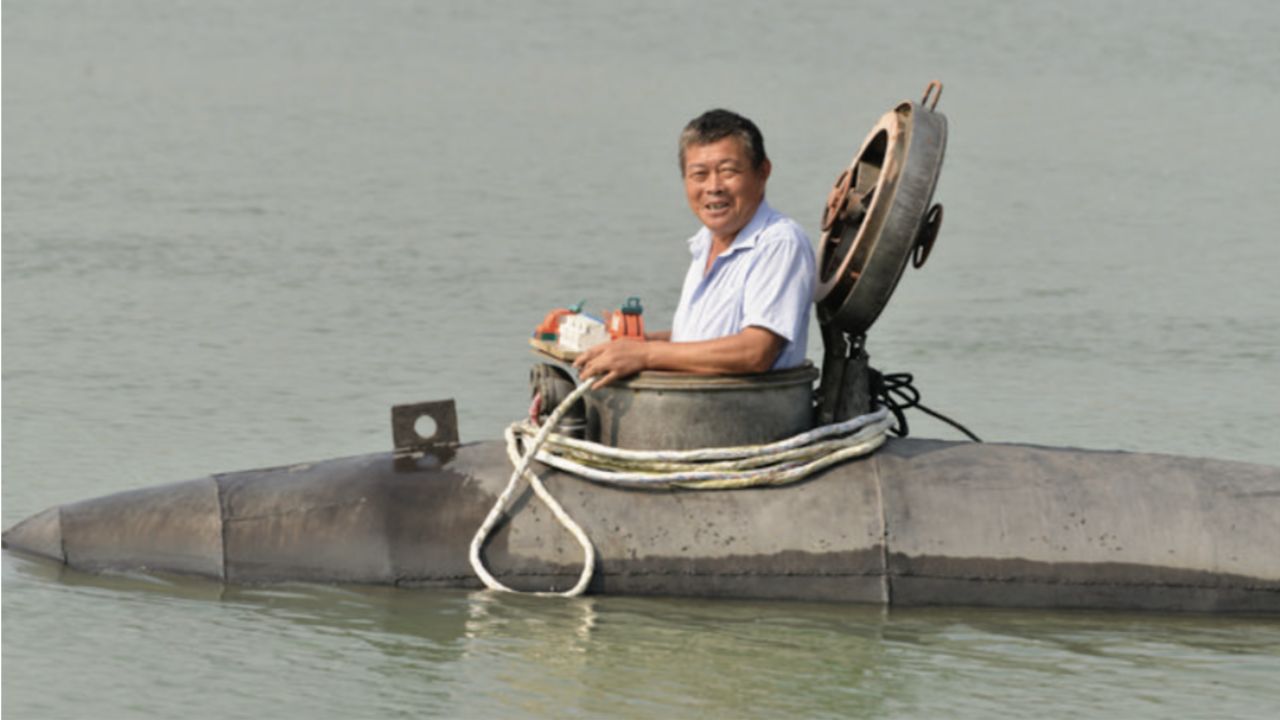
Self-Taught Chinese Farmer Builds 5-Ton Submarine from Scrap, Launches It in Anhui River
-
Invisible Induction Technology Enables Wireless Power for Blenders, Coffee Makers, and Air Fryers, Reducing Countertop Cables




The recognition came from the American Bureau of Shipping (ABS) and the flag state of Liberia, enhancing the credibility of the initiative.
What Is an AiP
The AiP functions as a preliminary certification. It does not mean the immediate construction of the ship, but confirms that the design meets the basic safety and feasibility requirements.
In the case of the South Korean vessel, this is the first time a ship powered by a molten salt reactor has received this type of official recognition.
Molten Salt Technology
The molten salt reactor differs from conventional reactors because it uses fuel mixed with molten salt, rather than solid fuels. According to KAERI, the developed propulsion system has a thermal capacity of 100 megawatts (MWth).
This configuration offers significant advantages because it combines high safety with energy efficiency. Additionally, it ensures continuous operation without the need for refueling throughout the vessel’s lifetime.
Traditional reactors require maintenance and fuel replacement, which causes disruptions. The MSR, therefore, emerges as a revolutionary solution to reduce downtime and improve maritime logistics.
Strategic Partnership
The project is the result of cooperation between the Korea Atomic Energy Research Institute (KAERI) and Samsung Heavy Industries. Research began in 2023 and was supported by the Ministry of Science and ICT of Korea and the Ministry of Oceans and Fisheries.
The teams are working to complete the conceptual design of the marine reactor by next year, consolidating South Korea’s position as a leader in naval innovation.
International Debut
The official announcement came just before Gastech 2025, the largest gas and energy exhibition in the world. The event will be held in Milan, Italy, from September 9 to 12.
Gastech serves as a global stage for the shipbuilding, energyrgia and classification societies sectors. Choosing the event for the announcement underscores the international significance of the innovation.
Vision for the Future
According to Jin Young Cho, director of the advanced reactor research institute at KAERI, the goal is clear: to contribute to carbon neutrality in the maritime sector.
The statement encapsulates the initiative’s impact as it shows that the project goes beyond technological innovation. It is directly connected to the energy transition and the global effort to reduce emissions.
This first step marks the beginning of a new era for the oceans, where transportation can become cleaner and more sustainable.





-

1 person reacted to this.