Portuguese
  Spanish


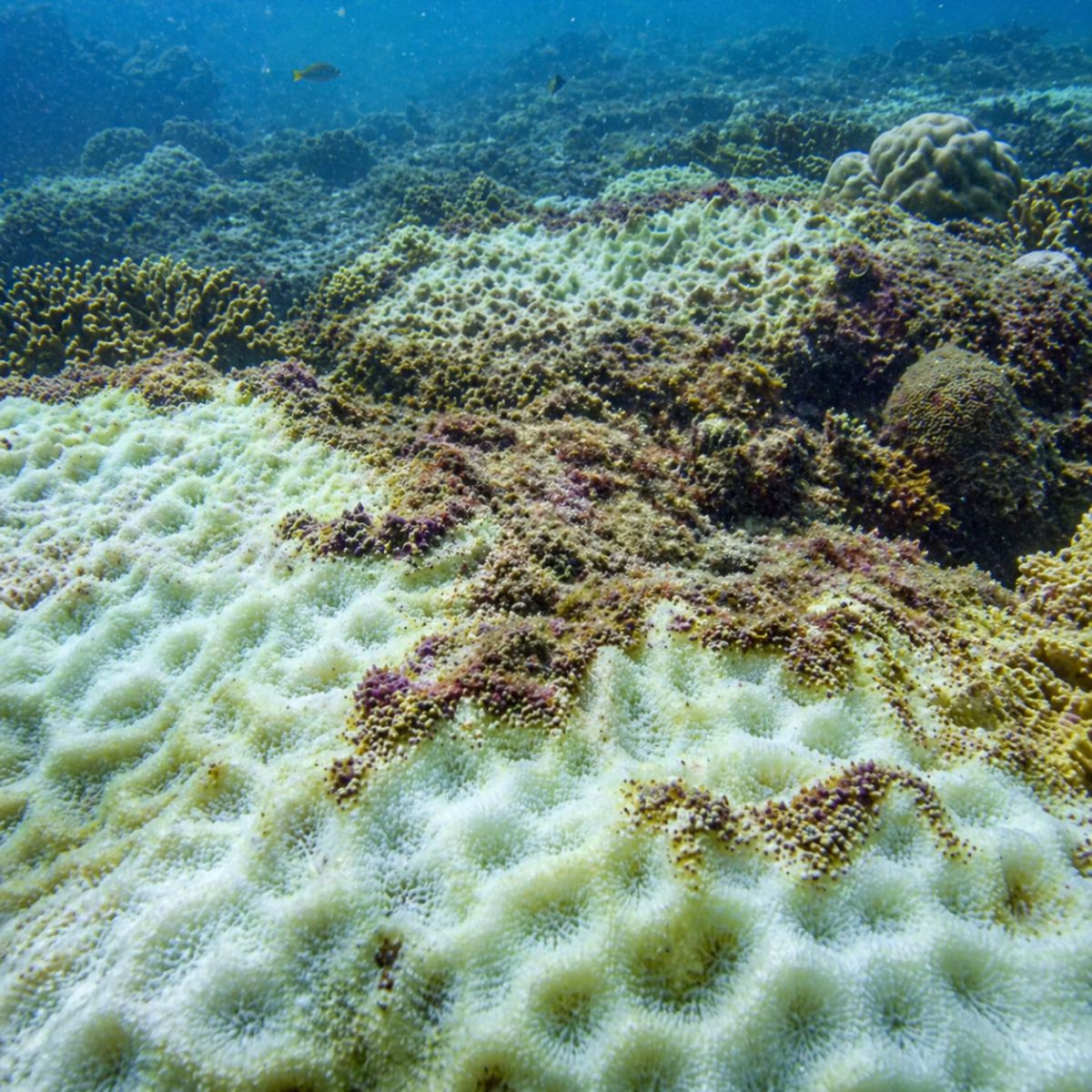

The fourth global coral bleaching event, declared in 2024 by NOAA, has affected up to 80% of the planet’s reefs and reached Brazil with unprecedented force. Maragogi, Natal, and Salvador recorded high mortality, with species showing losses exceeding 90% and a real risk of extinction on the Brazilian coast. Oceanographer Miguel Mies, from Project Coral Vivo, states that the country is now part of the global reef vulnerability map.
Brazil was relatively unscathed by the bleaching that devastated coral reefs in other parts of the world, but that protection has ended. In April 2024, NOAA and the International Coral Reef Initiative declared the fourth global bleaching event, the most extensive ever recorded, and the country was hit with unprecedented intensity. Heatwaves associated with the El Niño phenomenon raised sea temperatures in the Northeast and caused mass mortality in reefs in Maragogi (AL), Natal (RN), and Salvador (BA), marking the second major episode of the phenomenon in the country after the initial record in 2019.
The diagnosis is alarming because it involves species that only exist on the Brazilian coast. According to oceanographer Miguel Mies, a researcher at Project Coral Vivo, some species showed mortality exceeding 90%, putting them at real risk of extinction. “What it demonstrates is that this problem of heatwaves and bleaching, which Brazil had been escaping unscathed, is now starting to critically affect the country,” says Mies. Brazilian reefs, which concentrate unique marine biodiversity in the world, have now become part of the global vulnerability map that once seemed distant.
What is coral bleaching and why does it kill reefs

According to information released by the portal Um só planeta, bleaching is a process directly linked to the increase in ocean temperature. Corals are animals that live in symbiosis with microalgae responsible for providing energy to the organism through photosynthesis. When heat intensifies, these algae begin to produce toxic substances, and the coral expels its partner, losing its main food source and characteristic coloration. If the situation persists, the result is the death of the organism.
-
Electric Vehicle Repairs Cost 23% More, But the Battery Isn’t to Blame

-
China’s Solar Panel Installation in Desert Unintentionally Alters Soil, Moisture, and Vegetation Dynamics

-
China’s Plan to Prevent Giant Asteroids from Hitting Earth Involves Deep Nuclear Blasts and 20 Years of Preparation
-
Google Invests Billions in Italian Island’s Innovative Energy Storage Using Liquid CO2 Technology





The phenomenon is not new on a global scale, but in Brazil, it has only recently reached critical proportions. The first major Brazilian episode was recorded in 2019, and the 2024 event indicates a trend of intensification that accompanies the accelerated warming of the oceans. For the reefs of the Northeast, the proximity between the two events is concerning because it does not allow enough time for the corals to recover before facing a new cycle of thermal stress.
The economic and social impact of reef loss in Brazil
Coral reefs occupy less than 1% of the ocean’s area, but they concentrate about a third of marine biodiversity and support essential economic activities. Mies emphasizes that they provide fundamental services such as fishing, tourism, and coastal protection, and that these benefits only exist as long as the reef is alive. When mortality affects the corals, the reef structure degrades, and the entire ecosystem that depends on it collapses.
Globally, about 500 million people directly depend on reefs, which are associated with a multi-trillion dollar economy per year. In Brazil, degradation can affect everything from the food security of coastal communities in the Northeast to the income generated by tourism in destinations like Maragogi, one of the country’s main diving spots. The loss of endemic corals, which exist only on the Brazilian coast, adds a dimension of irreversibility that makes the problem even more serious.
What Project Coral Vivo does to try to save Brazilian reefs
In the face of the crisis, Project Coral Vivo coordinates the largest continuous coral monitoring program in the world, tracking reefs along 2,649 kilometers of the Brazilian coast. The project develops studies on species reproduction, which is one of the ways to increase population resilience and assess whether they can renew themselves, produce larvae, and re-establish themselves in the environment after bleaching events.
The initiative was recognized by the UN as part of the Decade of Ocean Science for Sustainable Development, which brings together around 600 projects worldwide. “The recognition reinforces the role of Brazilian science in the global ocean agenda and values a trajectory built over more than two decades,” says Mies. Researchers also emphasize that reducing local pressures such as pollution, overfishing, and tourism impacts is fundamental to increasing the capacity of corals to resist warming, which Brazil cannot combat alone.
Why the pace of the crisis outstrips the speed of solutions
The main threat to reefs continues to be global warming, and no local action replaces the reduction of emissions on a planetary scale. Scientific solutions are being developed, but at an insufficient pace given the speed at which ocean temperatures are rising. Mies states that for knowledge to generate impact, it needs to be incorporated into public policies, with the strengthening of marine protected area management and the integration of reef conservation into climate agendas.
The scenario for Brazilian corals depends on two variables operating on different scales. In the short term, reducing local pressures can increase the chance of reef survival between bleaching events and decrease the mortality of the most vulnerable species. In the long term, only the deceleration of global warming can prevent Brazil from definitively losing coral species that exist exclusively on its coast and that took thousands of years to develop in an ecosystem now facing an unprecedented threat.
Have you ever dived in coral reefs in the Northeast or know someone who has seen bleaching up close? Tell us in the comments if you believe Brazil is doing enough to protect its corals and what worries you most about the future of the oceans.