






 Portuguese
  Spanish
  4 min of reading
  0 comments


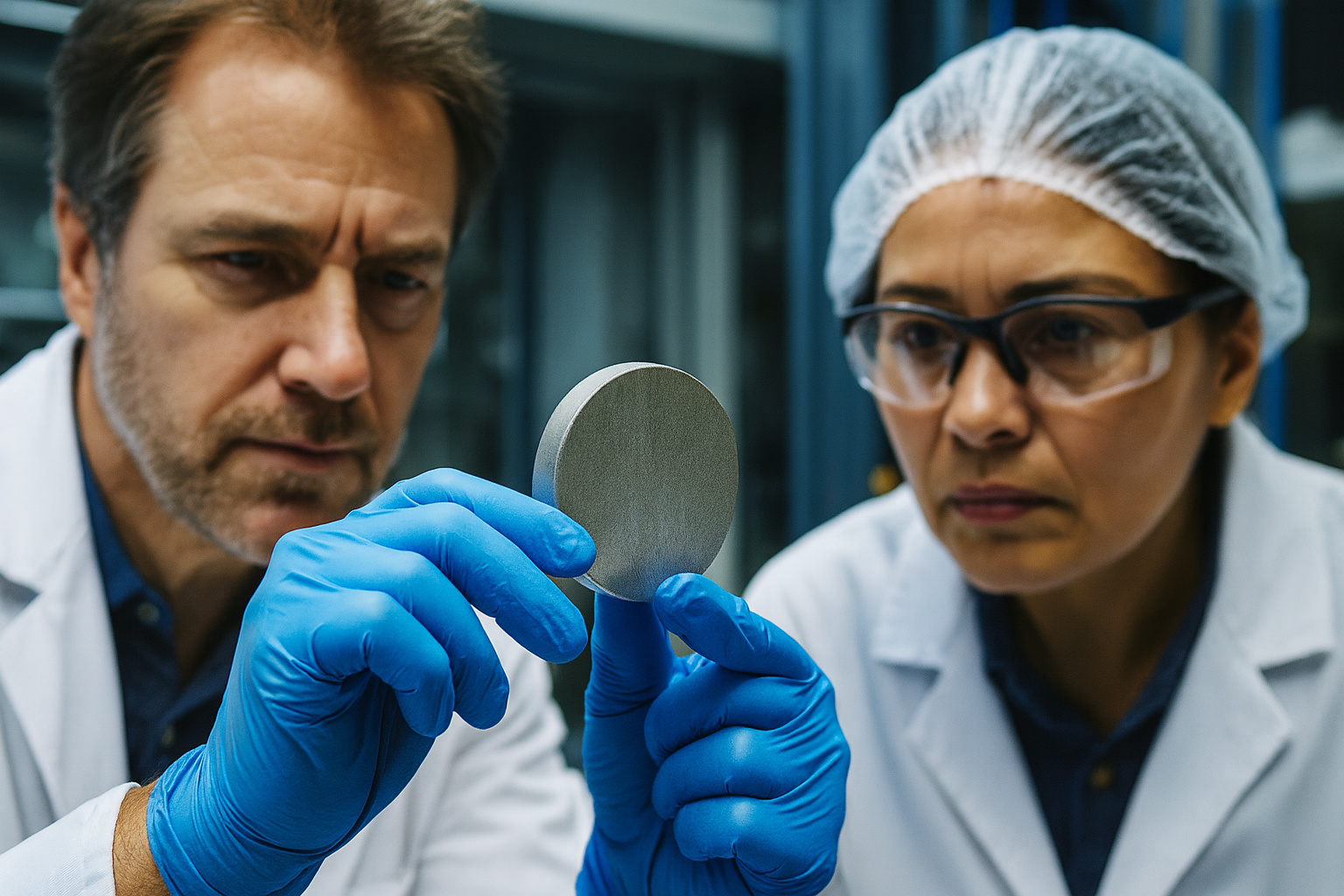
Center in Minas Gerais Starts Pioneering Production of Neodymium Magnets and Seeks to Reduce Dependence on China, Which Controls More Than 90% of Global Supply
In Lagoa Santa, a city 35 kilometers from Belo Horizonte, a three-story glass-fronted building houses the first laboratory-factory of neodymium magnets in the Southern Hemisphere. The place is more than a research space: it represents a concrete attempt for Brazil to dominate the entire production chain of rare earth elements—minerals considered strategic for energy transition and technological sovereignty.
These minerals, such as neodymium (Nd), are essential for the production of so-called super magnets, materials with high magnetic power used in electric car motors, wind turbines, military jets, missiles, and electronic devices. Despite the country having one of the largest reserves in the world, the dominance of the production process is still in its initial phase.
The new CIT Senai ITR (Innovation and Technology Center of Senai – Institute of Rare Earth Magnets) began operations in 2024. The unit features research laboratories and a semi-industrial line capable of producing up to 100 tons per year of permanent magnets.
“We have already mastered, on a pilot scale, the technological cycle for producing permanent magnets based on neodymium, iron, and boron. At an industrial level, we have control over 60% to 70% of the process,” explains chemist André Pimenta de Faria, coordinator of the CIT Senai ITR.
-
At 10 years old, a prodigy boy who claims to have learned to read as a baby is already explaining how the brain works to over a million followers and left the famous Dr. Sanjay Gupta speechless.

-
Hidden in a secret laboratory in Tokyo for over 25 years, an impossible lens made of 2,500 microlenses that saw like insect eyes promised to blow the minds of those watching TV.
-
NASA separated two identical twin brothers for 340 days and turned one of them into a human laboratory in space: the experiment revealed changes in genes, immune system, microbiome, and cognition, as well as a surprising “rejuvenation” effect that exposed the impact of living away from Earth.

-
China and Japan create a brain implant thinner than a hair, with 128 channels and data density ten times greater than any previous hydrogel, which operated for 550 days in rabbits without causing inflammation or scarring.



According to him, the goal is to finalize the commissioning of equipment imported from China by January.
“We want to dominate the entire production chain and transfer technology to companies that wish to produce magnets in the country,” adds Faria.
China Dominates the Market and Brazil Seeks Technological Independence
Today, China accounts for more than 90% of global production of super magnets. Brazil, although it has large reserves, still relies on imports of neodymium metal bars and lacks commercial operations for the chemical separation and refining stages of the elements.
The CIT Senai ITR is a step toward changing this scenario. Originally created by Codemge (Minas Gerais Development Company), the laboratory was acquired in 2023 by the Federation of Industries of the State of Minas Gerais (FIEMG), which integrated it into the Senai system.
“The laboratory-factory is a link between research and industrial application,” explains Faria. “Our role is to validate prototypes and processes in a semi-industrial way, not to manufacture on a large scale.”
The project is part of a broader national initiative: MagBras – From Mine to Magnet, launched in July 2024 by the federal government. The program brings together 38 companies, startups, research centers, and universities, with a budget of R$ 73 million, of which R$ 60 million is public investment.
“Brazil has the second largest reserve of rare earth elements in the world, second only to China,” recalls mechanical engineer Luís Gonzaga Trabasso, coordinator of MagBras.
“We have all the conditions to dominate the production cycle of these minerals and permanent magnets by 2030,” adds the researcher from the Senai Institute of Innovation in Manufacturing Systems and Laser Processing and professor at ITA (Technological Institute of Aeronautics).
The Bottleneck of Chemical Separation: The Most Expensive Challenge of the Chain
Despite the name, rare earth elements are not really scarce. These elements are relatively abundant in nature but appear mixed in small concentrations, which requires advanced technologies for separation and purification.
“The challenge lies in the chemical separation stage, which is the most complex and expensive part of the entire chain,” explains chemist Henrique Eisi Toma from the Institute of Chemistry at USP. To isolate elements such as neodymium and praseodymium, a detailed process involving several refining stages is necessary.
The good news is that Brazil has already accumulated relevant knowledge in this area. Research conducted since the beginning of the last decade within the National Institute of Science and Technology (INCT) Rare Earths, also known as Patria, formed the basis for current advancements.
The INCT brought together universities and research centers such as USP, the Institute of Technological Research (IPT), the Institute of Energetic and Nuclear Research (Ipen), the Mineral Technology Center (Cetem), and the Nuclear Technology Development Center (CDTN), as well as UFSC and the Certi Foundation.
At Cetem, linked to the Ministry of Science, Technology, and Innovation (MCTI), there has been significant progress.
“We have achieved success in separating praseodymium (Pr) and neodymium (Nd), two of the main rare earth elements,” states chemical engineer Ysrael Marrero Vera, head of the Extractive Metallurgy Service at the center.
The Path to Brazilian Technological Sovereignty
Dominating the production cycle of rare earth elements means more than economic autonomy; it represents technological and industrial sovereignty. Countries that control this production hold strategic chains linked to clean energy, electric mobility, and defense.
With the CIT Senai ITR and MagBras, Brazil takes a firm step toward reducing external dependence and consolidating a new technological economy. The country seeks not only to explore natural resources but also to add value, generate jobs, and export innovation.
There are still obstacles, especially regarding the cost of chemical processes and dependence on imported equipment. But for the first time, Brazil seems to be bringing together research, industry, and public policy around the same goal.
And you, reader: will Brazil manage to turn its rare earth elements into a global strategic asset, or will it continue to export only the raw potential of its mineral wealth?
Leave your opinion in the comments.





Be the first to react!