






 Portuguese
  Spanish


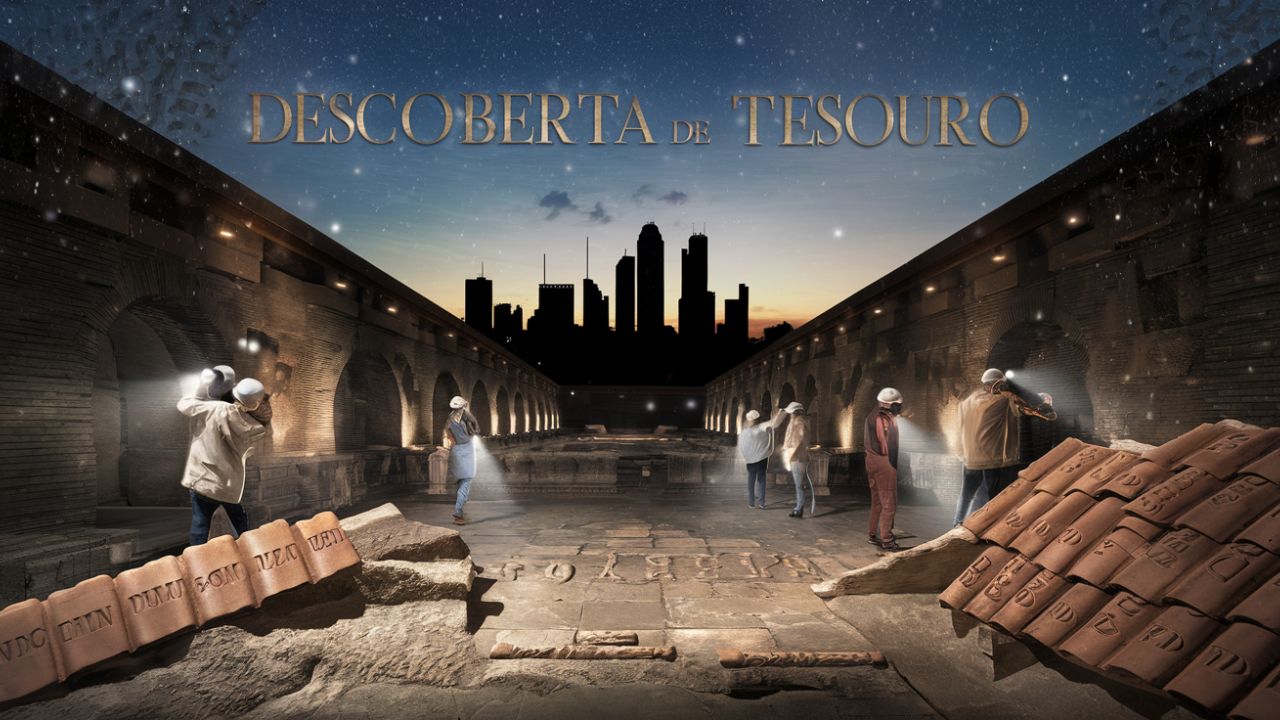


An Incredible Archaeological Discovery: The Ruins of a Roman Basilica Beneath a Commercial Building on Gracechurch Street
Being in an office anywhere in the heart of London and discovering that right beneath your feet is a monumental structure that is two thousand years old! This is exactly what archaeologists found while excavating the basement of a commercial building on busy Gracechurch Street. An archaeological treasure that rewrites the history of Roman London.
A Find That Rewrites History
Not every treasure comes in the form of gold and jewels. In this case, the prize was a significant part of the city’s first basilica, a space where important political, economic, and administrative decisions were made. A grand construction that symbolized the power and organization of the Roman Empire in the region.
What is most impressive is how this building remained hidden for so long. During preliminary excavations, archaeologists opened small pits to understand what lay beneath the modern concrete. On their third attempt, among office cabinets and files, they came face-to-face with an incredibly preserved limestone wall. Like a fragment frozen in time, this wall was part of one of the most important buildings in Roman Londinium.
-
China could reduce iron ore imports from 80% to 50% of consumption by 2030, while its share in global steel production falls from 52% to 46%, in a shift that could reshape the global market, says CMRG.

-
Brazil is sitting on one of the largest lithium reserves in the world, in the Jequitinhonha Valley, but national mining has almost become an appendage of China: 97% of the metal’s export goes to a single country, which also dominates refining.
-
Iron ore falls to 762 yuan in China as real estate sales decline and steel production hits lowest level since 2018
-
Brazil has minerals, clean energy, and a waiting market, but it could miss a billion-dollar opportunity if it doesn’t speed up the race for green minerals, while the steel industry seeks to reduce emissions.


The Forgotten Giant, The Basilica and Its Grandeur

If it was already surprising to find traces of a Roman building, the details are even more impressive. This basilica was no ordinary building: measuring 40 meters long, 20 meters wide, and an impressive 12 meters high, it dominated the urban landscape of the time.
Its primary material, limestone from Kent, reinforces the importance of the region as a supply center for Roman London. Roof tiles found on site bore an official stamp from the ancient city, a kind of seal of authenticity that transports us directly to the past.
An Obstacle or a Gift? How the Discovery Changed Plans
Planning the demolition and reconstruction of a building and suddenly discovering an essential part of London’s history. This is what happened to the owners of the building, who had to completely rethink their plans. Instead of simple commercial offices, the new project now needs to incorporate the archaeological site, becoming a space that balances modernity and historical preservation.
Redesigning a building around Roman ruins is not easy. The columns needed to be repositioned, and the number of elevators was reduced to avoid damage to the ancient structure. Despite the challenges, the outcome promises to be fascinating.
“Seeing people really using and enjoying the space, passing through the public hall and going down to see the ruins, will be absolutely amazing,” commented James Taylor from the architecture firm responsible for the project.
London, A Treasure Trove of Archaeological Wonders
According to the BBC, this is not the first time London has surprised with archaeological treasures. The city, which has gone through multiple layers of transformation over the centuries, holds true secrets beneath its modern buildings. One example is the Roman amphitheater exposed beneath the glass floor of the Guildhall Art Gallery and the famous Temple of Mithras, carefully preserved in the offices of Bloomberg.
The discovery of the basilica reinforces a pattern: the more you dig, the more history is revealed. The challenge is to find a balance between progress and preservation, allowing the past and present to coexist harmoniously.
What’s Next? The Future of the Treasure Discovery
Now that the existence of the basilica has come to light, what will be done with it? The idea is to make the archaeological site accessible to the public, creating an interactive experience for residents and tourists to experience a piece of Roman London.
For archaeologists, this discovery is a living page of the city’s history, a reminder that London is more than skyscrapers and financial markets. “The fact that Roman London is beneath your feet is, frankly, an extraordinary emotion to experience,” says Chris Hayward from the City of London Corporation.









Imagem de IA horrorosa
“Descoberta de tesouro”
Se n querem pagar artista, usa alguma imagem real do evento
Estive em Londres em 1986, após um ano vivendo em Roma. Me impressionou o carinho londrino com seu passado romano. Qualquer vestígio desse era tratado como um tesouro. E isso não mudou.