






 Portuguese
  Spanish


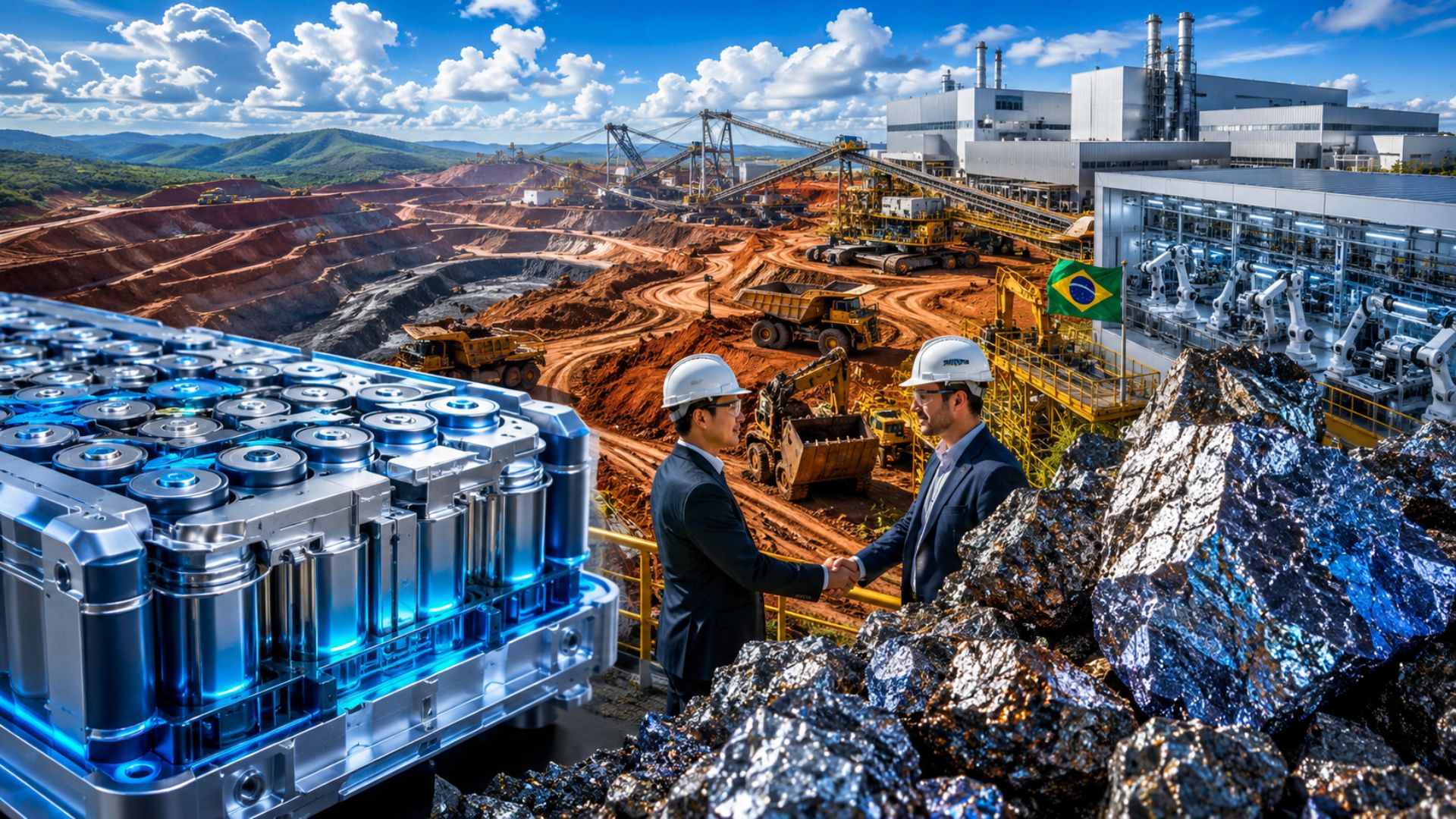

Amperex Technology Limited, an Asian manufacturer specializing in lithium-ion batteries and controlled by the Japanese TDK Corporation, announced a stake in the Araxá Project, an Australian venture focused on rare earths and niobium in Alto Paranaíba, still in the exploratory phase with operations expected to start in 2027.
An Asian battery manufacturer has just become a shareholder in one of the most talked-about mineral projects in Minas Gerais. Amperex Technology Limited, known by the acronym ATL and specializing in next-generation lithium-ion batteries, announced a direct stake in the Araxá Project, developed by the Australian mining company St George Mining in the Alto Paranaíba region. Geological studies estimate mineral resources of 70.91 million tons in the complex, with an average grade of 4.06% TREO, the technical acronym for total rare earth oxides, as published by Revista Fórum in June 2026.
The venture is still in the exploratory phase. There are no confirmed commercially exploitable reserves, nor defined economic viability, and activities are only expected to start in 2027, according to the mining company itself. Even so, the move is of interest: it brings together an Asian manufacturer controlled by a Japanese multinational with a Brazilian critical minerals project in a region that already hosts the world’s largest niobium producer. The geopolitical context surrounding strategic mineral supply chains makes this type of agreement much more than a common corporate transaction.
What is the Araxá Project and where is it located
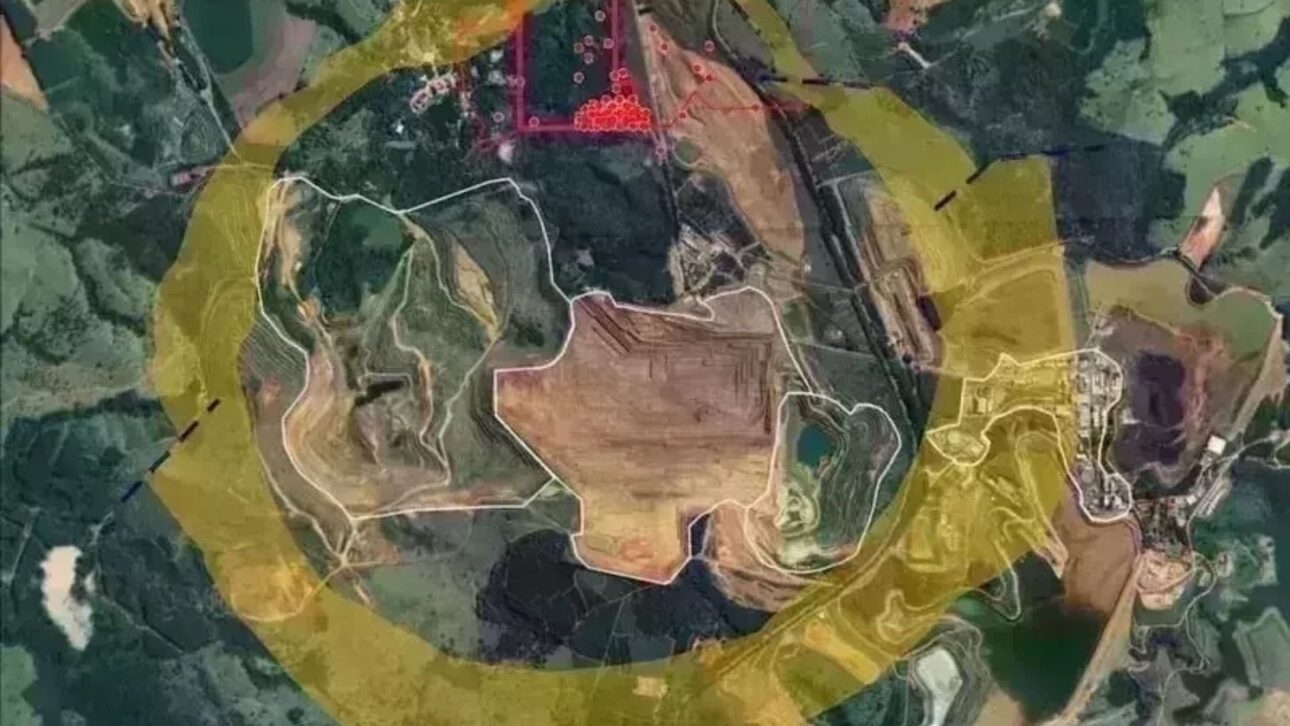
The area has been known in the mineral sector for decades, not by chance: it is in this same region that CBMM, Companhia Brasileira de Metalurgia e Mineração, operates, controlled by the Moreira Salles family and responsible for up to 80% of the world’s niobium production, according to Fórum.
-
Mexico’s Giant Crystal Cave: A Deadly 58°C Underground Palace with 11-Meter Crystals Formed Over Nearly a Million Years

-
China Dominates Over 90% of Rare Earth Refining, Prompting Global Concerns: Canada and Japan Launch Billion-Dollar Plan to Reduce Dependency and Safeguard Batteries, Semiconductors, and Defense

-
Ancient Mines in Spain Reveal Tools and Metals That May Explain Bronze Age Trade with Scandinavia
-
XCMG Launches 240-Ton Mining Truck in Brazil, Promising Increased Productivity with Lower Fuel Consumption


The proximity to this productive hub gives the project a relevant geological reference, even though St George’s assets are distinct and independent.
The focus of the Australian venture is the exploration of niobium and rare earths, two groups of minerals that occupy a central position in the global race for energy transition technologies. Rare earths are used in electric motors, wind turbines, defense equipment, and high-performance electronic components.
Niobium has a well-established use in the production of high-strength steel and is beginning to gain ground in next-generation batteries. The combination of both in the same complex is what makes Araxá attractive to investors in the sector.
Who is ATL and why it entered this business
Amperex Technology Limited is not an unknown company for those who follow the energy storage sector. Controlled by TDK Corporation, a Japanese multinational with operations in electronic components, batteries, and data storage technologies, ATL is a specialized manufacturer of next-generation lithium-ion cells.
Its entry into the capital of St George Mining represents a change in stance: instead of just buying minerals on the market, the company gains access to the supply chain before extraction.
According to the announced agreement, ATL will receive 12.5 million shares of St George with a 36% premium over the current value of the mining company’s shares, as reported by Revista Fórum.
In addition to participation in the Araxá Project, the contract guarantees the manufacturer preferential rights to up to 25% of the future lithium production from Lithium Star’s projects, an entity that St George is expected to fully assume.
ATL is also negotiating an 8% discount on long-term contracts based on international mineral prices. It is a structure that mixes equity participation with supply assurance.
The reorganization of the joint venture and the role of Lithium Star
To understand the current agreement, it is necessary to go back to 2023. In that year, St George and ATL had already created a joint venture called Lithium Star Pty Ltd, focused on lithium exploration projects in Western Australia. The agreement now announced reorganizes this structure: St George assumes 100% of Lithium Star while ATL gains direct equity participation in the Australian company’s mining ventures, including the Brazilian one.
The change in format is not a minor detail. Direct equity participation gives the Asian manufacturer access to project decisions, not just the final product. It is a different position from that of a simple mineral buyer. In the context of the global dispute for control of critical mineral beneficiation chains, this type of positioning has strategic value beyond immediate financial return.
Brazil on the map of critical minerals: a scenario under construction
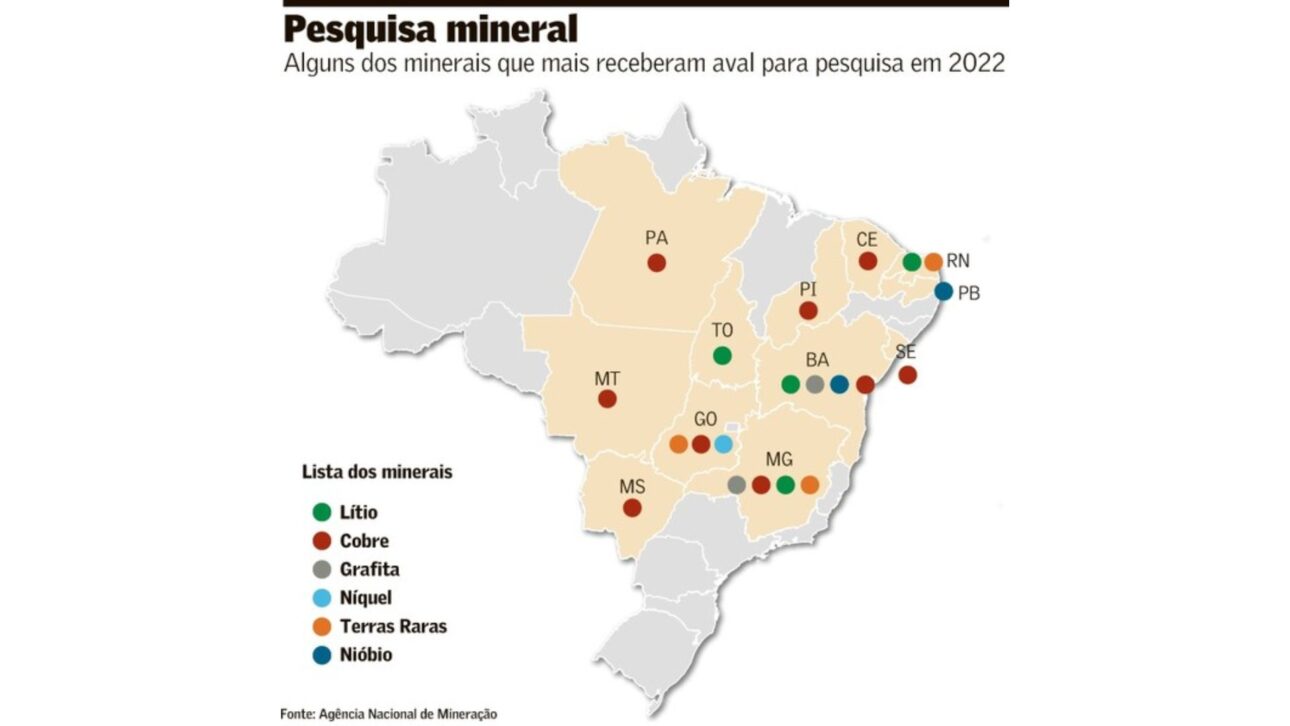
The main reason is simple: the country has mineral reserves that the industrialized world needs and that, to a large extent, have not yet been developed on a commercial scale.
The processing chain of these materials, in turn, is concentrated in China in a way that worries Western and Asian governments trying to reduce this dependency.
The only rare earth mine in operation in Brazil, Serra Verde, in Minaçu, Goiás, was fully acquired by a foreign enterprise, a process currently under investigation by Cade, the Administrative Council for Economic Defense, according to the Forum.
The case of Araxá fits into this same environment of intense external interest in Brazilian mineral assets. The difference is that Araxá is still far from production, and the path between a geological study and an operational mine is long, expensive, and full of variables.
What the numbers say and what they don’t say yet
The 70.91 million tons with an average grade of 4.06% TREO are numbers that draw attention but need context. A geological study is not a confirmed reserve.
St George itself acknowledges that the enterprise is in an exploratory stage, without confirmation of economic viability or commercially exploitable reserves, according to a note released and reproduced by the Forum.
Between an estimated resource and a revenue-generating mine, there is a chain of licensing, feasibility studies, engineering projects, infrastructure works, and, in the specific case of Araxá, the construction of an operation in a region that already has other major mineral players established.
The 4.06% TREO grade is considered relevant for the sector, and the presence of niobium adds value to the portfolio. But the 2027 timeline for the start of operations still depends on a series of steps that have not been publicly detailed.
What is known so far is that a major Asian manufacturer has decided it’s worth being part of this project before it actually exists. And that, in itself, already says something about what the market sees in this reserve.
Araxá, niobium, and the race for the minerals of the future
The presence of CBMM in the same region is not just a geographical curiosity. It is a benchmark. The Brazilian company has been operating for decades with one of the richest niobium deposits on the planet and dominates the global market for the metal.
The Barreiro carbonatite complex, where Araxá is located, has favorable geology that justifies the continuous interest of the industry. What St George is trying to do is open a second front in this same geological formation.
With the entry of ATL, the project gains a partner who understands where these minerals will end up: inside batteries, in electrification technologies, in components that global demand is expected to absorb in increasing volumes over the coming decades.
The bet is not on the price of niobium today. It is on the strategic position that whoever controls the supply will occupy tomorrow. If and when the mine comes into operation, those within the capital will have already secured their place in the chain.
The entry of an Asian battery manufacturer into critical mineral projects in Brazil is a sign of development or just another case of foreign control over national strategic resources? Is the country prepared to regulate this type of investment in a sovereign manner? Leave your opinion in the comments.


