Portuguese
  Spanish


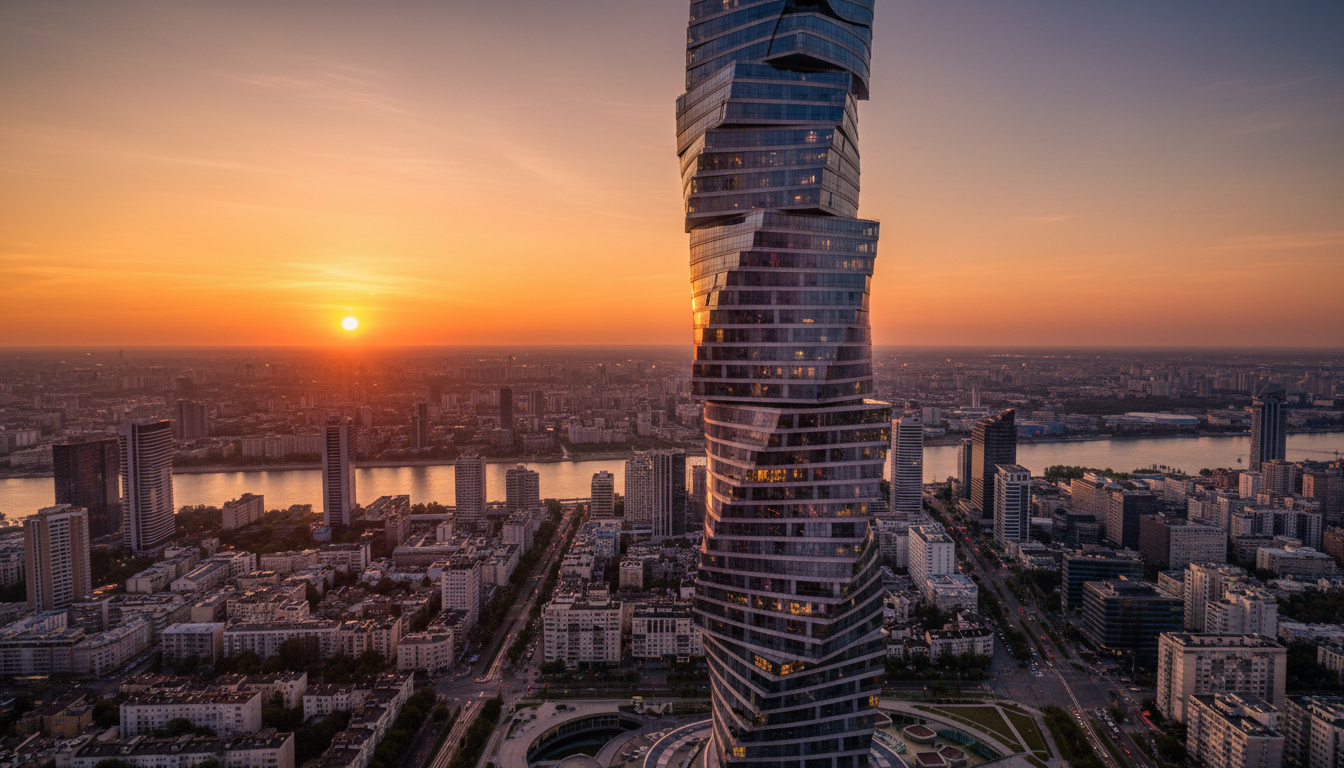


The building does not have a fixed shape because each floor rotates 360 degrees independently and the building’s profile changes every minute like a living sculpture 420 meters high
Imagine a skyscraper that never looks the same twice in the same day. In the morning, the floors are aligned like a conventional building. At noon, residents rotate their apartments to follow the sun.
At night, the building’s profile is twisted so much that it looks like a giant helix against the sky.
This is the proposal for the Dynamic Tower, designed by Italian architect David Fisher in 2008.
-
Alabama Family Converts Giant Grain Silos into a 1,750 sq ft Rustic Home, Spending $100,000 to Prove the Impossible

-
Modular ‘Microhouse’ Arrives Ready to Install in Hours Without Deep Foundations or Construction Waste

-
UK Student Develops Solar Water Purification System Using Fresnel Lens, Wins Global Young Scientists Popular Vote
-
Giant Dredger “No Woman, No Cry” Arrived in Brazil in 2010 to Clear 1.8 Million m³ of Sand and Improve Port Logistics


The building would have 80 floors, be 420 meters high, and each floor would rotate 360 degrees independently.
The resident would control the rotation of their floor with a button, like adjusting the recline of an armchair.
The estimated price of the apartments: starting from US$ 30 million each.
Wind turbines between floors: the building that generates more energy than it consumes
Between each floor, Fisher designed horizontal wind turbines.
There are 79 turbines in total, one in each gap between floors.
The wind passing between the rotating floors powers the turbines and generates electricity.
Combined, they would produce enough energy to power the building itself and even export the surplus to the grid.
Solar panels on the roof of each floor would complement the generation.
The promise was that the Dynamic Tower would be the world’s first energy-positive skyscraper.

The modules would be factory-made and assembled on site like Lego pieces
Fisher did not want to build the building in the traditional way, floor by floor.
Each floor would be entirely manufactured in a factory, with all electrical, hydraulic installations, and finishes already complete.
The modules would arrive at the construction site as pre-assembled pieces and would be lifted by crane and fitted into the central concrete core.
This core would be the only part built on site, in a conventional manner.
Everything else would come ready from the factory. This would reduce construction time by up to 30%.
The idea was revolutionary in 2008. Today, pre-fabricated modules are common in civil construction.
But no one has yet combined pre-fabricated modules with independent rotation in a skyscraper.
The estimated cost: US$ 700 million
The estimated investment was approximately US$ 700 million.
Pre-sales of the apartments would begin in the fourth quarter of 2008, with deliveries scheduled for 2010.
The project was announced with great fanfare at architecture conferences worldwide.
Fisher traveled presenting models and animations. Global media covered it enthusiastically.
Dubai, which at the time was building the artificial islands Palm Jumeirah and the Burj Khalifa, seemed like the perfect place for this ambition.
And then the project stopped
The 2008 financial crisis hit Dubai hard.
The real estate market plummeted. Billion-dollar projects were canceled or frozen.
The Dynamic Tower remained on paper.
Since then, Fisher has mentioned several times that the project would be resumed. In 2010, in 2014, in 2017.
To this day, no foundation has been dug.
The land in Dubai has not been publicly confirmed. No investor has been announced.
What exists are models, animations, and a registered patent.
Why it still matters
Even without being built, the Dynamic Tower changed the conversation about architecture.
The idea of buildings that move and generate energy influenced later projects.
Smaller rotating towers were built in Curitiba, Brazil, and in other cities.
The concept of prefabricated modules that Fisher advocated became mainstream in the construction industry.
And the debate about buildings that generate more energy than they consume is more relevant than ever.
The Dynamic Tower may never be built. But the question it posed, whether a building can be alive, has not yet been answered.