Portuguese
  Spanish


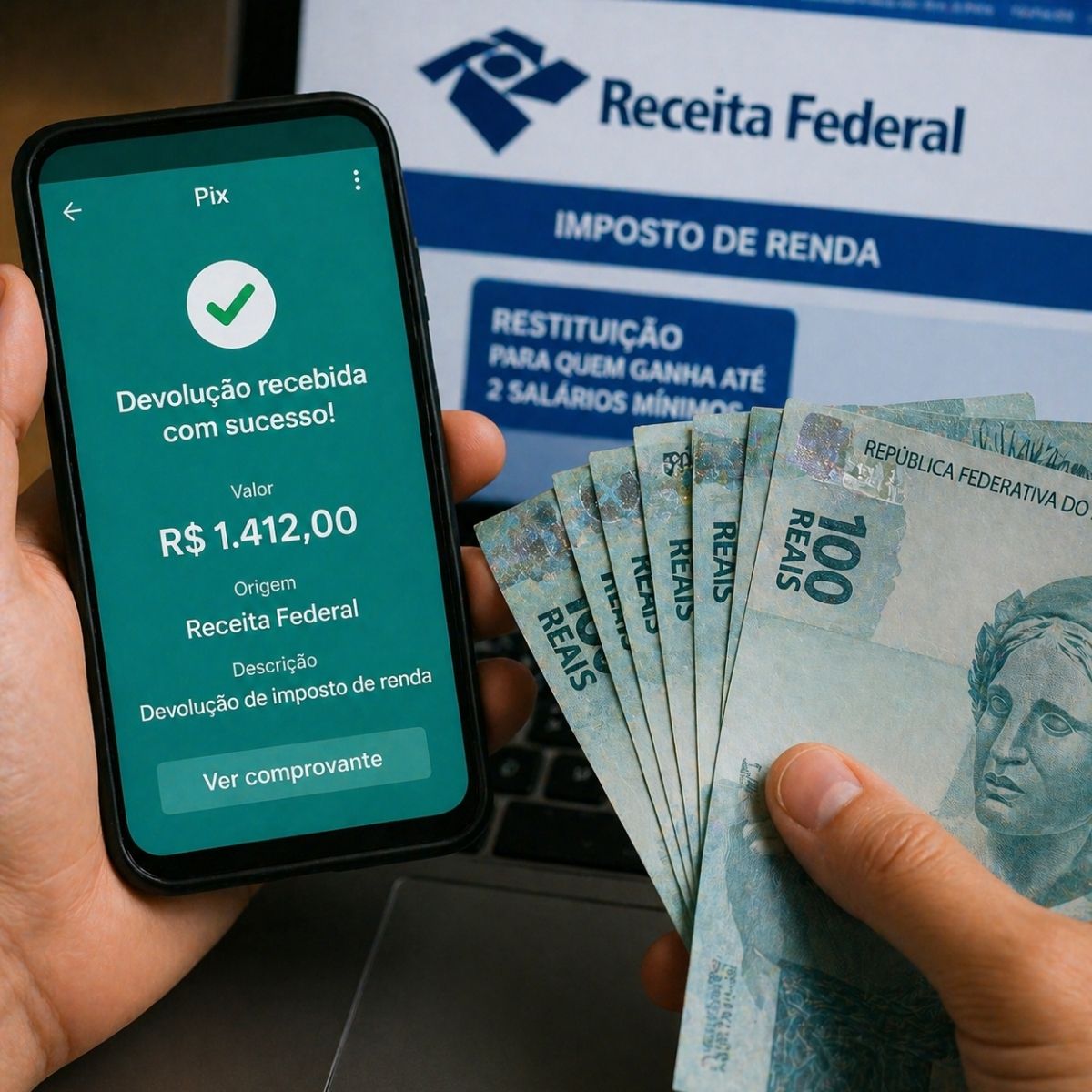

The Federal Revenue Service created the IRPF 2026 Cashback, a special refund batch that will automatically deposit money via Pix into the accounts of approximately 4 million Brazilians with incomes up to two minimum wages who had tax withheld at the source, with payment scheduled for July 15 and amounts up to R$ 1 thousand.
The Federal Revenue Service will return money to millions of Brazilians who didn’t even know they had amounts to receive. The IRPF 2026 Cashback is a special and unprecedented batch of automatic refunds that benefits approximately 4 million citizens with remuneration up to two minimum wages who had Income Tax withheld directly at the source during the base year of 2024, but who were not obligated to file an income declaration and, therefore, never requested the return of the money collected in excess by the government. Payment will be made via Pix on July 15, 2026, and the only technical requirement is that the beneficiary has a Pix key registered with their CPF.
The objective of the measure is to prevent low-income workers from losing their right to the money due to unfamiliarity with the tax system. The integrated system of the Revenue Service will automatically cross-reference databases to locate those with pending refund amounts, and the credit will be deposited into the bank account linked to the CPF’s Pix key without the taxpayer needing to fill out forms, download applications, or perform any additional procedures. The government estimates that the total amount distributed will reach R$ 500 million, although the average amount per beneficiary will be around R$ 125, as not everyone will be entitled to the R$ 1 thousand ceiling.
Who is entitled to receive the IRPF 2026 Cashback money

The criteria for receiving the money are specific and do not depend on prior registration. The beneficiary must simultaneously meet four conditions: receive remuneration up to two minimum wages, have had Income Tax withheld at the source in 2024, not be classified among taxpayers with a legal obligation to declare, and possess a Pix key registered with their CPF number. Those who fit this profile will receive the money without needing to take any initiative, because the Federal Revenue Service will perform the identification and payment automatically.
-
Entrepreneur Sells Car to Launch Healthy Meal Business, Now Runs Mr. Fit with 880 Stores in 3 Countries and $40 Million Annual Revenue

-
End of an Era: Renault Plans Major Overhaul, Cutting Jobs to Compete with Chinese Rivals and Transform Engineering by 2027
-
Brazil’s Largest Grain Port Faces Delays in the Hinterlands, Missing Rail Link Costs Agribusiness Billions

-
Egg Prices Drop Due to Weak Demand as Poultry Producers Increase Purchasing Power


Those who are not entitled to the Cashback money also need to know their situation. Taxpayers who are obligated to declare Income Tax, people who did not have withholding at the source, workers outside the range of up to two minimum wages, and citizens who do not have a Pix key linked to their CPF are excluded from the special batch. For this last group, the solution is simple: register a Pix key with your CPF before July to ensure the money has somewhere to be sent, should the system identify amounts to be refunded.
How much money each Brazilian can receive and when it will be deposited into the account
The individual ceiling for the IRPF 2026 Cashback is R$ 1 thousand, but most beneficiaries will receive less. The Federal Revenue Service estimates that the average refund amount will be approximately R$ 125 per person, a number that reflects the fact that withholding at the source on salaries up to two minimum wages usually generates small residual amounts on each payslip, accumulated over the months. The total money made available by the government amounts to R$ 500 million, divided among the approximately 4 million beneficiaries automatically identified by the system.
The official date for the money deposit is July 15, 2026. This payment does not follow the traditional schedule of Income Tax refund batches: it is a completely separate batch, exclusive for exempt taxpayers who had undue withholding and who did not submit a declaration in 2025 precisely because they were not obligated. The money will be deposited via Pix directly and quickly, and the Revenue Service emphasizes that the only technical requirement is the existence of a Pix key linked to the holder’s CPF, a mechanism that ensures security against fraud and agility in the transfer.
Why the Revenue Service decided to return money automatically
The problem that Cashback IRPF 2026 solves is an old one: millions of low-income Brazilians had tax withheld at the source every month, but never received a refund because they were not obliged to declare and did not know they could do so voluntarily to get their money back. In practice, the government kept amounts it should not have charged, and the workers who most needed the refund were precisely those who lacked the knowledge or access to request it. The automatic system eliminates this distortion by reversing the logic: instead of requiring the citizen to go after the money, the Receita brings the money to them.
The measure also represents a technological advance in tax administration. By automatically cross-referencing withholding tax data with Pix registration databases, the Receita Federal demonstrates the ability to identify and process millions of refunds without human intervention, a model that can be expanded to other situations where taxpayers are entitled to government money but do not know how to access it. Cashback IRPF 2026 functions as a pilot project for a more proactive tax administration, which refunds before being asked, instead of waiting for citizens to discover their rights on their own.
What those who are obliged to declare need to know about deadlines and penalties
Cashback IRPF 2026 exclusively serves exempt taxpayers. Those who are obliged to declare Income Tax continue to follow the conventional calendar: the deadline for submitting the declaration began on March 23 and ends on May 29, and the Receita Federal expects to process approximately 46.2 million documents this fiscal year. Obliged taxpayers who do not submit the declaration within the deadline are subject to a minimum fine of R$ 165.74, an amount that may increase according to the tax due.
For those who have already declared or intend to declare, the priority in conventional refund batches follows the order established by law. Elderly people, people with serious illnesses, teachers, and taxpayers who opt to receive via Pix and use the pre-filled declaration have preference in the payment queue, an order that applies to regular batches and has no relation to Cashback IRPF 2026. The money from the special batch for exempt individuals and the money from conventional refunds operate on separate tracks, and receiving one neither excludes nor delays the other.
What to do to ensure the money is deposited into your account in July
For the 4 million potential beneficiaries, the only necessary action is to verify that the Pix key registered with the bank corresponds to their CPF number. If the Pix key is linked to a phone number, email, or a random key instead of the CPF, the Cashback money will not be deposited, because the Receita exclusively uses the CPF as an identifier to ensure the amount reaches the correct person. Verification can be done through the bank’s app or internet banking, and changing or registering a new Pix key takes only a few minutes.
Those who meet the criteria but do not have a bank account with Pix need to resolve the situation before July 15. Digital banks offer free account opening with CPF-linked Pix key registration in a matter of minutes, and this could be the step that separates the beneficiary from receiving up to R$ 1,000 or seeing the money held without destination. The Receita Federal emphasizes that it will not send individual communications or make phone calls about the Cashback, so any contact received in the name of the Receita requesting personal data or payments should be treated as an attempted scam.
And you, do you meet the criteria for Cashback IRPF 2026? Have you already checked if your Pix key is linked to your CPF? Leave your opinion in the comments.