Portuguese
  Spanish


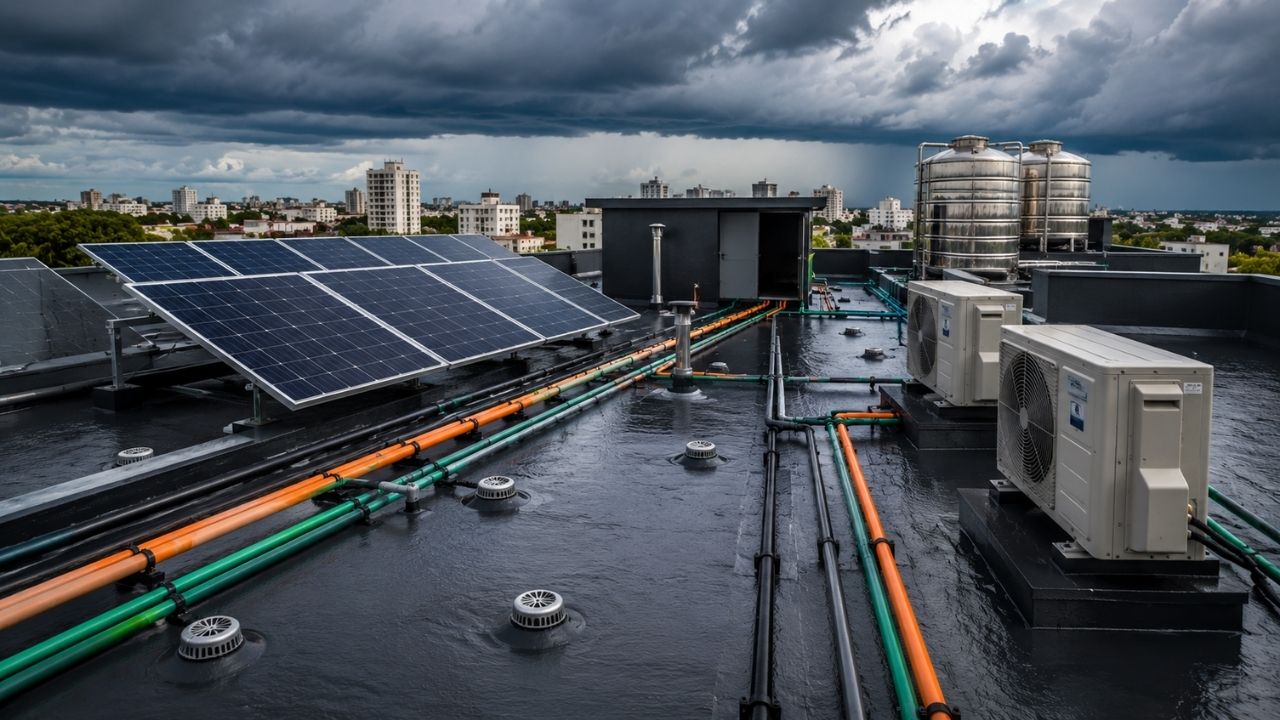

Furthermore, painting with enamel paint adds a layer of protection to the exposed pipes. As the sun can dry out materials over time, this coating helps reduce wear caused by direct exposure.
The result is a technical area that is more legible, more organized, and easier to inspect.
Piping on the slab can reduce damage in case of rupture

The choice to keep pipes exposed on the waterproofed slab changes how a potential plumbing problem behaves.
-
28-meter, 156-ton titans traveled 20,000 km from China to the port of Santa Catarina: Portonave received 7 fully electric megacranes, part of a R$ 210 million package, to double container handling.

-
They exchanged the idea of a large house for a 35 m² warehouse, spent US$ 12,000 on the structure, and created a tiny house in Colorado with space to live and work.

-
A newly opened terminal in the middle of the Amazon has begun transporting soy and corn through Amapá, eyeing the queue of ships that is congesting the ports in the South.

-
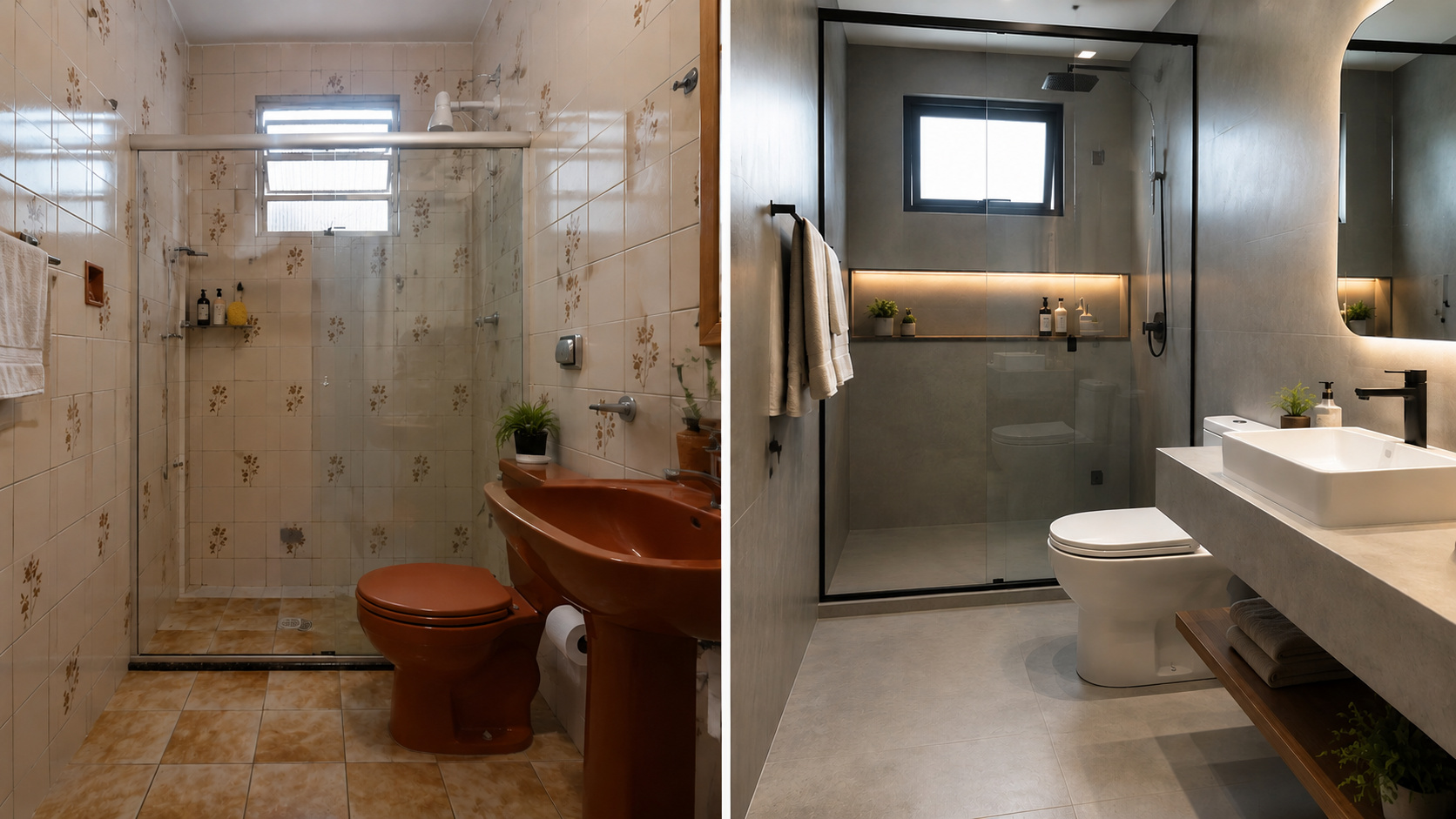
Goodbye to old tiles: renovation technique without construction transforms bathrooms in a few hours, eliminates debris, and reduces costs with coverings using special paints, high-resistance adhesives, and modern finishes that completely renew the space.


If a cold or hot water pipe ruptures on a roof with good drainage, the water tends to fall onto the waterproofed area and flow to a drain. In a traditional built-in roof, a hidden leak can affect the ceiling, cabinets, and interior spaces before being noticed.
Therefore, the project’s logic is to transform the roof into a control area. The problem, when it appears, becomes more visible and can be resolved with less demolition and less risk of internal damage.
This solution does not eliminate the need for good execution, but it creates a system that is easier to monitor.
Many drain points accelerate runoff and protect waterproofing
Another decisive detail lies in the drainage. The roof was designed with many drain points, spread across the slab, to prevent rainwater from traveling long distances before draining.
This point is important because standing water deteriorates waterproofing over time. The faster rain finds a drain, the lower the risk of ponding and localized wear.
On a slab with few drains, the floor needs to have steeper slopes to guide the water to the exit point. This requires more material, more weight on the structure, and increases the path the water needs to travel.
With several drains, the slope can be better distributed, and the system tends to function more efficiently.
Waterproofed slab gives freedom to position drains where the project needs them

One advantage of a waterproof slab is the freedom to position drains. Unlike a roof, where water typically flows to gutters defined by the slope of the tiles, the slab allows for organizing drainage points according to the internal design.
The practical rule is to position the drains where it’s possible to hide the downpipes inside the house. This way, the roof drainage aligns with the layout of the lower rooms.
This planning avoids improvisation and reduces the risk of visible pipes in undesirable locations.
When drainage is considered from the design phase, the roof becomes more efficient, and the house’s architecture suffers fewer interferences.
Roof without a roof facilitates maintenance of solar panels and air conditioning
The roof also concentrates equipment that is increasingly common in homes today, such as photovoltaic panels and air conditioning units.
On a conventional roof, the installation and maintenance of these systems can require moving over tiles, with the risk of breakage and subsequent leaks. On a waterproof slab, access is safer and more direct.
In the design, the solar panels are supported on the roof, and there’s even a tap point provided for washing. This detail makes a difference because dust can form a film over the panels and reduce solar light capture.
The same logic applies to air conditioning units. Technicians can move across the slab to install, inspect, or replace equipment without relying on balancing on tiles.
Loose supports prevent puncturing the waterproofing membrane
One of the most important precautions for a waterproof slab is not to puncture the membrane. Each poorly executed hole can become a point of infiltration.
To avoid this problem, the pipes and support structures were positioned on concrete bases resting on the slab itself, without piercing fixation. The weight of the system helps keep the elements in place.
The same principle applies to the structure of solar panels. Instead of puncturing the waterproofing, the supports rest on it, preserving the layer that protects the house against water.
This detail is simple but crucial. A good roof doesn’t just depend on the membrane itself, but on everything that will be installed on it afterward.
Recessed skirting prevents water from passing behind the waterproofing

The waterproofing of a slab should not only be on the floor. It needs to extend vertically at the edges and where it meets walls, forming a kind of continuous protection.
The risk arises when water manages to pass behind this layer. To prevent this, the design uses a recessed skirting, where the waterproofing ends protected, without being exposed to water entry from behind.
Another solution mentioned is to extend the waterproofing to an area protected by a superior finish, such as a metal cap. This type of piece has fewer seams than a cement solution and can increase the efficiency of the finish.
These junction details between floor, wall, and finish are critical points. Many infiltrations begin precisely where the membrane ends.
Stainless steel water tank can be exposed and reduce facade impact
The roof also solves the position of the water tank. In many houses, it is located within a masonry volume at the top of the property, creating that visible block that can interfere with the architecture.
In the design, the alternative was to use stainless steel water tanks, which can be exposed and are easier to clean.
Another possibility is to position the tank at the back of the house, reducing the visual impact for those observing the property from the street.
This type of decision shows that the roof is not just a technical area. It directly influences the aesthetics of the residence, the upper volume of the construction, and how the house appears externally.
Hidden access in the closet avoids external ladder and visible trapdoor


A detail that is often forgotten is access to the roof. After all, if the slab concentrates solar panels, air conditioning, water tanks, pipes, and drains, someone will need to go up there frequently.
Instead of using an external ladder or a visible trapdoor in the ceiling, the project created a hidden access inside a cabinet.
The solution makes the ascent more discreet, organized, and integrated into the house. It also avoids future improvisations when maintenance requires quick access to the roof.
This is the kind of decision that needs to appear during the design phase. After the house is built, correcting a poorly resolved access can be expensive and visually unappealing.
Well-planned roofing becomes an essential part of the modern home
House roofing has gained importance because the routine of residences has changed. Today, it is common to have solar energy, several air conditioning units, reservoirs, technical piping, antennas, equipment, and a constant need for maintenance.
Therefore, the roof or the upper slab cannot be treated as secondary areas. They need to be thought of as part of the house’s infrastructure.
An efficient roof combines well-executed waterproofing, fast drainage, identified piping, accessible equipment, supports that do not puncture the membrane, and solutions that preserve the architecture.
Ultimately, the project shows that preventing leaks does not depend on a single miraculous product. It depends on the sum of decisions: where the water will fall, where it will drain, how the pipes will be protected, how maintenance will be done, and how each technical detail will be integrated into the house.
Project shows how a house roof can function as an organized technical area, with exposed pipes protected from the sun, reinforced drainage, solar panels, air conditioning, exposed water tank, and waterproofing details designed to prevent infiltrations.
A house roof is no longer just a hidden area at the top of the property and has become a hub for important decisions regarding plumbing, electrical, drainage, solar energy, air conditioning, and maintenance. In a well-planned project, the upper slab can become an organized, accessible technical area, prepared to reduce the risk of leaks.
According to information from Engineer Matheus’s Channel, published on April 2, 2026, the most curious detail lies in the adopted logic: instead of hiding everything under a built-in roof, the solution exposes part of the piping on a waterproofed slab, with different colors to identify each system, many drain points to accelerate water runoff, and supports that prevent puncturing the membrane.
Colored pipes help identify cold water, hot water, electrical, and sewage
One of the most visual aspects of the roof is the color identification of the pipes. In the project, the pipes were separated by function: green for cold water, orange for hot water, gray for electrical installation, and black for sewage, including the system’s vent.
The solution has an aesthetic impact, but it also facilitates maintenance. When each line has a color, it becomes simpler to quickly identify what passes through each section of the slab.
Furthermore, painting with enamel paint adds a layer of protection to the exposed pipes. As the sun can dry out materials over time, this coating helps reduce wear caused by direct exposure.
The result is a technical area that is more legible, more organized, and easier to inspect.
Piping on the slab can reduce damage in case of rupture
The choice to keep pipes exposed on the waterproofed slab changes how a potential plumbing problem behaves.
If a cold or hot water pipe ruptures on a roof with good drainage, the water tends to fall onto the waterproofed area and flow to a drain. In a traditional built-in roof, a hidden leak can affect the ceiling, cabinets, and interior spaces before being noticed.
Therefore, the project’s logic is to transform the roof into a control area. The problem, when it appears, becomes more visible and can be resolved with less demolition and less risk of internal damage.
This solution does not eliminate the need for good execution, but it creates a system that is easier to monitor.
Many drain points accelerate runoff and protect waterproofing
Another decisive detail lies in the drainage. The roof was designed with many drain points, spread across the slab, to prevent rainwater from traveling long distances before draining.
This point is important because standing water deteriorates waterproofing over time. The faster rain finds a drain, the lower the risk of ponding and localized wear.
On a slab with few drains, the floor needs to have steeper slopes to guide the water to the exit point. This requires more material, more weight on the structure, and increases the path the water needs to travel.
With several drains, the slope can be better distributed, and the system tends to function more efficiently.
Waterproofed slab gives freedom to position drains where the project needs them
One advantage of a waterproof slab is the freedom to position drains. Unlike a roof, where water typically flows to gutters defined by the slope of the tiles, the slab allows for organizing drainage points according to the internal design.
The practical rule is to position the drains where it’s possible to hide the downpipes inside the house. This way, the roof drainage aligns with the layout of the lower rooms.
This planning avoids improvisation and reduces the risk of visible pipes in undesirable locations.
When drainage is considered from the design phase, the roof becomes more efficient, and the house’s architecture suffers fewer interferences.
Roof without a roof facilitates maintenance of solar panels and air conditioning
The roof also concentrates equipment that is increasingly common in homes today, such as photovoltaic panels and air conditioning units.
On a conventional roof, the installation and maintenance of these systems can require moving over tiles, with the risk of breakage and subsequent leaks. On a waterproof slab, access is safer and more direct.
In the design, the solar panels are supported on the roof, and there’s even a tap point provided for washing. This detail makes a difference because dust can form a film over the panels and reduce solar light capture.
The same logic applies to air conditioning units. Technicians can move across the slab to install, inspect, or replace equipment without relying on balancing on tiles.
Loose supports prevent puncturing the waterproofing membrane
One of the most important precautions for a waterproof slab is not to puncture the membrane. Each poorly executed hole can become a point of infiltration.
To avoid this problem, the pipes and support structures were positioned on concrete bases resting on the slab itself, without piercing fixation. The weight of the system helps keep the elements in place.
The same principle applies to the structure of solar panels. Instead of puncturing the waterproofing, the supports rest on it, preserving the layer that protects the house against water.
This detail is simple but crucial. A good roof doesn’t just depend on the membrane itself, but on everything that will be installed on it afterward.
Recessed skirting prevents water from passing behind the waterproofing
The waterproofing of a slab should not only be on the floor. It needs to extend vertically at the edges and where it meets walls, forming a kind of continuous protection.
The risk arises when water manages to pass behind this layer. To prevent this, the design uses a recessed skirting, where the waterproofing ends protected, without being exposed to water entry from behind.
Another solution mentioned is to extend the waterproofing to an area protected by a superior finish, such as a metal cap. This type of piece has fewer seams than a cement solution and can increase the efficiency of the finish.
These junction details between floor, wall, and finish are critical points. Many infiltrations begin precisely where the membrane ends.
Stainless steel water tank can be exposed and reduce facade impact
The roof also solves the position of the water tank. In many houses, it is located within a masonry volume at the top of the property, creating that visible block that can interfere with the architecture.
In the design, the alternative was to use stainless steel water tanks, which can be exposed and are easier to clean.
Another possibility is to position the tank at the back of the house, reducing the visual impact for those observing the property from the street.
This type of decision shows that the roof is not just a technical area. It directly influences the aesthetics of the residence, the upper volume of the construction, and how the house appears externally.
Hidden access in the closet avoids external ladder and visible trapdoor
A detail that is often forgotten is access to the roof. After all, if the slab concentrates solar panels, air conditioning, water tanks, pipes, and drains, someone will need to go up there frequently.
Instead of using an external ladder or a visible trapdoor in the ceiling, the project created a hidden access inside a cabinet.
The solution makes the ascent more discreet, organized, and integrated into the house. It also avoids future improvisations when maintenance requires quick access to the roof.
This is the kind of decision that needs to appear during the design phase. After the house is built, correcting a poorly resolved access can be expensive and visually unappealing.
Well-planned roofing becomes an essential part of the modern home
House roofing has gained importance because the routine of residences has changed. Today, it is common to have solar energy, several air conditioning units, reservoirs, technical piping, antennas, equipment, and a constant need for maintenance.
Therefore, the roof or the upper slab cannot be treated as secondary areas. They need to be thought of as part of the house’s infrastructure.
An efficient roof combines well-executed waterproofing, fast drainage, identified piping, accessible equipment, supports that do not puncture the membrane, and solutions that preserve the architecture.
Ultimately, the project shows that preventing leaks does not depend on a single miraculous product. It depends on the sum of decisions: where the water will fall, where it will drain, how the pipes will be protected, how maintenance will be done, and how each technical detail will be integrated into the house.