Portuguese
  Spanish


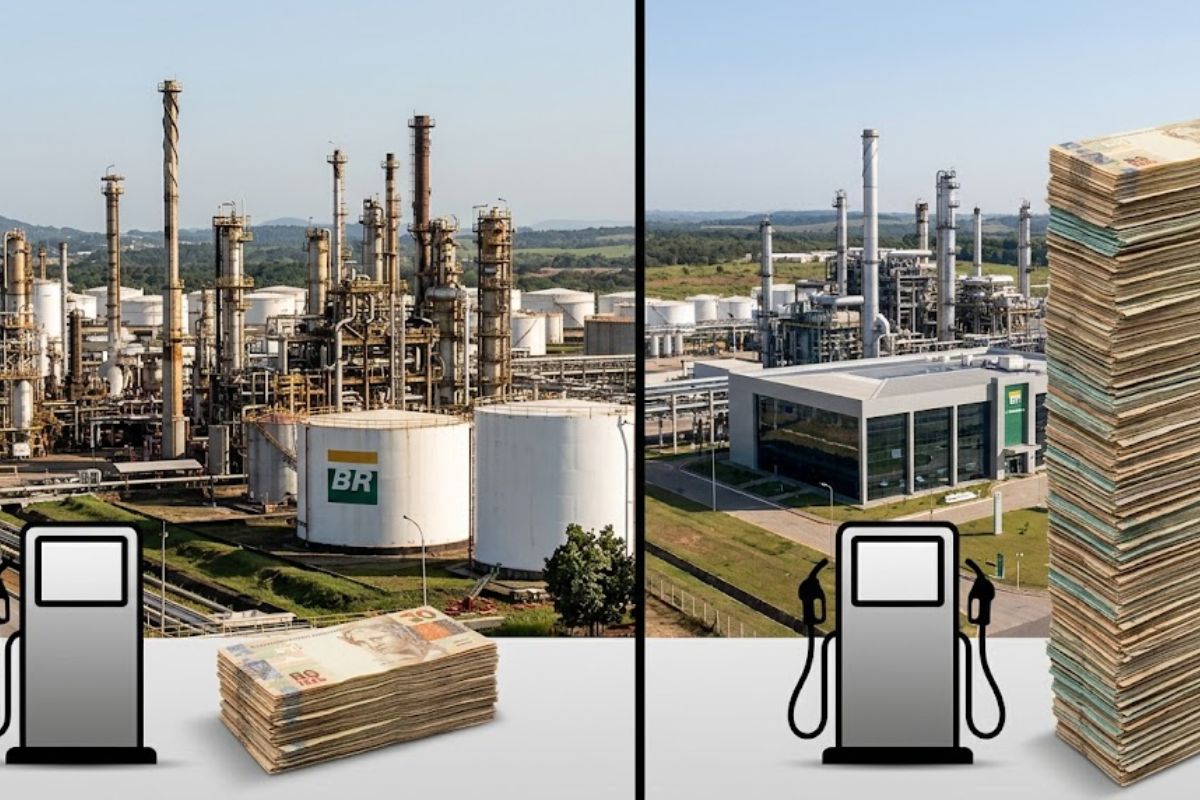

The Mataripe Refinery, in Bahia, privatized during Bolsonaro’s government in 2021, adjusted the price of diesel by 87% between February 27 and March 31, 2026, jumping from R$ 3.28 to R$ 6.15 per liter. In the same period, Petrobras adjusted the diesel from R$ 3.27 to R$ 3.65, an increase of 12%. The data was collected by the Brazilian Institute of Political and Social Studies (Ibeps) based on information from the companies themselves.
The result is that the diesel sold by Mataripe became 64% more expensive than Petrobras’s in the same month, using the same oil as raw material and serving the same consumer market. But Bahia is not the only case. Two other privatized refineries also adjusted much higher than the state-owned company during the crisis caused by the war in Iran and the closure of the Strait of Hormuz.
In Amazonas, Ream raised the diesel price from R$ 3.78 to R$ 5.10, an increase of 35%. In Rio Grande do Norte, Clara Camarão adjusted the S-500 diesel from R$ 3.33 to R$ 5.78, a rise of 74%. Meanwhile, Petrobras maintained the adjustment at 12% across all its refineries, absorbing part of the international volatility instead of passing it entirely to the consumer.
Why is the difference so large if the oil is the same?
The explanation lies in the pricing model.
-
After nearly two decades in operation, the Grupo Dass shoe factory ends production, confirms 150 layoffs, and shows how the drop in orders changed everything.

-
Pizza Day highlights a curious contrast in Brazil: while 13 new pizzerias open every day, the price of mozzarella skyrockets, and the country’s most beloved dish weighs increasingly on family budgets.

-
It’s official: Petrobras takes 75% of block 3 in São Tomé and Príncipe and debuts as an offshore operator outside South America.

-
US$ 1.5 billion dam project on the Rio Indio promises water for the Panama Canal for 50 years, but it could flood rural areas and displace 2,000 residents from 38 farming communities.



Privatized refineries operate with the so-called Import Parity Price (IPP), which links the price of diesel directly to the international quotation of the barrel, the dollar, and maritime transport costs.
When the barrel went from US$ 70 to over US$ 100 in March, with peaks of US$ 120 due to the closure of Hormuz, these refineries passed the increase entirely to the consumer.
Petrobras, being state-owned, has the margin to absorb part of the volatility, holding the internal price even when the international market spikes.
This does not mean that Petrobras operates at a loss, but that it accepts smaller margins in times of crisis to avoid direct impact on inflation and freight costs.
The problem goes beyond price
In the case of Ream, in Amazonas, the refinery reduced its refining operations and began to function basically as an import base.
In practice, Amazonas lost industrial capacity and became more dependent on imported diesel, precisely the type of fuel that is more expensive during international crises like the current one.
The federal government reacted with a subsidy package: R$ 0.32 per liter for domestic producers and R$ 1.20 per liter for importers, with costs shared between the Union and states, limited to R$ 4 billion.
Even with the subsidy, diesel at the pump reached R$ 7.26 per liter in the third week of March, the highest price of the year.
The road modal accounts for 65% of cargo in Brazil, and diesel represents up to 50% of operational costs on long-distance routes.
The discussion about the privatization of refineries gains a concrete element with the current crisis: instead of creating competition and lowering prices, as promised at the time of the sale, the privatized refineries created regional monopolies that pass on the rise in oil prices more intensely and quickly than Petrobras.
Same barrel, same month, same country: private diesel cost up to 87% more than Petrobras’s.
What do you think: did the privatization of refineries benefit the consumer or just the companies?