






 Portuguese
  Spanish
  5 min of reading
  0 comments


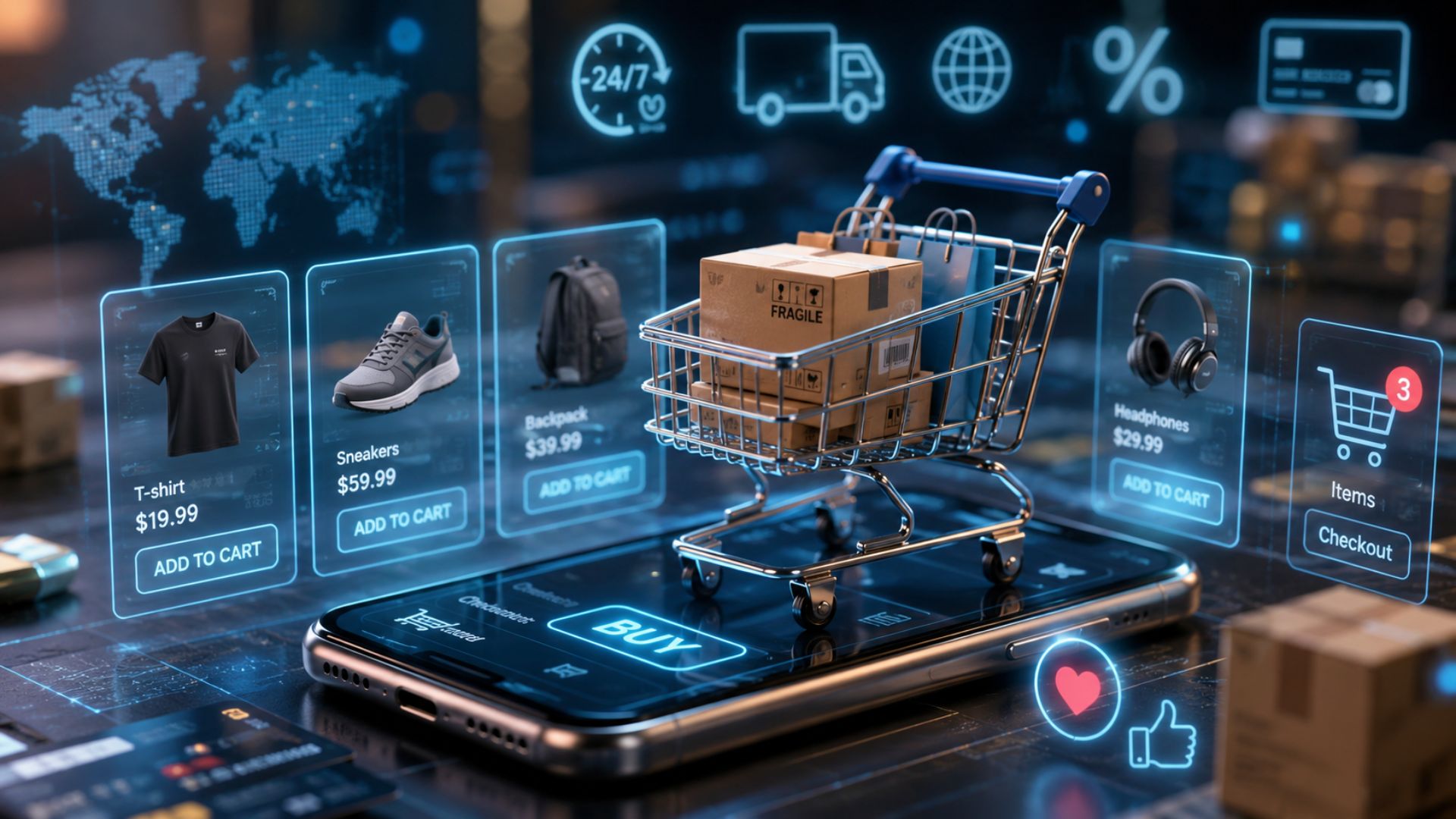
Online shopping has become part of the routine for millions of people worldwide. What once seemed like a distant trend is now a consolidated reality, present in the daily lives of consumers seeking convenience, speed, and savings. With just a few clicks, it is possible to buy practically any product without leaving home, from basic items to luxury goods, technology, and specialized services.
In recent years, the growth of e-commerce has accelerated impressively. The popularization of smartphones, the advancement of the internet, and the development of increasingly intuitive platforms have turned the habit of online shopping from an occasional activity into a common behavior. And everything indicates that this evolution is just beginning.
The future of online shopping promises even faster, smarter, and more personalized experiences. Technology is completely changing the way consumers find products, make payments, and interact with brands. Companies that wish to remain competitive need to constantly keep up with these transformations.
One of the main drivers of this change is artificial intelligence. Currently, digital platforms can understand consumer preferences and habits with enormous precision. When a person searches for a specific product, visits specific categories, or adds items to the cart, the systems analyze this information to offer recommendations aligned with the consumer’s profile.
-
São Paulo Offers Over 13,000 Job Openings: Opportunities in Industry, Logistics, and More Across the State

-
Brazil’s BNDES Allocates $65 Million to Fund 85,000 E-Bikes for App-Based Delivery Workers, Offering Purchase Discounts and Leasing Options to Boost Income and Improve Delivery Operations
-
JBS Invests Nearly $160 Million in Texas Megaproject to Expand Beef Production and Operations Through 2027

-
The urgent need to implement a severe cut in public spending and a massive increase in taxes, in addition to drastically compromising the quality of basic services and the purchasing power of the population, could result in social unrest in the country, with the population leading protests, strikes, and frequent disturbances.


This makes the experience much more personalized. Instead of browsing through thousands of random options, the user starts to see products that truly make sense for their interests. In the future, this personalization will be even more advanced, creating almost exclusive shopping journeys for each customer.
Another factor that directly influences the growth of e-commerce is the convenience offered by mobile apps. Today, a large portion of online purchases happens via mobile phones. People search for prices, track promotions, and complete orders anywhere, whether during work, on public transport, or while watching TV at home.
Therefore, companies are increasingly investing in fast, intuitive, and secure apps. User experience has become one of the most important factors for the success of any digital platform. The modern consumer values simplicity, speed, and efficiency throughout the entire purchasing process.
Delivery speed will also be a decisive differentiator in the coming years. Large companies already use automated logistics centers and routing intelligence to make deliveries faster and faster. In some regions, orders placed in the morning arrive on the same day to the consumer.
The trend is for this standard to continue evolving. Today’s consumer wants to track all stages of delivery in real-time and expects to receive their products with maximum agility. This means that logistics and technology work together to offer increasingly efficient experiences.
Besides practicality, saving money remains one of the most important factors for those who shop online. Even with all the technological advancements, consumers continue to be alert to opportunities to save without compromising on quality. Promotions, cashback, and exclusive discounts continue to attract millions of people daily.
Many consumers, for example, look for alternatives such as a Mercado Livre coupon to get more advantageous prices before finalizing their purchases. This search for savings is part of modern consumer behavior, using the internet not only for convenience but also for the possibility of finding better deals.
Another point that is expected to gain even more strength in the future is the use of augmented reality. This technology allows consumers to visualize products in real environments before completing a purchase. In the decoration segment, for example, there are already apps capable of showing how a piece of furniture will look inside the user’s home.
In fashion, some brands are developing virtual fitting rooms that simulate clothes and accessories on the consumer’s body. This reduces doubts, improves the shopping experience, and helps decrease returns and exchanges.
Virtual reality also promises to revolutionize e-commerce in the coming years. Instead of accessing traditional pages, consumers will be able to visit immersive digital stores using specific glasses. It will be possible to walk through virtual aisles, analyze products in 3D, and even interact with digital sellers in fully simulated environments.
Social media also plays a fundamental role in this transformation. Currently, many people discover products while watching short videos, following influencers, or participating in live broadcasts. Consumption has become directly connected to entertainment.
This movement has driven the growth of social commerce, a model where the purchase takes place within the social platforms themselves. Users can learn about the product, watch reviews, and finalize the order without leaving the app.
Live sales are also gaining ground in various sectors. Companies use live broadcasts to present products, offer exclusive promotions, and interact directly with consumers in real-time. This format creates a closer and more dynamic experience.
Another important aspect is the evolution of payment methods. The future of online shopping will be marked by increasingly fast and secure processes. Digital wallets, facial biometrics, fingerprint authentication, and automatic payments are expected to become even more popular.
The intention is to make the checkout process almost instantaneous. The fewer steps there are between the desire to purchase and the payment, the higher the conversion rate tends to be for digital platforms.
At the same time, concerns about online security are growing. With the increase in digital transactions, consumers want to be sure that their data is protected. Therefore, companies are constantly investing in advanced encryption, two-step authentication, and intelligent fraud prevention systems.
Sustainability will also be an increasingly present theme in e-commerce. Modern consumers value companies that adopt responsible practices, such as recyclable packaging, waste reduction, and less polluting logistics.
Many brands are already investing in electric vehicles, delivery optimization, and environmental compensation programs. In the coming years, these initiatives will cease to be just differentiators and will become a natural market requirement.
Another important movement is the integration between physical and digital stores. Retail is moving towards an omnichannel model, where the consumer can start their experience in one channel and finish in another without any difficulty.
A person can research online, test the product in person, and complete the purchase through the app, all in an integrated way. This connection between physical and digital tends to become increasingly natural.
The future of online shopping will be marked by the combination of technology, convenience, and personalization. Consumers will have faster, smarter, and more efficient experiences, while companies will need to constantly innovate to keep up with new market demands.
More than just selling products, the e-commerce of the future will be responsible for creating complete experiences, capable of combining convenience, savings, and connection with the modern consumer.





Be the first to react!