Portuguese
  Spanish


Billings stores enough water to be strategic against the water crisis, but the largest urban reservoir in the country has become a symbol of a São Paulo surrounded by sewage, irregular occupation, and environmental neglect
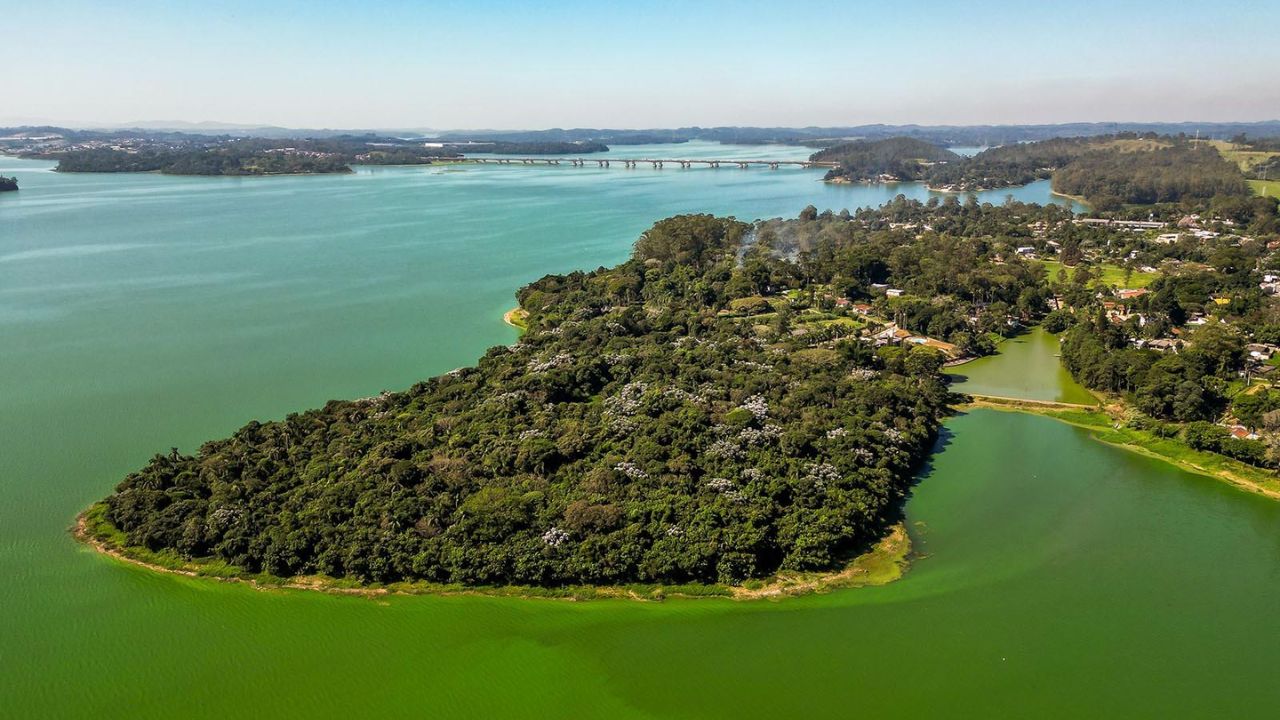
The Billings Reservoir has become a kind of brutal portrait of São Paulo. On one side, one of the largest water resources in the country, essential for water, energy, flood control, and climate security of Brazil’s largest metropolis. On the other, sewage, irregular occupation, microplastics, and a clandestine real estate pressure advancing over protected areas.
According to The Guardian, Billings has 127 km² and is considered the largest urban reservoir in Brazil by area and volume. The figure is even more alarming when it appears alongside another number: as reported by Secom, based on IBGE, the São Paulo Metropolitan Region has 21.6 million inhabitants. In other words, it’s not just a reservoir. It’s a strategic piece for a region that concentrates a population larger than that of many countries.
The reservoir that was born to generate energy became a vital piece against the water crisis
According to the São Bernardo do Campo City Hall, Billings is not a natural lake. It was built to function as a hydroelectric power generation reservoir, linked to the utilization of the Serra do Mar’s elevation and the history of the Henry Borden Plant.
-
Engineers Develop Jacket That Converts Air Humidity Into Drinkable Water, Producing Up to 900 ml Daily for Hikers, Campers, Rescuers, Rural Workers, and Military in Remote Areas

-
NASA Plans to Repurpose Mars Rover for Lunar Mission, Sending a 1-Ton Nuclear-Powered Vehicle to Explore the Moon’s South Pole Without Solar Dependence
-
Early Humans Made Beds Nearly 200,000 Years Ago in African Caves, Study Reveals

-
Japanese Smart Bike Detects Cyclist’s Intent to Turn and Potential Falls


The problem is that, a century later, what was born to drive São Paulo’s industrialization has taken on another role: that of a strategic water reserve in a metropolis squeezed between urban growth, extreme heat, disordered occupation, and water crisis.
According to Agência SP, the interconnection between Billings and the Alto Tietê System began in January 2026, is expected to be completed in 2027, and foresees an investment of R$ 1.4 billion. The project will allow the capture of up to 4,000 liters of raw water per second from the Rio Pequeno arm and pump this volume to the Taiaçupeba reservoir.
Still according to Agência SP, Billings has a total storage capacity of 1.13 trillion liters. It’s a gigantic number. But it comes with an uncomfortable question: how did São Paulo reach the point of increasingly relying on a reservoir surrounded by pollution, sewage, and illegal settlements?
Sewage, microplastics, and strong odor expose the environmental wound of Billings
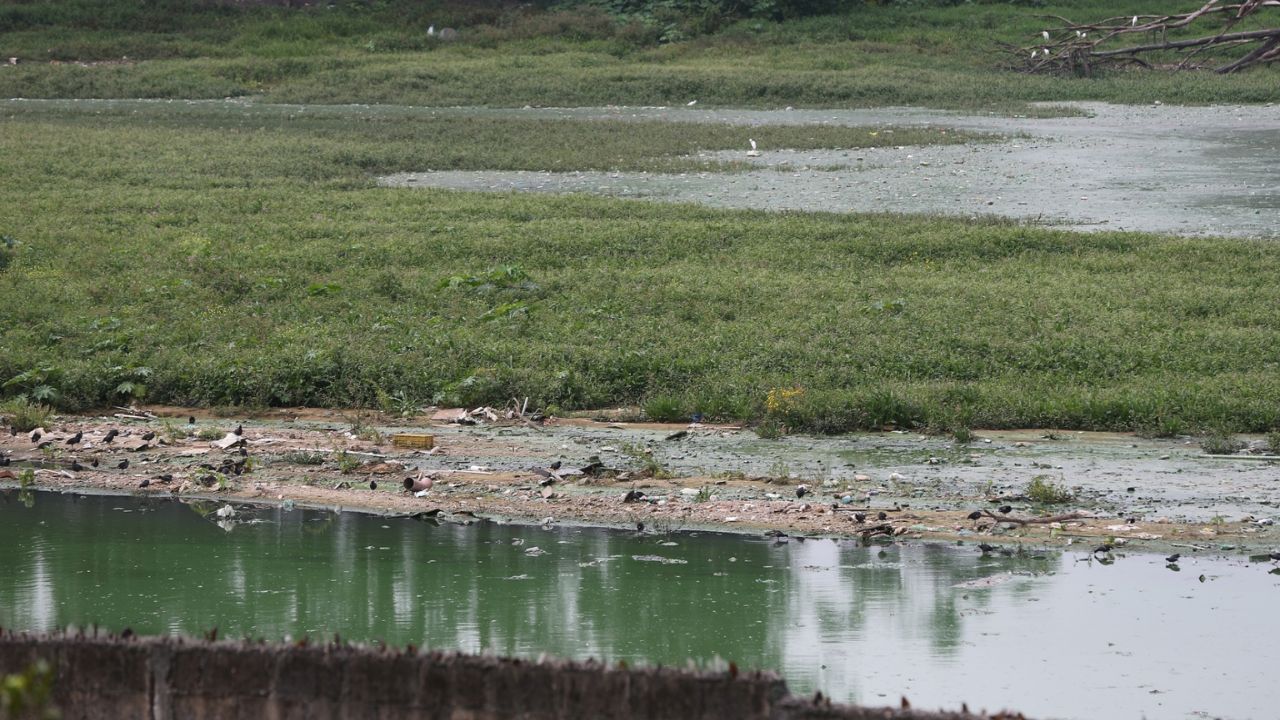
The beautiful image of water surrounded by greenery hides a harsh reality. According to The Guardian, large areas of Billings are contaminated by domestic and industrial waste, pharmaceutical waste, microplastics, and fecal matter.
The situation is not just visual. It is sanitary, urban, and political. The reservoir is under pressure from neighborhoods without adequate infrastructure, contaminated streams, irregular disposal, and settlements encroaching on areas meant to protect the water source.
According to Semil, the São Paulo Government articulated in February 2026 an integrated plan to contain the bad odor in the Billings Reservoir, with actions for sanitation, inspection, and monitoring of water quality until 2028. The department itself classified the problem as structural, associated with irregular sewage discharge, disordered land occupation, and environmental degradation around the reservoir.
The most alarming data came from the same Semil: in some sub-basins, the pollutant load is up to four times higher than the environmentally acceptable limit. In other words, the reservoir that São Paulo wants to use as a shield against the water crisis also bears signs of urban collapse.
Clandestine subdivisions and organized crime advance over protected areas
Billings is protected by law. According to the São Paulo Legislative Assembly, the State Law No. 13,579, of July 13, 2009, defined the Protection and Recovery Area of the Water Sources of the Billings Reservoir Basin as a water source of regional interest for the supply of current and future populations.
But the law alone did not stop the advance of the illegal city. According to the São Paulo City Hall, criminals operate in protected areas, mainly in the Guarapiranga and Billings reservoirs, with deforestation, illegal subdivision, and sale of houses in water source areas.
The city hall states that these groups invade or buy cheap land, clear vegetation, and build gated communities to profit from the sale of properties. It is a simple and devastating mechanism: the forest falls, the soil is exposed, the occupation grows, and water pays the price.
According to The Guardian, sources interviewed for the report also mentioned the involvement of networks linked to local interests, land grabbers, political agents, and organized crime groups around illegal constructions. Therefore, the Billings case has ceased to be just an environmental issue. It has also become an issue of public safety, housing, sanitation, and urban governance.
Fines, oversight, and a question São Paulo cannot avoid


The problem has also reached the center of the sanitation debate. According to CNN Brasil, Cetesb imposed two fines on Sabesp, totaling R$ 1 million, following incidents of illegal sewage discharge into the Tietê River, Pinheiros River, and Billings Reservoir. The report stated that the fines were imposed starting in December 2025.
Sabesp, according to CNN Brasil, stated that the region has historical challenges, high population density, and a need for sewage network expansion. The explanation shows the extent of the impasse: there is no simple solution for a reservoir surrounded by urban inequality, old occupation, sanitation failures, and real estate pressure.
Billings is not a distant landscape. It is a warning within the metropolis itself. If recovered, it could be one of São Paulo’s greatest allies against water scarcity. If it continues to be treated as the city’s backyard, it could become the symbol of an impending crisis.
In the end, the question that remains is harsh: how does Brazil allow a reservoir with a strategic role for millions of people to be surrounded by sewage, microplastics, illegal settlements, and organized crime?