Portuguese
  Spanish


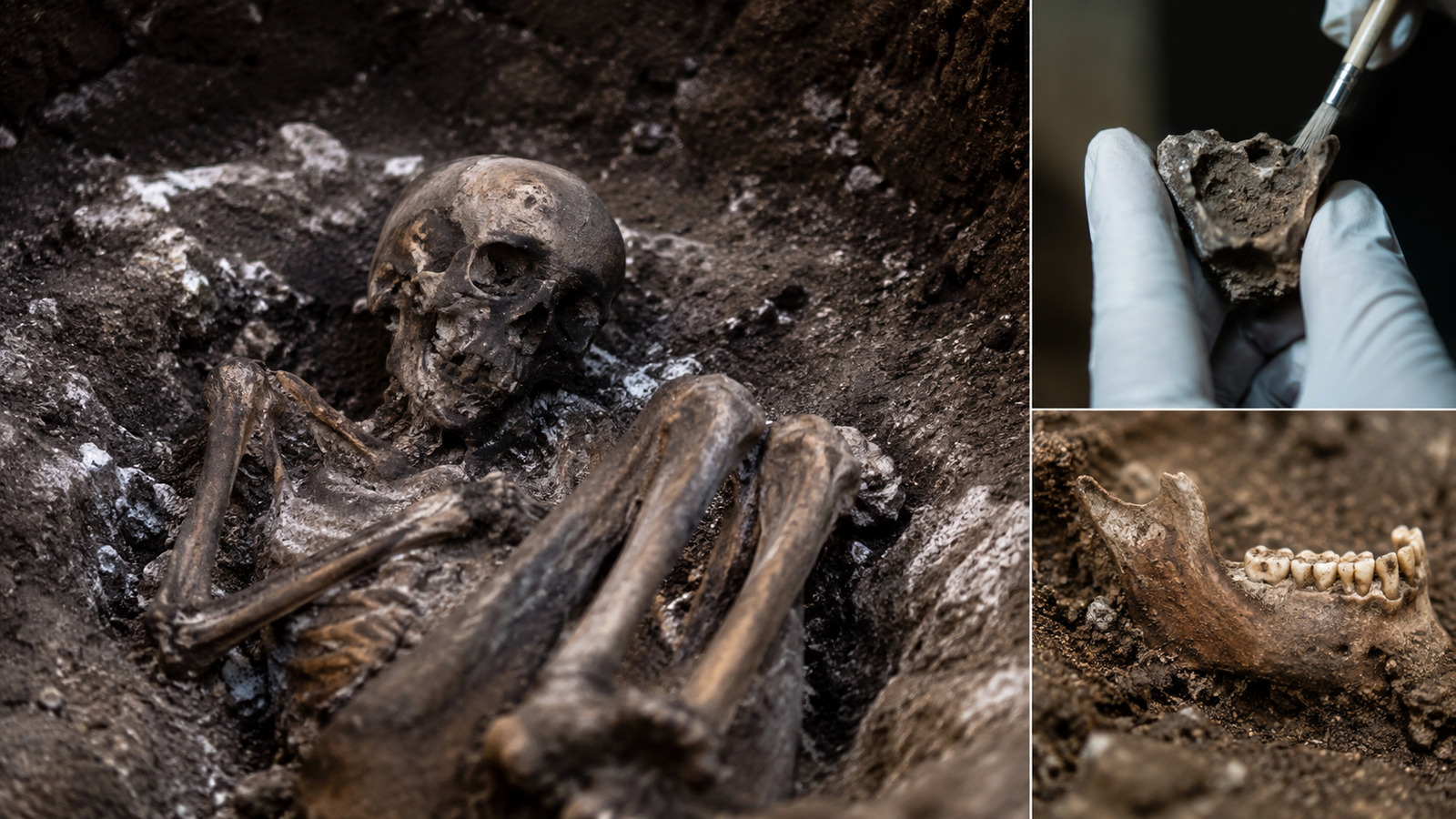

Discovery in eleven Southeast Asian sites revealed human remains preserved by smoke over 12,000 years ago and changed the chronology of intentional mummification
Human remains with mummification over 12,000 years old, found in eleven Southeast Asian sites, changed the chronology and were chosen by Historia National Geographic as the greatest archaeological discovery of 2025.
Smoke mummification changed the timeline
For over a century, archaeology manuals placed the oldest origins of mummification in two locations: Egypt, with practices 4,500 years old, and Chinchorro, in Chile, with mummies around 7,000 years old.
This axis between Africa and America seemed consolidated. In September 2025, the Australian National University broke this interpretation by identifying human remains preserved over 12,000 years ago in eleven Southeast Asian sites.
-
15-Year-Old American Builds Ocean Generator with PVC Pipe and 3D-Printed Propeller for $12, Wins National Prize, Presents at White House, and Makes Forbes 30 Under 30 List

-
$12 Billion Invested in AI Data Centers in Semi-Desert Mexican State, But 17 of 18 Municipalities Now Face Water Shortages, Residents Receive Water Only 3 Days a Week
-
How Much Does Starlink Satellite Internet Cost for Cars, Trucks, and RVs? Prices for Antenna, Accessories, and Plans

-
Scientists Convert Food Waste into Aviation Fuel, Successfully Test 50% Blend with Conventional Kerosene to Cut Emissions and Promote Sustainable Flights




The find predates the Egyptian and Chinchorro records. It doubles the previous estimate for mummification and shows that prehistoric communities performed complex rituals earlier than previously thought.

How the bodies were preserved
The remains were not preserved by dry sand or extreme cold. Evidence points to a deliberate dehydration process by smoke, done with controlled heat.
This technique heated and dried the body, creating difficult conditions for bacteria and slowing decomposition. The marks required advanced chemical analyses and comparisons with markers from other methods.
The distribution of the sites indicates that the practice did not belong to an isolated group. It appears as a tradition spread across communities in tropical forests, humid caves, and areas where natural preservation would be unlikely.
The humidity of Southeast Asia should have destroyed organic traces long before. Even so, the remains have reached the present with signs of intentional preservation.


What the discovery reveals about ancient rituals
The discovery changes the way archaeology understands the human relationship with death. For a long time, mummification was seen as a late innovation, linked to civilizations with social hierarchies and resources for elaborate ceremonies.
The mummies of Southeast Asia contradict this idea. 12,000 years ago, the world was still inhabited by hunter-gatherers, but some communities developed sophisticated funerary practices to preserve the dead.
This indicates that concern with memory, the body, and what happens after death is older than the dominant archaeological record suggested.
Without the resources of Egyptian mummification, tropical communities found their own ways. The smoke solution shows technical creativity where the conservation of organic matter was difficult.
Why Southeast Asia was left out of the center
The absence of Southeast Asia in the archaeological record has a climatic explanation. Humid tropical forests quickly destroy bones, tissues, and organic artifacts, making it difficult for remains to survive.
There is also an academic dimension. World archaeology concentrated resources and attention on classical centers of the Mediterranean, the Nile, and the Americas. Regions with less visibility received fewer excavations and funding.
The finding by the Australian National University serves as both a discovery and a warning. Human history developed in many places, and part of this diversity remains outside the global scientific debate.

Other findings of 2025 also drew attention
The Historia National Geographic evaluated other finalists in 2025. A Mayan monument revealed a 3,000-year-old map of the cosmos, with astronomical alignments under study.
There was also a medieval ship in Barcelona and a fresco in Pompeii linked to an unknown cult, with iconography that has no correspondence in known Roman religious records.
Still, none of them altered a central theoretical milestone regarding Asian mummies. The strength of the discovery lies in reorganizing a narrative, not just adding a new episode to archaeological knowledge.
What changes in the understanding of cultural evolution
The discovery raises a question that will remain open: did mummification arise independently in different places and times, or was there some form of cultural transmission between distant groups?
The Southeast Asian mummies are 5,000 years older than those of Chinchorro. The geographical distance makes direct contact unlikely, suggesting that different groups arrived at similar solutions through their own paths.
Preserving the dead, resisting oblivion, and maintaining symbolic ties with those who have died may be ancient human responses. The distance of 12,000 years does not erase this continuity. It makes it clearer.
With information from Catraca Livre.