Portuguese
  Spanish


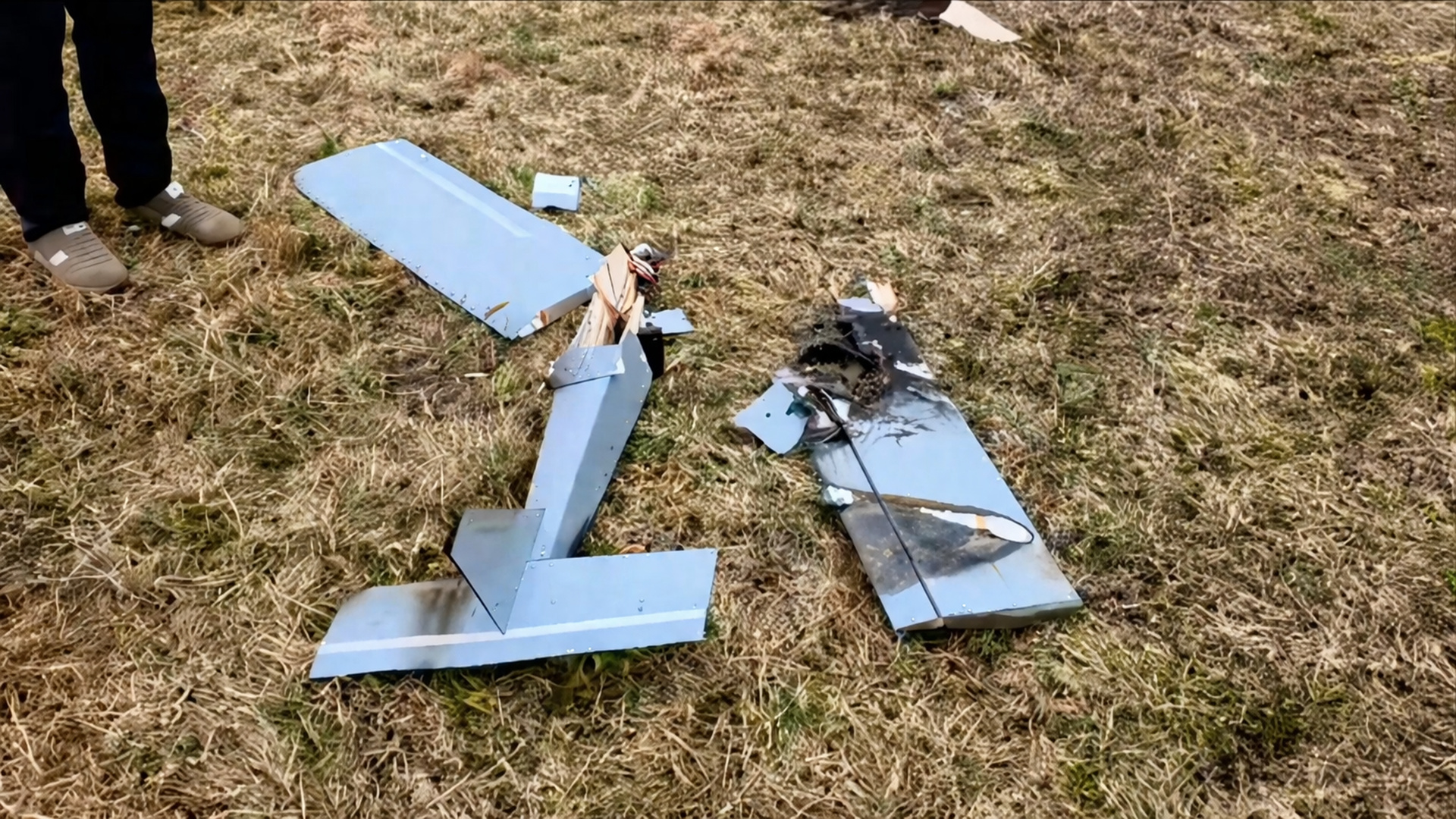

The laser weapon developed by the Russian LazerBuzz has increased its range against drones to 1.5 kilometers, surpassing the previous mark of 1 km and entering a new phase of testing with radar integration, focused ytterbium laser use, and advancement within the Posokh project.
The laser weapon developed by the Russian company LazerBuzz has extended its range against drones to 1.5 kilometers, in a new testing update presented under the Posokh Project. The advancement was reported by the Russian state agency TASS and marks another step in the development of directed energy defenses aimed at countering small unmanned aerial threats.
The new result indicates an evolution compared to previous tests and was described by the company itself as part of a continuous modernization process of the system. LazerBuzz stated that the interception occurred against a drone of the aircraft type at a distance of 1,500 meters, but emphasized that this would not yet be the final configuration of the technology.
Although the report represents a visible milestone in the program, the data available so far is limited to what has been disclosed by the company and reproduced by TASS. There are currently no official military assessments or independent tests made public to confirm the reported performance.
-
In Andradina, in the interior of SP, a tannery transformed tilapia skin that slaughterhouses used to throw away into exotic leather for bags, shoes, and even wedding dresses, producing about 2,000 pieces per month and exporting to seven countries, proving that fish waste has become high-value fashion.

-
The industrial waste that even recyclers didn’t want has gained value in the interior of Bahia: two entrepreneurs invested R$ 2.8 million to transform 350 tons per year of foam, rubber, and plastic into boards that can replace wood and MDF.

-
What is a red flashlight used for, after all? See why it is so commonly used at night.

-
He has never read a line of code, but he already knows how to work: the French company UMA presented in Paris the Northstar, its first AI-powered humanoid robot designed for factories and warehouses, capable of copying tasks just by observing an employee in action.



Laser weapon increases range in new phase of the Posokh Project
TASS reported that the system uses focused ytterbium laser technology to inflict physical damage on drones. In practice, this means that the equipment seeks to destroy components through direct heating, rather than resorting to electronic interference to neutralize the target.
This method requires that the energy remains concentrated long enough in a critical area of the drone to cause structural failure or fire. The data released by LazerBuzz suggests that the program continues to be updated, with changes still underway in the pursuit of greater range and better engagement capability.
The advancement to 1.5 kilometers surpasses previous milestones already reported by TASS itself. In December 2025, the agency had reported that the system had hit an FPV drone at a distance of 1 kilometer, in a test where internal components, including the battery, were damaged until the device caught fire and fell.
Integration with radar strengthens evolution of the anti-drone system
Another important milestone was recorded on March 27, 2026, when TASS reported the integration of the laser weapon with a radar. The measure was presented as part of a detection, tracking, and engagement process capable of countering FPV drone maneuvers.
Representatives of the company stated that unmanned aerial vehicles flying between 130 and 140 km/h were activated about 1 kilometer away. This data helps to show that the system is not being treated merely as an isolated beam, but as part of a broader anti-drone defense structure.
As a result, the program suggests a change in scope, moving from an independent laser to a more comprehensive platform, supported by sensors and tracking means. The addition of radar is pointed out as a central step, because locating and tracking small, low-flying drones is often as relevant a challenge as generating the power necessary to fire the beam.
TASS also reported that LazerBuzz is working on an acoustic sensor subsystem. If the resource advances, it could enhance early warning and strengthen detection capabilities in low-visibility scenarios.
Technical limitations still surround the laser weapon
Despite the announced progress, the result of 1.5 kilometers still requires caution in interpretation. A single successful interception does not, by itself, prove consistent performance in a real combat environment.
The operation of a laser weapon depends on factors such as beam quality, tracking precision, time spent on target, and atmospheric conditions. These elements can directly affect the ability to maintain energy focused on the exact point necessary to destroy critical parts of fast and agile drones.
Conditions such as rain, fog, dust, and complex terrains also remain relevant variables, but still lack public details on performance. There is a lack of information on output power, cooling systems, deployment timelines, and operational behavior in adverse situations.
Previous reports also mentioned faster engagement times. A September 2025 update indicated the destruction of drones in about three seconds, while a November report cited automatic engagements in just half a second, marks that, if confirmed, could have decisive weight in real scenarios.
At the current stage, interception at 1.5 kilometers appears as a sign of continuous progress, rather than confirmation of a definitive leap.
The result points to improvements in tracking, system integration, and beam control, but still does not prove consistent effectiveness against a wide variety of unmanned aerial threats.
With information from TASS.