






 Portuguese
  Spanish
  5 min of reading
  0 comments


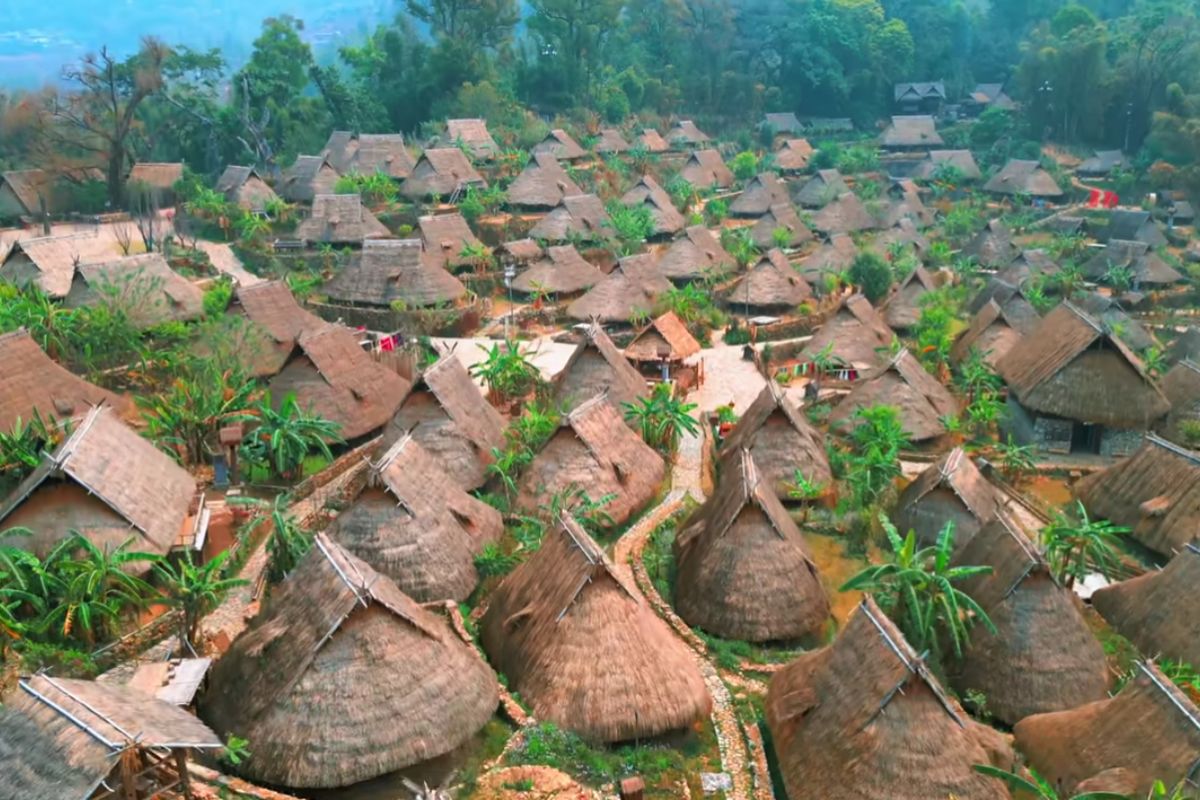
In the province of Yunnan, in southwest China, the village of Wengding houses the Wa people in a centuries-old community where all houses are built with wood and thatch, and the residents preserve the millennial ceremony of transporting the sacred drum from the forest to the village, a ritual that lasts three months and makes Wengding the last place in the country where Wa culture survives wholly.
The Wa people of China have inhabited a village called Wengding for over four centuries, in the mountains of Yunnan, a region where the name of the community means, in the local language, “place covered by clouds and mist.” The village preserves intact the traditional gates, totems, sacrificial houses, sacred forests, and artisan workshops that define the identity of this ethnicity, whose ancient designation in the Wa language translates as “people of the mountains.” The term Wengding also evokes the beauty of clouds over the mountain lakes, and the landscape confirms the poetry of the name: the community is surrounded by dense woods, terraced fields, and a mist that rarely dissipates.
What sets Wengding apart from any other community in China is the total absence of masonry. No building in the village uses brick or concrete: all follow the pattern of the Wa people, with a wooden frame, thatched roof, and bamboo floors. The residences have two floors, with the ground floor reserved for animals and storage and the upper floor for living, having a stove in the center and rooms on the sides. The high altitude of Yunnan ensures mild summers and natural ventilation that dispenses any air conditioning. It is in this setting that the sacred drum echoes every time the forest yields one of its trees to the community.
The sacred drum that the Wa people have pulled from the forest for over a thousand years

The most important ritual of Wengding is the wooden drum ceremony, a practice with over a millennium of existence that mobilizes the entire community. The process begins with the selection of a specific tree in the sacred forest, goes through the cutting and collective transportation of the trunk to the village, and extends for about 90 days, occupying the period between the beginning of autumn and the end of November. The drum sculpted from this trunk occupies a central position in the folk celebrations of the Wa people and is considered one of their main objects of veneration.
-
Federal Police involved in the case to identify the person responsible for hacking the Civil Defense system, which sent ten false alerts, frightened residents of different capitals, and turned messages about real risks into notifications with “misanthropy” and even alien attacks.

-
Extreme drought causes ghost village to reappear at the bottom of the reservoir that supplies Athens, revealing houses, a school, and ruins swallowed since the 1980s as the lake shrinks and exposes the water crisis threatening the capital of Greece.

-
An entire village lay asleep at the bottom of a lake for 3,000 years: divers suction sediments in Italy and reveal more than 600 wooden stakes, bronze tools, and traces of a Bronze Age settlement hidden underwater.
-
They call it the “Shopee house” and even cardboard, but the R$ 20,000 house is a certified Wood Frame from Alea, financed by Minha Casa Minha Vida: understand if it’s worth more than masonry.



The ceremony is conducted by a respected elder, who opens the ritual by sprinkling fermented drink and uttering sacred words directed at the chosen tree. In the oral tradition of the Wa people, the elder treats the tree as the sovereign of the forest and invites it to return to the community in the form of an instrument. Participants are guided to discover the head in a sign of reverence to the village spirits, and the elder distributes blessed elements that, according to belief, ensure protection for those present. The practice dates back to a matriarchal phase of Wa history and is inscribed on the list of intangible cultural heritage of Yunnan province in China.
The sacred forests of Wengding that no one can cut down

To the east of the village extend woods that the Wa people call “Yamowe” in their language, a term composed of the words that designate forest and protective deity of the community. These areas are treated as spiritual territory, and no tree can be removed without ritual permission, which has kept the vegetation around Wengding preserved for centuries. It is from this forest that the trunks for the sacred drums, the wood for the houses, and the materials used in blessing rituals come.
The relationship between the Wa people and the forest functions as a system of mutual protection. By considering the inviolable woods, the community ensures the survival of the natural resources that sustain both their spirituality and their material life. In contemporary China, where urbanization has advanced over most traditional biomes, Wengding represents a rare case of balance between human occupation and forest conservation maintained by cultural conviction, not by governmental imposition.
The 2021 fire and the reconstruction of the village by the Chinese government

In 2021, a fire devastated Wengding and reduced all the wooden and straw constructions that made up the village to ashes. The absence of any fire-resistant materials caused all the houses of the Wa people to be consumed, threatening to erase centuries of architectural and cultural heritage in one fell swoop. The residents were displaced, and the Chinese government intervened by constructing a new community nearby to house them.
The original site of Wengding has been reconstructed following traditional standards and converted into a space dedicated to showcasing Wa culture. The residents return daily to demonstrate practices such as rice husking, the preparation of Pu’er tea, typical of Yunnan, and the making of traditional clothing. An octogenarian resident, for example, displays ceremonial attire of the elderly Wa people in exchange for a modest daily payment, which she only receives on the days she attends. The sacred drum continues to be carved, and the ceremony continues to be held, now with an additional layer of meaning: to rebuild not only houses but the continuity of a culture that nearly vanished in the flames.
What Wengding Reveals About Cultural Preservation in China
The Wa people’s village serves as a living laboratory for a dilemma that China faces in various regions: how to preserve ancestral cultures without freezing them in time. The model adopted in Wengding separates housing and heritage, allowing the Wa to live in safer conditions outside the historic village while maintaining a daily connection to their traditions within it. The result is a hybrid arrangement that pleases those who value preservation but raises questions about the authenticity of a culture displayed as an attraction.
The terraced fields around Wengding continue to produce rice and corn, the Pu’er tea from Yunnan is still prepared by elders of the Wa people, and the sacred drum is still pulled from the forest by the entire community. China has formally recognized the value of this heritage by including Wengding in the cultural heritage protection list, but the sustainability of the model depends on whether the next Wa generation chooses, of their own volition, to continue beating the drum. And that is a question that no government decree can answer.
And you, were you aware of the existence of the Wa people and the village of Wengding? Do you think separating housing and cultural preservation is the best way to protect traditions like this in China? Leave your opinion in the comments.





Be the first to react!