






 Portuguese
  Spanish
  3 min of reading
  0 comments


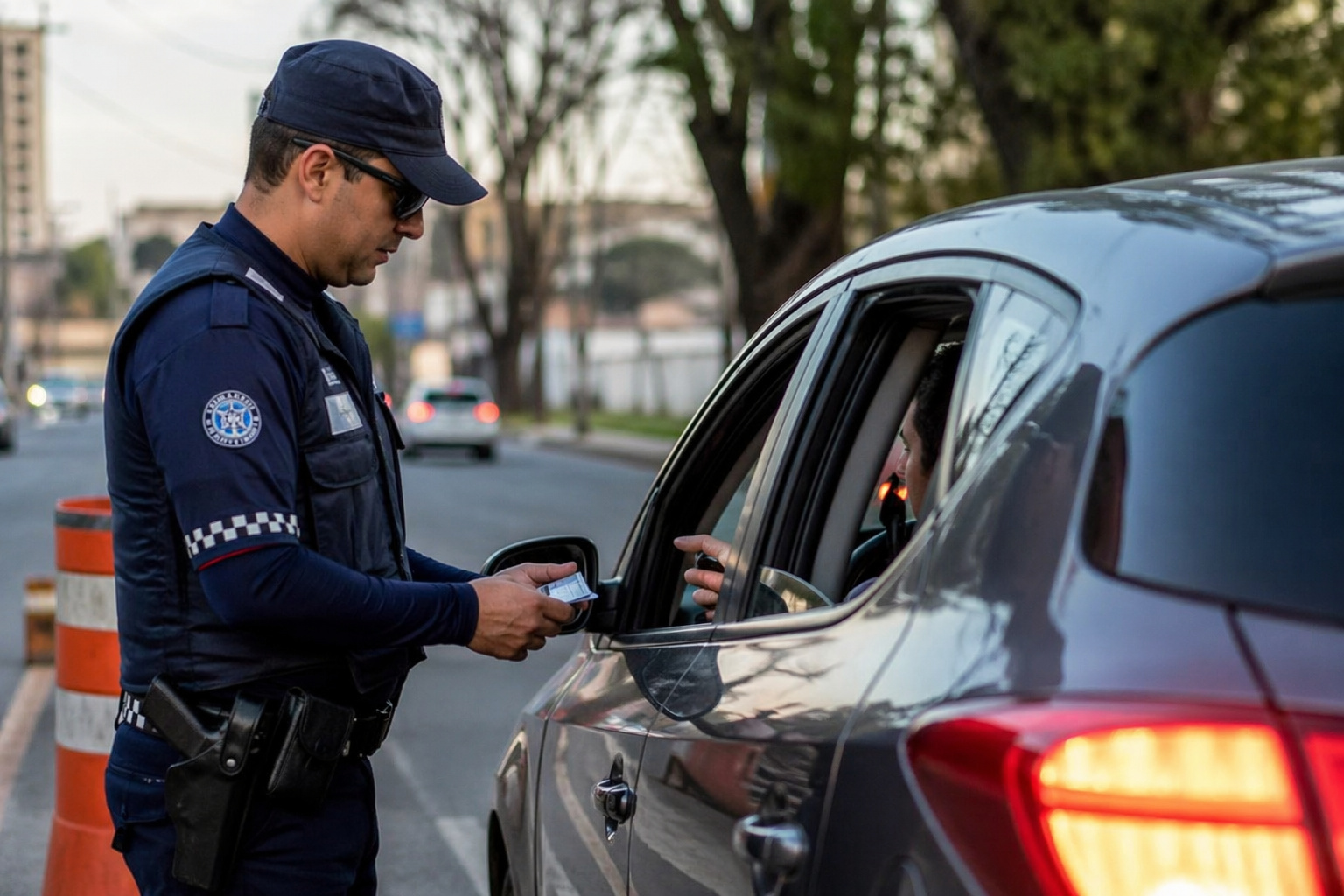
Irregular documentation, late licensing, and inappropriate behavior lead to violations in traffic inspections across Brazil
An apparently simple traffic stop can quickly turn into a significant financial and administrative problem for the driver.
In 2026, according to the current rules of the Brazilian Traffic Code (CTB), maintained and enforced by agencies such as Senatran (National Traffic Department), the decisive factor in a blitz remains compliance with the basics.
The validity of the driver’s license, updated licensing, and the driver’s behavior during the stop are elements that, in practice, define the outcome of the inspection.
-
Two new 300cc models from QJ Motor are expected to arrive in Brazil as SBM to target the CB 300F and shake up the low-displacement market, with more power and liquid cooling than Honda.

-
Camaro may reappear in 2027, but not as you remember: Chevrolet prepares the return of the icon with four doors, manual transmission, and an extreme performance version to face the new era of sports cars.

-
Is the BYD Song Pro worth it? The Anderson Sincero channel says it doesn’t exceed R$ 140,000, and the price dropped by R$ 47,000, reinforcing the depreciation of the plug-in hybrid in the Fipe table.
-
Caoa Changan CS75 arrives for R$ 199,990 with 4.77 m in length, a trunk of up to 1,620 liters, 8-speed Aisin transmission, 180 hp, 37.2 inches in screens, and Zero Gravity seat with massage.


According to recurring guidance from traffic authorities since 2023, most violations do not occur due to ignorance of the law, but rather due to neglect of fundamental rules.
Inspection goes beyond alcohol testing and covers basic everyday items
Although many drivers associate blitzes only with alcohol testing, the inspection covers various aspects of the vehicle and the driver’s conduct.
During the stop, therefore, points such as documentation, mandatory equipment, license plate conditions, and seatbelt use are evaluated.
Additionally, irregularities that can be verified on the spot tend to result in immediate violations, precisely because they are easily checkable.
On the other hand, inappropriate behaviors also weigh on the outcome of the stop.
Disobeying the stop order, hindering the inspection, or presenting visible administrative issues turns a simple mistake into an infraction with immediate consequences.
Mandatory documents remain decisive during the stop
Keeping documents accessible continues to be one of the main recommendations to avoid complications.
In 2026, according to Senatran guidelines, the driver can present both physical and digital versions of the mandatory documents.
Among them, the valid CNH and the updated CRLV stand out, which prove the regularity of the driver and the vehicle.
Thus, the quick presentation of these documents speeds up the stop and reduces the risk of additional questioning.
Additionally, it facilitates the agent’s work, who needs to confirm the information in a few minutes.
By ensuring these aspects are in order, the driver minimizes the risk of being penalized during inspections.
Additionally, staying informed about traffic regulations and updates is crucial for safe driving.
Ultimately, a proactive approach can lead to a more pleasant driving experience.
This care significantly reduces the risk of being fined for simple failures.
In the current scenario, as reinforced by the guidelines of the CTB and traffic authorities, the outcome of a checkpoint depends on the combination of document regularity, vehicle compliance, and appropriate behavior.
In light of this, those who keep these three pillars under control face inspections with more security and predictability — after all, is it worth risking a fine for a mistake that could be avoided in just a few minutes?


Be the first to react!