Portuguese
  Spanish


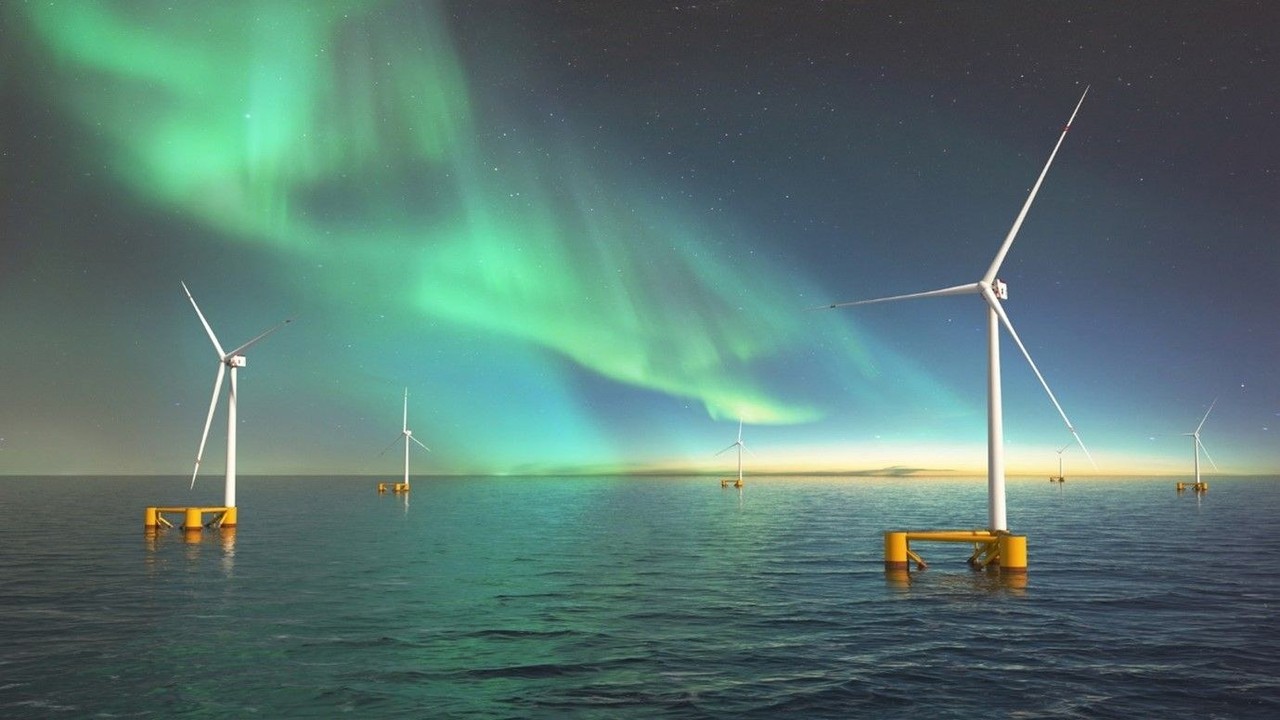

While France is already delivering energy from turbines floating in the Mediterranean and Japan is advancing in the same direction, Brazil, owner of some of the best ocean winds on the planet, is only now beginning to set up its first floating offshore wind farm.
There is a clean energy technology that has ceased to be a promise and has become a reality around the world, and Brazil is arriving late to it. The floating wind, where turbines are on structures that float in the sea instead of being fixed to the seabed, is already generating real electricity in France, where Ocean Winds has started delivering energy from its park in the Mediterranean. Japan and other countries are firmly following the same path.
The detail that makes this delay almost ironic is that Brazil has some of the best ocean winds in the world, especially in the South and Northeast, considered world-class by those who study the sector. Even so, the country is only now beginning to set up its first floating wind farm, with foreign investment planned for Rio Grande do Sul. It’s a classic case of sitting on a treasure and taking too long to open the vault.
Why floating changes everything
The difference between floating wind and traditional wind seems small, but it changes the entire game. In fixed turbines, the base is anchored to the seabed, which only works in shallow waters, near the coast. When the sea gets deep, anchoring becomes impossible. The floating solution solves this by placing the turbine on an anchored platform that floats, allowing access to deep ocean areas where it was previously not possible to generate energy.
-
Brazilian Researcher Develops Protein Supplement from Tilapia Waste, Combining Innovation and Sustainability with Economic Potential

-
Women in São Paulo Unknowingly Tracked by Coin-Sized Tags Hidden in Cars and Belongings, Raising Stalking Concerns
-
Near a $750 million AI data center in Brazil, a resident’s well runs dry, leaving her unable to afford the $25,000 needed for repairs.

-
16-Year-Old from Brazil’s Sertão Wins Young Scientist Award for AI Predicting Rainfall with 94.5% Accuracy to Aid Farmers


This matters a lot for Brazil, because much of our best wind blows precisely far from the coast, over deep waters. I confess it hurts a bit to see other countries unlocking this potential first, when we have an immense coastline and rare quality wind. Floating wind is the key that would unlock this gigantic resource, and it is already spinning in the Mediterranean while we are still assembling the first piece.

The world has already taken the lead
The progress abroad is no longer a laboratory experiment. France delivering energy from floating turbines to the grid shows that the technology has matured and is ready to produce on a commercial scale. Japan, a country with deep seas and little flat land, sees floating wind as a way to generate clean energy without competing for space on land and is investing heavily in it. Other European countries are in the same race.
This leading group was built with years of research, incentives, and pilot projects that matured the technology until it became reliable. The result is that today, those who arrive later have the advantage of learning from the pioneers, but also the disadvantage of competing with those who have already mastered the technique. Brazil enters this story as a latecomer in a club where the first members are already harvesting energy from the deep sea.
There is a detail that makes the delay even more relevant from an economic point of view. Floating wind not only generates electricity, it moves an entire industrial chain, with shipyards assembling the structures, ports supporting installation, and skilled technical jobs remaining in the country. Those who master the technology first tend to export this knowledge and equipment to latecomers, becoming suppliers instead of clients. Brazil, with its vast coastline and existing naval industry, would have the conditions not only to generate its own energy but also to manufacture part of these structures, but for that, it needs to catch up before the market settles in the hands of those who arrived first, turning a natural advantage into an opportunity truly seized.

Why Brazil takes so long
The inevitable question is why a country with such good wind has fallen behind. The answer involves a mix of factors, lack of clear rules for projects at sea, complex environmental licensing, absence of firm incentives, and competition with sources that Brazil already masters, such as hydroelectric and onshore wind. Without a defined regulatory path, the investment that could unlock ocean wind was stalled waiting for legal security.
The good news is that something is finally moving. The project planned for Rio Grande do Sul, with foreign capital, is the first concrete step to transform that world-class wind into real energy. It’s not time to celebrate yet, because one plant does not make an industry, but it’s the possible start of a turnaround in a sector where Brazil had everything to lead and ended up sitting in the stands watching others play.

A treasure of wind waiting to be used
I imagine the size of what Brazil fails to take advantage of each year that passes without unlocking ocean wind, a clean, abundant, and free resource blowing over our coastline while other countries are already turning it into electricity. It’s the feeling of having a fertile field in hand and taking too long to plant, watching neighbors harvest first.
The first floating plant in Rio Grande do Sul does not erase the delay, but it could be the beginning of a course correction. If the country creates the right rules and incentives, this world-class wind could still yield an entire clean energy industry. The gap between us and France today is real, but it only becomes a permanent lament if we continue looking at the sea and postponing the decision to finally set the turbines spinning.
Why does Brazil take so long to take advantage of an ocean wind that the whole world envies?