Portuguese
  Spanish


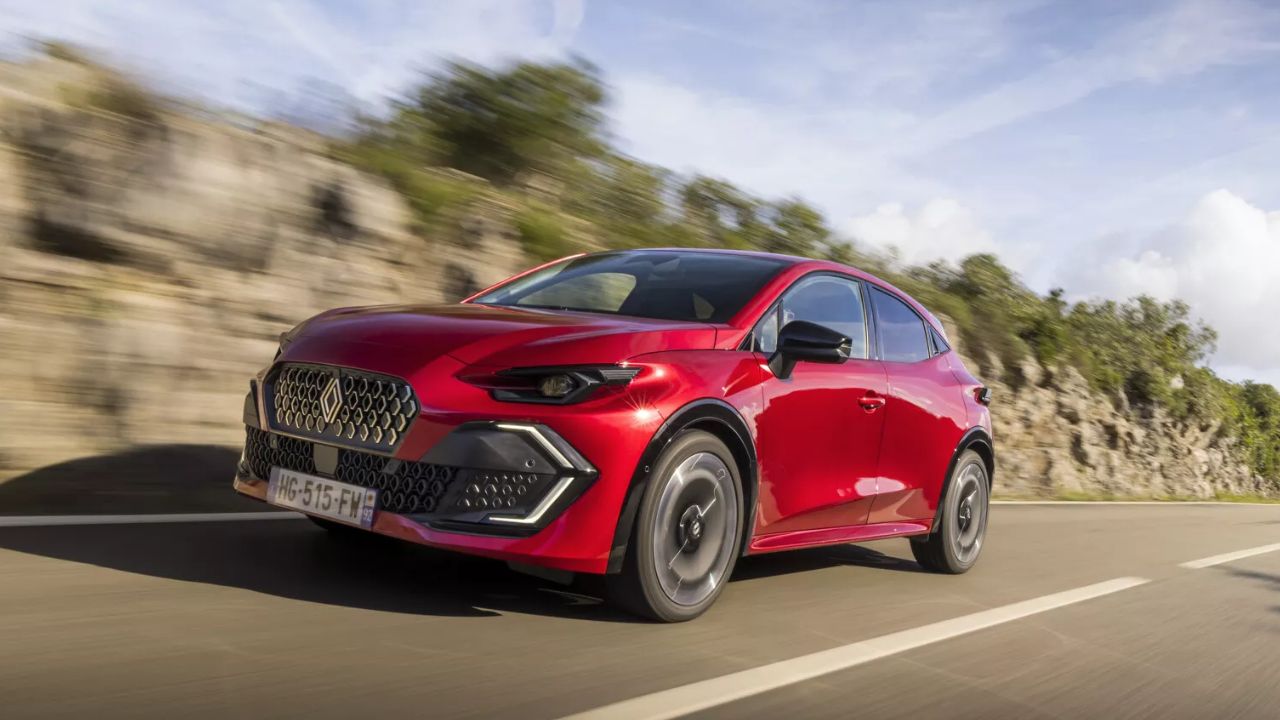


The Renault Clio Eco-G 120 combines gasoline (42 l) and LPG (39 l) tanks to deliver up to 1,450 km of range. The model arrives as an alternative to electric vehicles with 120 hp and a dual-clutch automatic transmission.
Renault has introduced a new strategic variant for its most popular compact car in Europe: the Renault Clio Eco-G 120. Equipped with a bi-fuel system that combines gasoline and Liquefied Petroleum Gas (LPG), the hatch was designed to offer one of the longest ranges on the market, reaching 1,450 km without the need for refueling, according to information from AutoPapo.
The proposal emerges as a “third way” for drivers looking to escape the high prices of traditional fuels, but who do not yet wish to switch to the charging network of electric cars.
This launch reinforces the utility of LPG as an efficient transition fuel, allowing the vehicle to maintain the modern design of its fifth generation while drastically reducing the cost per kilometer driven.
-
End of an era in Brazil: beloved sedan by Brazilians is discontinued despite having a 2.0 engine with 151 hp, CVT transmission, 466-liter trunk, and up to 650 km of range.

-
New Law Proposal in Brazil Could Heavily Penalize Drivers: Dangerous Overtaking May Become a Serious Offense with Fines Increased Tenfold and a 12-Month License Suspension; Update on 2026 Progress

-
Electric Revolution: Watts W125 Motorcycle Offers 160 km Range, 90 km/h Speed, and Affordable Price Starting at $3,000
-
General Motors Replaces Over a Thousand Workers with 50 Cobots at Electric Vehicle Plant, UAW Union Criticizes Move Amid Industry’s Automation Push



By offering the convenience of an automatic transmission combined with gas economy, the French brand positions itself pragmatically against hybrid and purely combustion models.
New Renault Clio: Economy and urban sustainability
In addition to allowing long-distance journeys with rare stops, Eco-G technology brings immediate financial and environmental benefits.
In LPG mode, the Renault Clio records a consumption of 15.4 km/l, while in gasoline mode the average is 18.5 km/l.

These efficiency ratings allow the model to receive tax incentives in several European countries.
Another relevant point is freedom of circulation: due to the low emissions generated by gas combustion, the compact can enter city zones that restrict more polluting vehicles without restrictions.
Therefore, the owner saves not only on fuel price — since LPG is significantly cheaper — but also on environmental fees and fines.
Technical performance and the two tanks of the Renault Clio
Unlike common adaptations, the Renault Clio Eco-G 120 system is fully factory-integrated, using a 1.2-liter three-cylinder turbo engine with direct injection.
This setup delivers 120 hp of power and 20.4 kgfm of torque, managed by a dual-clutch automatic transmission, known as EDC.
This gearbox ensures smooth and agile gear changes, maintaining constant engine power.

The record driving range capacity is explained by the presence of two distinct reservoirs that work in harmony:
- Gasoline Tank: Has a capacity of 42 liters.
- LPG Tank: An exclusive gas reservoir with a capacity of 39 liters.
- Fuel Management: The switch between energy sources can be done manually via a button on the dashboard or automatically when a tank runs empty.
- Practicality: The filler neck for both tanks is located under the same external cap.
Practicality for daily use and long journeys
Renault designed the system to be as intuitive as possible for the user. The driver doesn’t need to worry about technical complexity, as the transition between gas and gasoline is imperceptible during driving, with no interruption of torque.
In a scenario of oil price instability, having the option to choose the most economical fuel at the moment represents a huge competitive advantage.

Thus, the Renault Clio Eco-G 120 establishes itself as an accessible mobility tool.
It offers the necessary range for transcontinental journeys and the agility required for traffic in large metropolises, proving that the internal combustion engine, when combined with alternative fuels and cutting-edge technology, still holds great relevance in today’s market.
Source: AutoPapo