Portuguese
  Spanish


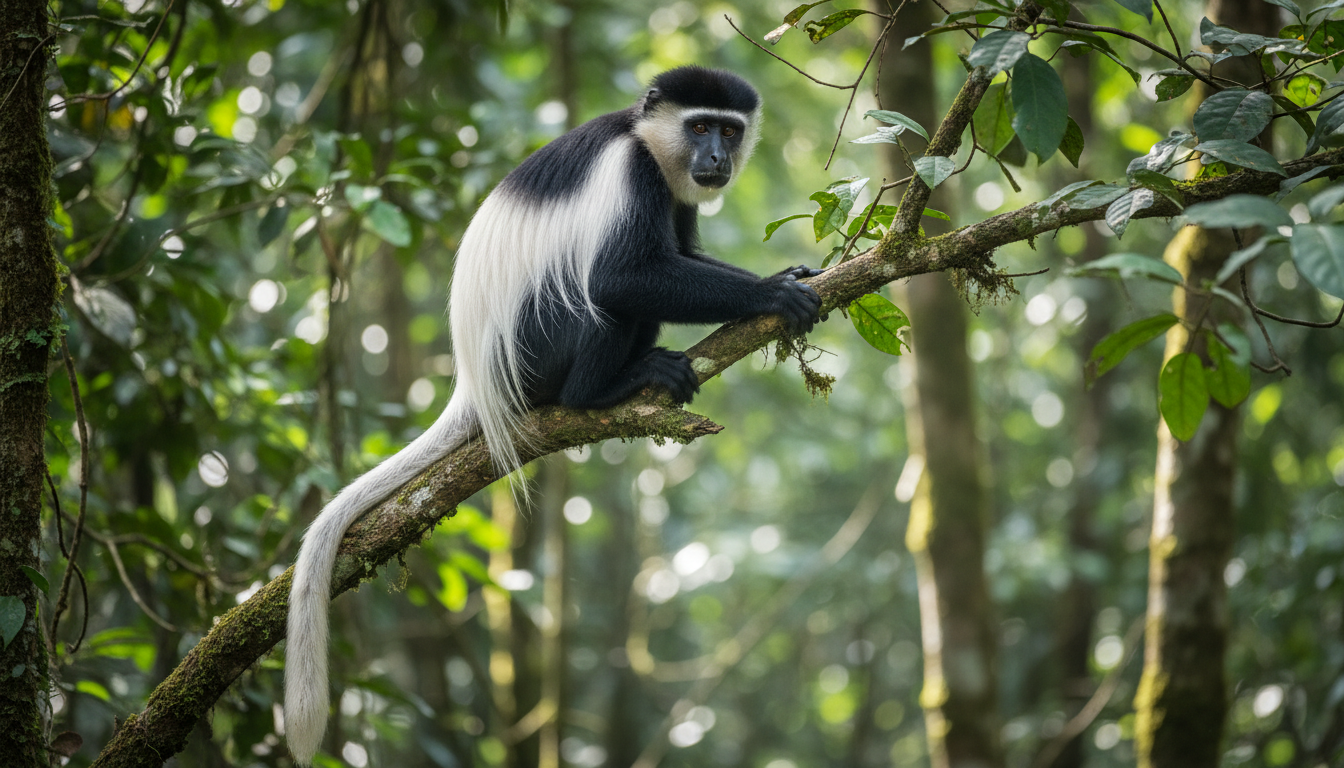

Born at Paignton Zoo in Devon, the female colobus monkey came into the world with white fur that will disappear in weeks — while in West Africa, the species faces hunting and deforestation that threaten its existence
A cub was born completely white in a British zoo. In a few weeks, its fur will darken to become black with a white mantle, like that of adults. The visual contrast draws attention, but behind the cuteness lies a harsh reality: the colobus monkey is an endangered species that is disappearing from West Africa.
The female was born at Paignton Zoo in Devon, United Kingdom, and became the first animal born in the park in 2026. The mother, named Ivy, is 23 years old and is already the mother of another female, Lola. Now the enclosure houses three colobus monkey cubs in total.
According to zookeepers, as reported by Metrópoles, “the births are the result of careful planning and years of collaboration between zoos, all aimed at safeguarding the future of the animals”.
-
Brazilian Airport to Receive $2.8 Million Investment, Completion Expected Within a Year

-
UN Warns of AI’s Environmental Impact and Calls for Greater Corporate Transparency

-
Former Atacadão Employee Turns Online Cake-Baking Lessons into a Confectionery Brand with Factory, Store, Delivery, and Nearly $400,000 in Revenue
-
Brazilian Startup Sells Nearly 9 Million Surprise Bags of Near-Expiry Food, Prevents Thousands of Tons of Waste, Aiming for $42 Million Revenue by 2026




Why the colobus cub is born white
The white fur of the cubs is a biological trait with a practical function. In the first 1 to 3 months of life, the light color makes it easier to identify the newborn clinging to its mother, especially amidst the dense vegetation of tropical forests.
After this period, the fur gradually darkens until it reaches the adult pattern: black body with a long white mantle that descends along the sides and tail. The visual transformation is complete and rapid.
The colobus monkey (Colobus polykomos) belongs to the family of cercopithecoid primates. Adults can weigh between 8 and 14 kg and live in family groups in the treetops of West Africa, feeding on leaves, fruits, and flowers.
- Scientific name: Colobus polykomos
- Fur at birth: completely white for 1 to 3 months
- Adult fur: black with white side mantle and tail
- Habitat: tropical forests of West Africa
- Threat: loss of forest habitat + illegal hunting
- Status: endangered species

Paignton Zoo celebrates the rare birth of the colobus monkey
The Paignton Zoo is located in Devon, in the southwest of England. The birth of a female king colobus marked the beginning of 2026 in the park, which participates in international conservation programs for endangered species.
Ivy, the 23-year-old mother, shows experience in maternal care. Keepers report that she constantly carries the infant close to her body, a typical behavior of the species in the first weeks.
The birth is not an isolated event. Other British zoos have also recorded significant births in 2026. At the Hertfordshire Zoo, two elephant shrew infants, one of the smallest mammals in the world at just 30 grams each, were born on February 23. It was the first birth of the species in the United Kingdom.
“Receiving the first birth in the UK is incredibly special. Seeing them reproduce so quickly is a true testament to the exceptional care provided by our team”, said Tyler Whitnall, managing director of Hertfordshire Zoo, as reported by CNN Brasil.

The Silent Threat in West Africa
While European zoos celebrate births, in West Africa the situation is the opposite. The king colobus faces two combined threats that are reducing its wild population: deforestation for agriculture and logging, and illegal hunting driven by the skin trade.
The species relies on continuous forest canopy to move between trees. When the forest is fragmented, groups become isolated and lose access to reproductive partners. As a result, genetic diversity decreases and the population becomes increasingly vulnerable.
Captive breeding programs, like the one at Paignton, serve as a genetic safety net. Zoos from different countries exchange individuals to maintain DNA variability and avoid inbreeding. Other species facing similar risks, such as domestic animals now protected by mandatory care laws, show that awareness of animal welfare is growing globally.

United Kingdom leads rare species births in 2026
In addition to the colobus monkey in Paignton and the elephant shrews in Hertfordshire, Chester Zoo recorded the birth of Lagertha, a female Roloway monkey, a critically endangered species on the brink of extinction. This is the third birth of the species at Chester Zoo since 2020, according to O Antagonista.
Also in April, Chester Zoo celebrated the birth of a dik-dik, one of the smallest antelopes in the world, the size of a can of beans. And Yorkshire Wildlife Park announced four cubs of the North African cheetah born from Darcy, as part of an international conservation program.
These births position the United Kingdom as a global leader in the breeding of endangered species in captivity in 2026. However, experts warn that zoo programs do not replace the protection of wild habitats. Captive breeding ensures genetic survival, but does not address the deforestation that threatens the species in the wild.