






 Portuguese
  Spanish


Storm exposed marble columns in the Mediterranean Sea, revealing Roman shipwreck near Israel and clues about Roman architecture. Discovery announced by Smithsonian in May 2023 indicates that monumental pieces traveled unfinished before being completed at the destination, changing the debate on public works of the Roman Empire, with submerged pieces.
The marble columns from 1,800 years ago were found by swimmer Gideon Harris in the waters of the Mediterranean Sea, off the coast of Israel, at about 4 meters deep. The discovery revealed part of the cargo of a Roman merchant ship that was likely transporting architectural elements intended for a monumental construction.
According to a report by Smithsonian Magazine, published on May 22, 2023, the Israel Antiquities Authority announced the find after recent storms exposed the submerged cargo. The case occurred in the Beit Yanai beach area and helped researchers record the exact location of a known shipwreck, but not yet precisely located.
Storm exposed what was hidden at the bottom of the Mediterranean
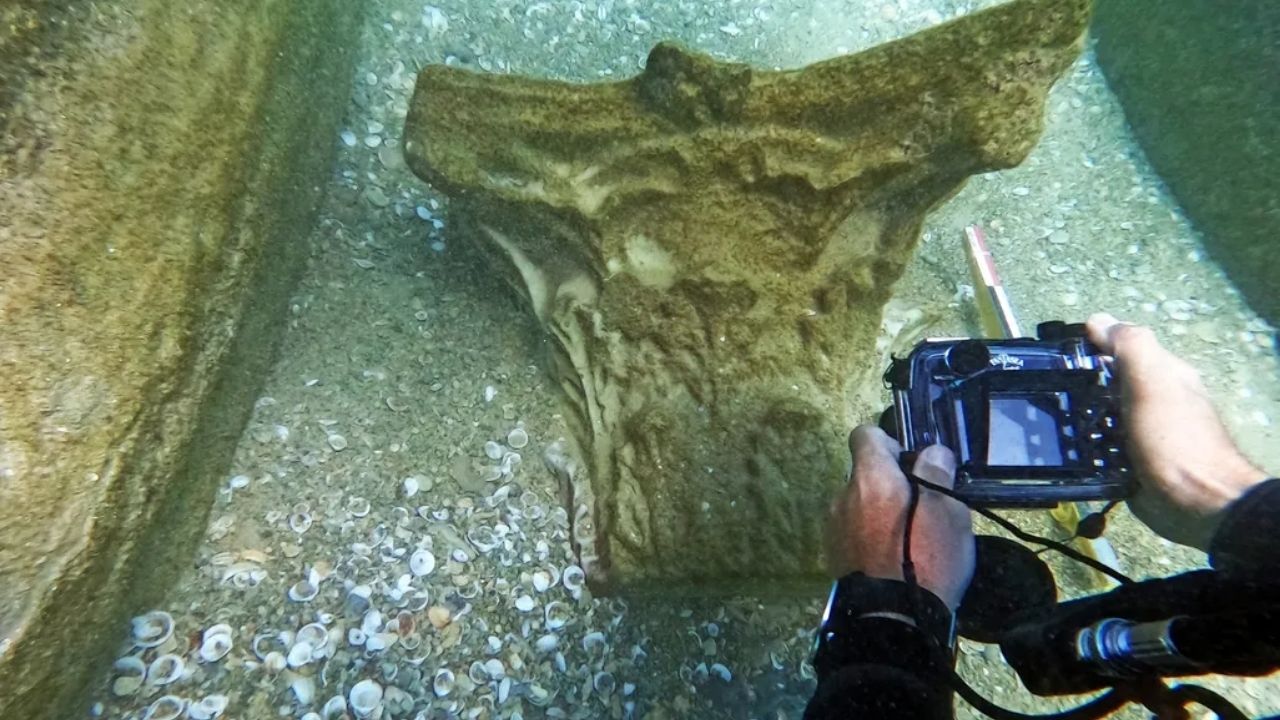
The discovery did not happen during a major planned expedition, but from the keen eye of a swimmer. Gideon Harris was diving in the Mediterranean Sea, off the coast of Israel, when he found marble pieces in shallow waters. What seemed like just an unusual find at the bottom of the sea turned out to be an ancient Roman cargo.
-
Man Compensated After Being Charged Property Tax for Over 30 Years Post-Sale, Court Upholds Decision in Southern Brazil

-
Pregnant Woman Gives Birth Minutes After Seeking Help at Roadside Station in Brazil; Family’s Decision and Quick Action by Novo Litoral Team Touch Hearts

-
Brazilian Farmer Turns Life Around with Papaya: At 67, He Leases Land, Harvests 3.2 Tons Monthly, and Earns Up to $3,000 Selling the Fruit He Once Found Too Expensive

-
400-Year-Old Shark Predates Brazilian Empire, Offers Insights into Arctic Marine Life




According to the Israel Antiquities Authority, recent storms likely removed sediments and made part of the marble columns visible again. This detail changes the reading of the case, because nature ended up revealing a cargo that remained hidden for centuries.
The cargo belonged to a Roman merchant ship
The artifacts were linked to a Roman shipwreck of a merchant ship that sank while transporting architectural elements. The vessel has not yet been located by researchers, but the cargo found already allows understanding part of the route and the function of Roman maritime transport in the ancient Mediterranean Sea.
According to the interpretation presented by the Israeli authority, the ship may have come from a region near Greece or Turkey. The probable destination would be a port like Ashkelon, Gaza, or Alexandria. The marble columns show that Roman trade also moved gigantic structures for prestigious works.
The pieces indicate a monumental building
The material found includes capitals and parts of columns, some larger pieces and others smaller. Capitals are the decorative elements installed at the top of columns, widely used in public buildings, temples, porticos, and constructions with great visual impact in Roman architecture.
The use of genuine marble caught the researchers’ attention. Even in important Roman cities in the region, architectural elements were often made of local stone coated to imitate marble. In this case, the marble columns point to a high-status work, probably associated with power, wealth, and monumentality.
The discovery helps answer an ancient question
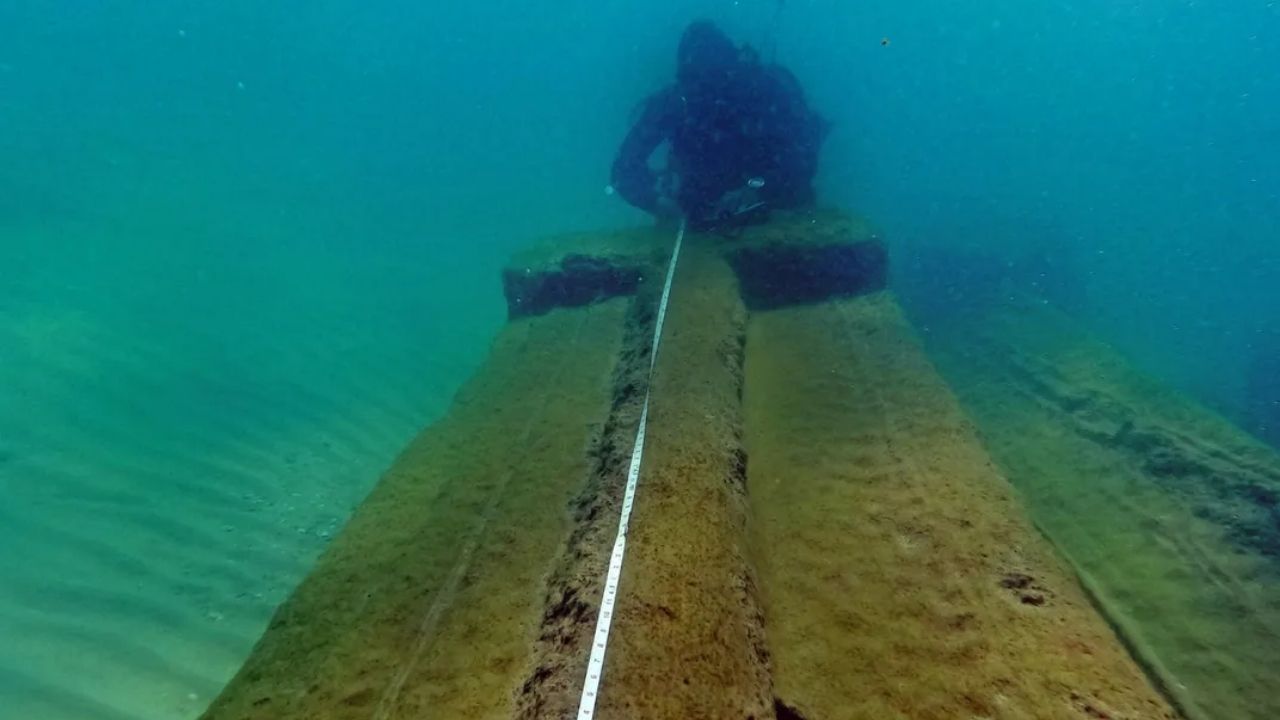
One of the most important points of the find is that several pieces were unfinished. This interests archaeologists because there is an ancient question about the transportation of architectural materials in the Roman world: were the columns finished at the origin or completed at the destination?
The cargo found near Israel suggests that at least part of these pieces traveled still incomplete. The marble columns were probably transported in a rough or partially sculpted stage to be finished at the construction site, which would help adapt details to the final building.
Unfinished pieces reveal the logic of Roman construction
The marble columns were likely transported in a raw or partially carved state to be finished at the construction site, providing a direct clue about Roman architecture and imperial logistics. Therefore, the cargo found shows not only a Roman shipwreck but also a complex logistical chain behind Roman architecture.
The smaller and larger pieces may indicate different destinations or buildings of distinct scales. The hypothesis mentioned by the Israeli authority is that the ship might have been carrying a dual cargo. This reinforces the idea that the marble columns were part of an organized architectural market, not an improvised transport.
The storm may have surprised the crew
The explanation proposed by researchers is that the vessel was caught by a storm while sailing along the coast. The crew would have dropped anchor to try to prevent the ship from running aground in shallow waters, but the maneuver did not prevent the loss of the cargo in the Roman shipwreck.
This detail makes the finding even more important because it brings the reader closer to a concrete scene: a heavy ship, loaded with marble, battling bad weather in the Mediterranean. Centuries later, another storm exposed the same marble columns that an ancient storm may have taken to the bottom.
The coast of Israel has already revealed other Roman finds
The Mediterranean coast of Israel is an area of great archaeological interest. Other ancient finds have been recorded in nearby waters, including shipwrecks, coins, and bronze objects associated with the Roman period and later phases of regional history.
In this context, the marble columns found by Harris are part of a sequence of underwater discoveries that help reconstruct routes, trade, and Roman presence in the region. Each object retrieved from oblivion adds a piece to the historical map of the ancient Mediterranean.
The next step is to search for the lost ship
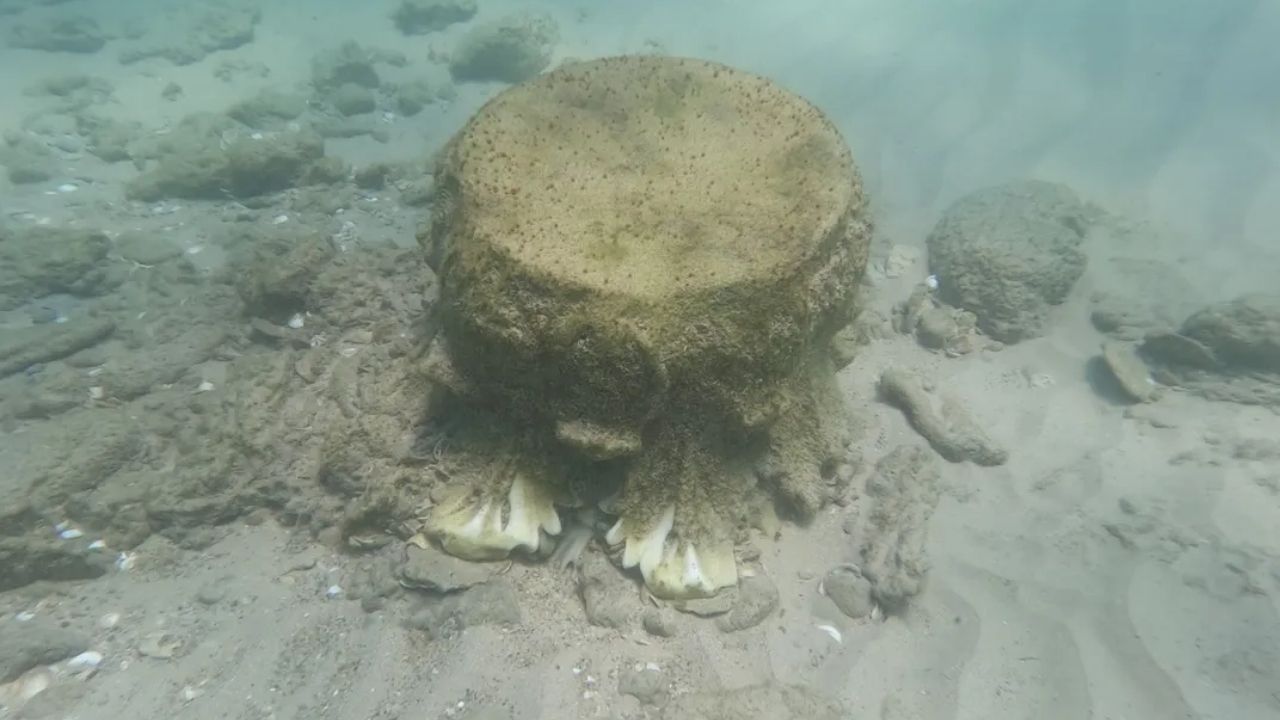
The Israel Antiquities Authority reported that it intends to advance an excavation at the site, with academic collaboration. The expectation is to find other artifacts, such as coins, that may help better date the cargo and understand the context of the shipwreck.
The greatest interest, however, lies in the possible remains of the vessel itself. So far, the ship has not been located. If the structure of the boat is found, researchers will be able to connect the marble columns to a more complete story about trade, storm, route, and the fate of the cargo.
What can this Roman cargo still reveal?
The marble columns found in the Mediterranean Sea, near Israel, show that an apparently silent discovery can alter ancient questions about Roman architecture, trade, and power in the Roman Empire.
Now the question remains: do you find it more impressive that the cargo survived for 1,800 years at sea or the possibility that these pieces traveled unfinished to take shape only at their final destination? Leave your opinion in the comments.


