Portuguese
  Spanish


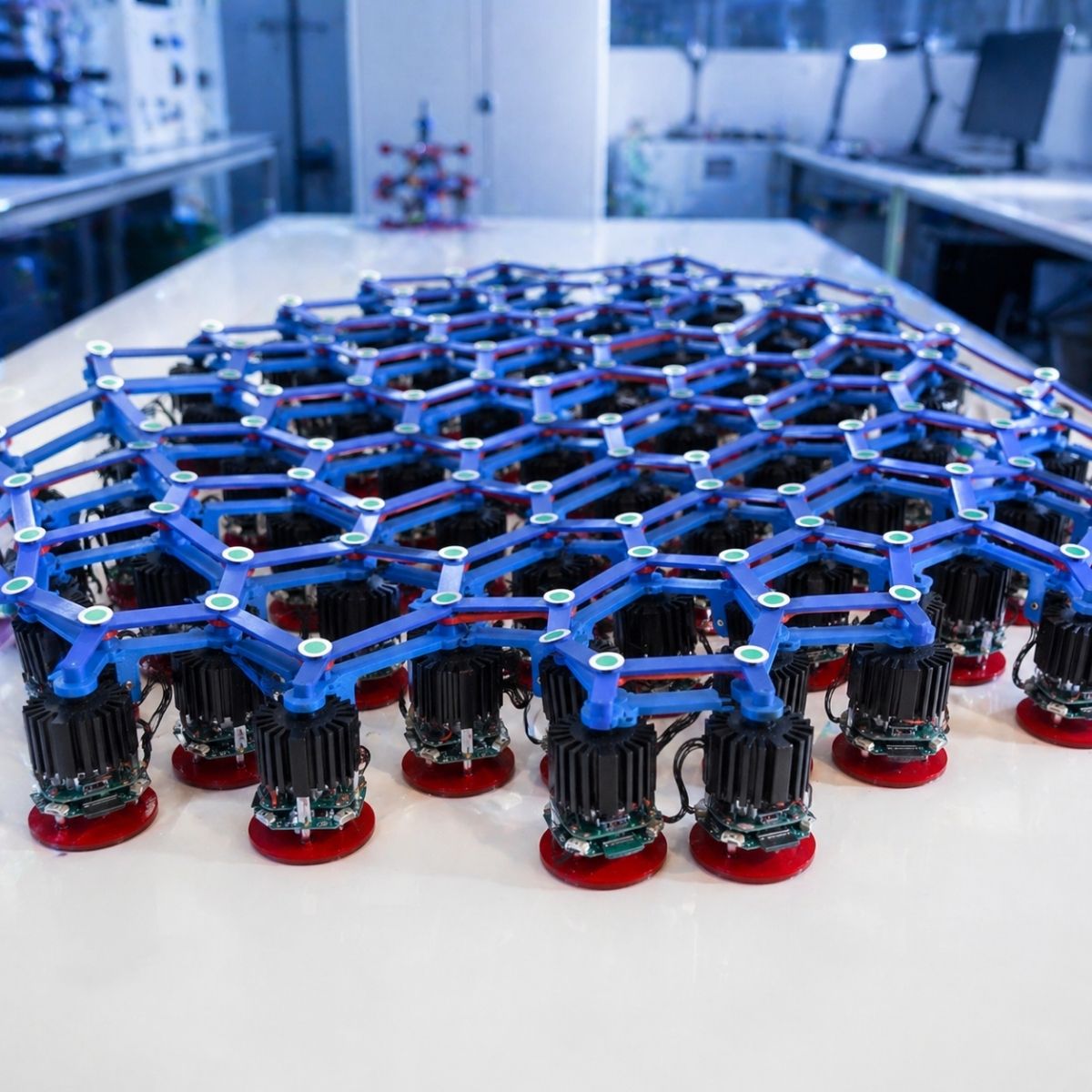

Amsterdam researchers published a study in Nature about a worm-like material that learns new shapes, forgets old ones, and moves without an external computer, composed of segments with individual microcontrollers that memorize and communicate movements to neighboring units, an advance that scientists describe as an evolution whose possibilities “seem almost limitless.”
The University of Amsterdam has created a material that blurs the line between inanimate object and living system in a way science has never achieved before. The metamaterial published in Nature is composed of segments chained like a worm, each equipped with a motorized hinge and its own microcontroller that measures rotation, records previous movements in a kind of internal memory, and communicates information to neighboring units so they can adjust stiffness and position. The result is a material that learns specific configurations when it receives stimuli from researchers, retains these shapes in the memory of each microcontroller, and can replace them with new configurations when trained again, a process the team calls learning and which requires no central computer to function.
What makes this material different from everything that came before is its autonomy. Previous research from the same institute had already demonstrated objects capable of rolling, crawling, and moving across different terrains, but these movements were random and could not be directed or memorized. The new metamaterial overcomes this limitation because its microcontrollers update and optimize commands through step-by-step training, until the chain of segments “understands” that it must assume a specific posture when a certain stimulus is sent. The ability to switch between learned shapes, forget older ones, and incorporate new behaviors is what leads researchers to describe the system as an evolving material.
How the material learns new shapes without an external computer


The learning process is structured in stages controlled by the researchers. Scientists send impulses that organize the material’s segments into the desired configuration, and during each training step, the microcontrollers embedded in the hinges recalibrate their internal commands based on feedback received from neighboring units. Over multiple sessions, the system converges to the target shape with increasing precision, like a muscle that improves the execution of a movement after repetition.
-
Human Waste in Kenya is Solar-Treated and Turned into Fuel Briquettes, Tackling Open Sewage, Charcoal Use, and Deforestation

-
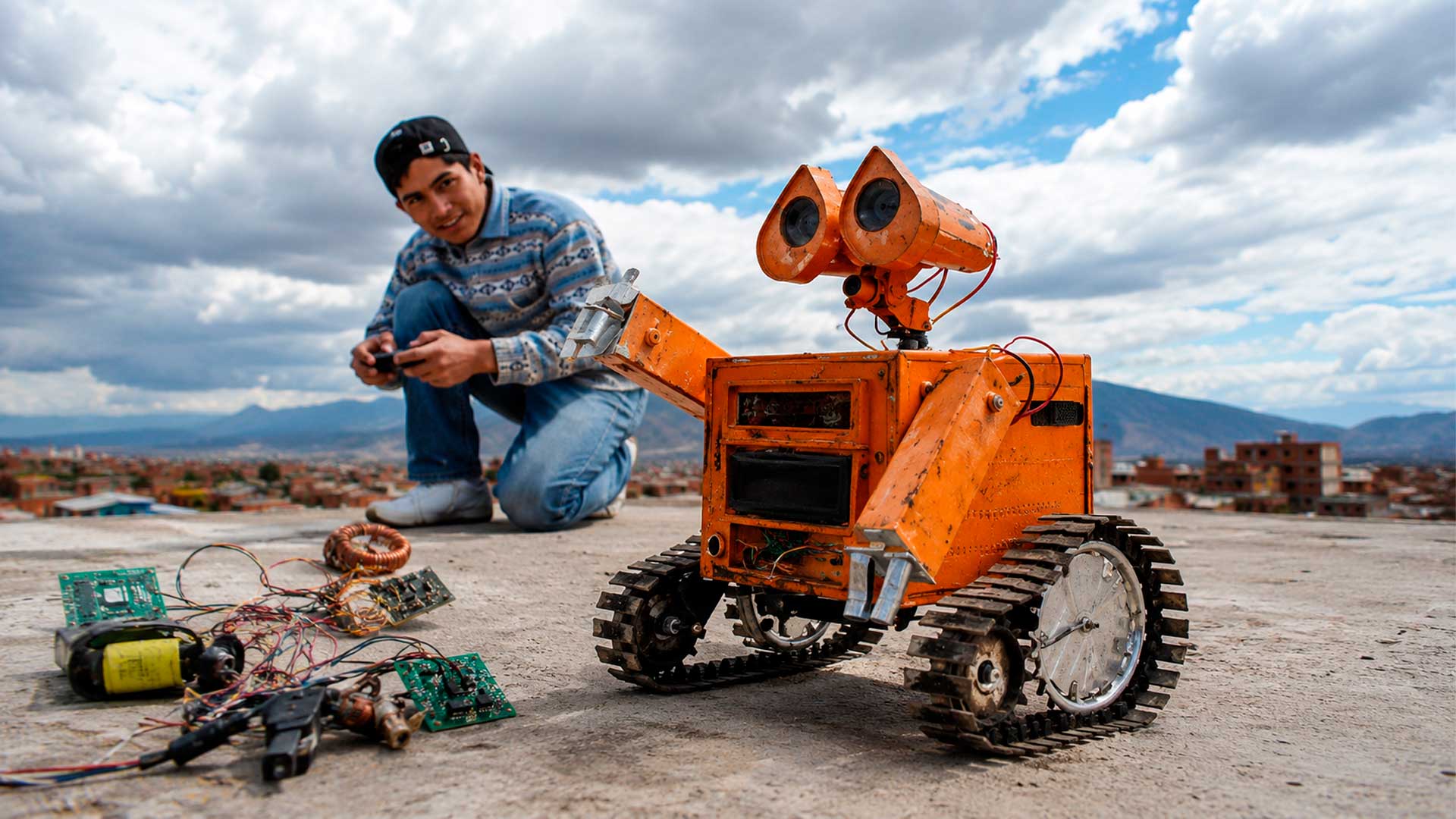
Bolivian Teen Builds Functional Robots from Scrap Materials in High-Altitude Rural Town
-
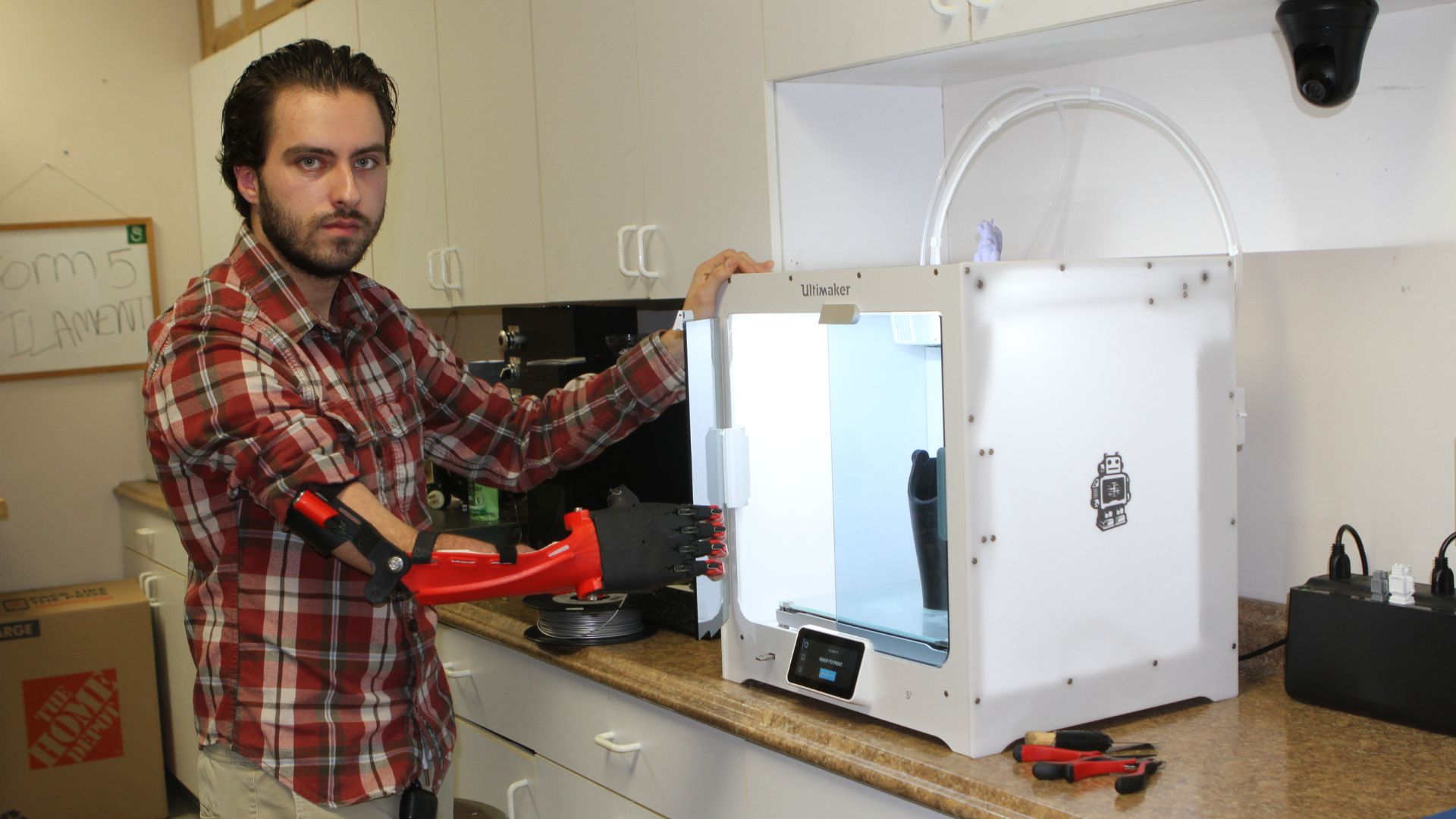
Student Creates 3D-Printed Prosthetics from Recycled Plastic, Turning Waste into Affordable Custom Arms
-
Climate Scientist Who “Proved” Humanity Is Warming the Earth



The absence of a central computer is the most important technical differentiator. Each segment of the material operates with its own microcontroller, which stores data locally and makes decisions based only on communication with adjacent hinges, a decentralized architecture that eliminates the single point of failure that centralized systems present. If one segment fails, the others continue to operate with the information they already possess, a robustness that makes the material suitable for applications in environments where remote control is not feasible or where communication with a central computer would be unstable.
What it means to say the material forgets and evolves
The ability to forget old shapes and learn new ones is what researchers classify as the system’s evolution. When a new set of stimuli is introduced into training, the microcontrollers gradually overwrite previous commands and incorporate the new configurations, a process analogous to a living organism adapting behaviors as the environment changes. The material does not maintain an unlimited library of shapes: it prioritizes the most recent ones and allows older ones to be replaced, exactly like biological memory that strengthens frequently used connections and weakens those that fall into disuse.
The researchers acknowledge that this adaptive capacity opens up possibilities that they themselves cannot fully define. “Once the system starts to learn, the possibilities of when it will stop seem almost limitless,” they state in the study, a phrase that reflects both enthusiasm and caution in the face of a material that demonstrates emergent behavior not explicitly programmed into any of the individual microcontrollers. The behavior of the whole surpasses the sum of its parts, a characteristic that in complex systems often generates unexpected capabilities as scale and complexity increase.
What this material can be used for outside the laboratory
The potential applications of the Amsterdam material span sectors ranging from medicine to aeronautics. Flexible robots built with this type of material would replace the rigidity of conventional robots with adaptive structures capable of changing shape according to the task, a capability that in medicine could result in surgical instruments that reconfigure inside the patient’s body and in the aerospace industry in components that adjust their properties in response to flight conditions. Programmable devices that modulate behavior in real-time and “reprogram” themselves according to the situation are another avenue researchers mention as a natural development of the technology.
The material can also function as an intelligent structural component. In buildings located in seismic zones, metamaterials with learning capabilities could redirect earthquake energy by adapting to the vibration pattern in real-time, while in military applications they could serve as active camouflage that alters shape and surface according to the surrounding environment. Sensors built with this technology would be able to automatically adjust sensitivity, and photonic lenses based on the same principle could recalibrate optical properties without human intervention.
What researchers plan as the next step for the material
The immediate goal is to advance from learning static shapes to learning time-dependent movements. The team plans to enable the material to learn different types of locomotion, such as crawling or rolling, choosing the most suitable mode of movement according to environmental stimuli detected by microcontrollers, a transition that would elevate the system from a shape-shifting object to an entity that navigates and adapts to its surrounding space. The investigation of stochastic scenarios, where learning occurs amidst noise and uncertainty, is also in the plans, because in such environments the material would need to adapt probabilistically rather than deterministically, gaining robustness to operate in real-world conditions outside the laboratory.
The material developed by the Amsterdam team is at the point where scientific curiosity transforms into a technological platform. What began as an academic experiment to understand how structures can learn without a central brain has become a demonstration that physical objects can exhibit behaviors that until recently were exclusive to biological organisms and artificial intelligence systems. The boundary between what is alive and what is constructed has become more blurred, and no one on the Amsterdam team dares to define where the material that learns, forgets, and evolves will end up.
And you, do you think materials that learn on their own are an advancement or a risk? What would you do with a material that adapts without a computer? Leave your opinion in the comments.