Portuguese
  Spanish


Railway megaproject between New Jersey and Manhattan wins new US$1.29 billion contract to drill tunnels under the Hudson River, unlock a historic bottleneck in the busiest railway corridor in the USA, and replace structures in service since 1910.
Tunnel under the Hudson River returns to the center stage of major works in the United States after a team formed by Traylor Bros., Walsh Construction, and Skanska won a US$1.29 billion contract to build a decisive stage of the approximately US$16 billion railway megaproject in New York.
What makes the project bigger than a simple contract is the setting where it will be executed: two new parallel tunnels, each 2,210 meters long, will be drilled under one of the busiest regions in the country, connecting the access shaft in Weehawken, New Jersey, to 12th Avenue on the west side of Manhattan.
US$1.29 billion contract puts the Hudson River tunnel back in motion
The new contract marks the first significant progress for the Hudson Tunnel Project since work was halted amid a federal funding freeze announced last October.
-
They exchanged the idea of a large house for a 35 m² warehouse, spent US$ 12,000 on the structure, and created a tiny house in Colorado with space to live and work.

-
A newly opened terminal in the middle of the Amazon has begun transporting soy and corn through Amapá, eyeing the queue of ships that is congesting the ports in the South.

-
Goodbye to old tiles: renovation technique without construction transforms bathrooms in a few hours, eliminates debris, and reduces costs with coverings using special paints, high-resistance adhesives, and modern finishes that completely renew the space.
-
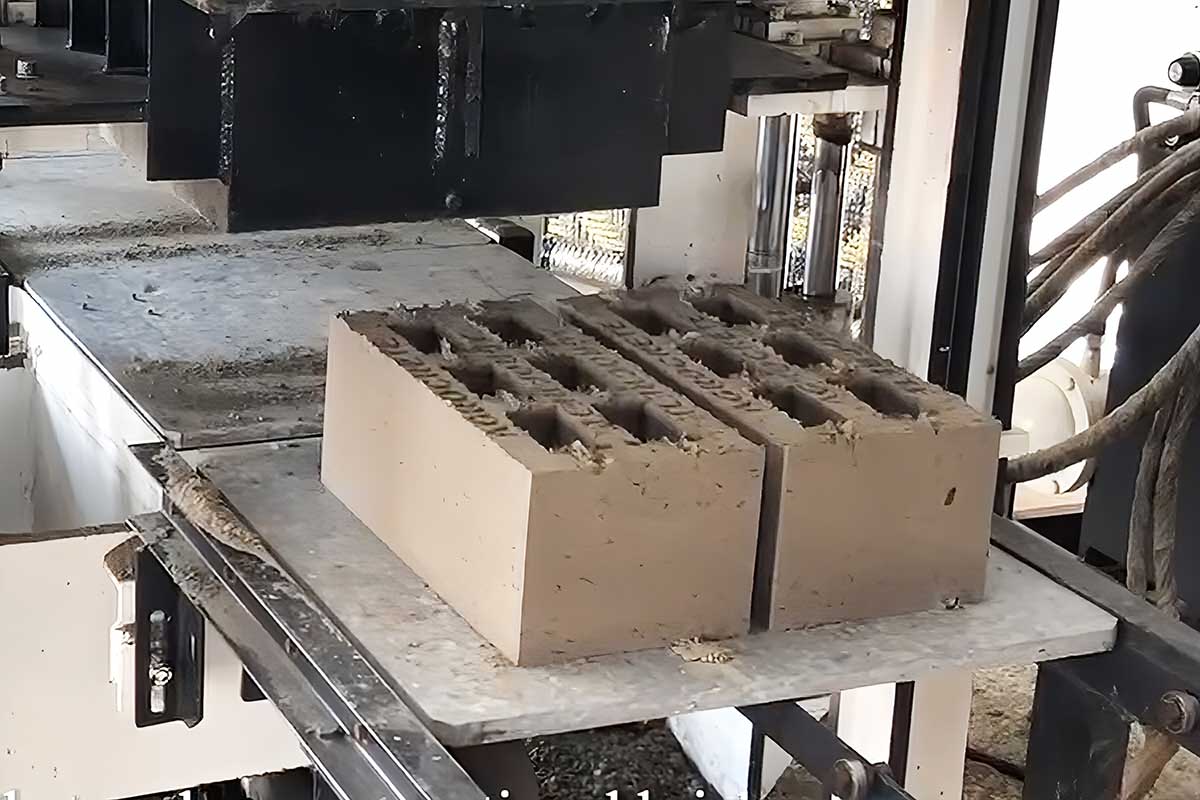
Goodbye to the traditional clay brick: Indian startup transforms burnt straw into a carbon-negative brick that costs half, insulates better, and even removes CO2 from the air.


Package 1C provides for the construction of two parallel single-track railway tunnels, which will form a new underground connection between New Jersey and Manhattan. This phase will be executed by a consortium with the participation of the American Traylor Bros., Walsh Construction, and the Swedish Skanska.
The project is one of the most important in the program because it involves direct drilling under the Hudson River, a section considered essential to expand railway capacity between the two sides of the New York metropolitan area.
Two 2,210-meter tunnels will depart from Weehawken and arrive in West Manhattan
The planned route connects the Hudson County access shaft in Weehawken, New Jersey, to 12th Avenue on the west side of Manhattan.
Each tunnel will be 2,210 meters long, forming two parallel single-track corridors. The scope includes lining installation, tunnel floor, and the construction of nine cross passages connecting the two underground structures.
Also planned are soil stabilization works near the Hudson Bergen light rail line and the permanent reinforcement of the foundations of the Willow Avenue bridge in New Jersey.
In practice, the contract is not just about digging holes under the river. It involves a set of underground, structural, and railway interventions in a densely populated area, where any failure could affect mobility, neighboring works, and existing services.
Custom-made tunnel boring machines will face soft soil, weathered rock, and stabilized ground

The most curious part of the project lies in the subsurface conditions. To drill this section, custom-built, multi-purpose tunnel boring machines have been designed, prepared to handle different materials under the Hudson River.
The terrain combines weathered rock, soft soil, and stabilized areas. Therefore, excavation requires equipment capable of adapting to varied conditions along the same route.
In addition to opening the tunnels, the work includes the installation of precast concrete segmented linings and permanent precast foundation slabs.
This type of solution is used to provide stability and resistance to the structure as excavation progresses. In a project under a river, with a direct connection between two major urban centers, controlling the soil and subterranean pressure is a central part of the technical challenge.
Project aims to resolve railway bottleneck in corridor used for over a century
The Hudson Tunnel Project is also linked to the replacement of the North River Tunnel, an existing structure that has been in operation since 1910.
These old tunnels were damaged by Hurricane Sandy and require constant maintenance. Nevertheless, they remain an essential part of the railway connection between New Jersey and New York.
When completed, the project will replace the two existing railway tunnels under the Hudson River with a system of four entirely new tunnels. The goal is to eliminate a historic bottleneck in the Northeast Corridor, considered the busiest railway corridor in the United States.
The impact goes beyond engineering. The project aims for the reliability of passenger transport between New Jersey and New York, two hubs connected daily by an intense flow of commuters, services, and regional travel.
Funding freeze halted the project and led to a legal dispute
The megaproject is primarily funded by federal resources. Last October, disbursements were suspended by the Trump administration, alleging that programs aimed at including businesses owned by Black people, minorities, and women in federal projects could be “discriminatory” and “unconstitutional.”
Construction continued for some time with available funds, but the money ran out in February. At that point, about US$ 1 billion had already been spent on the project.
The Gateway Development Commission, responsible for the project, sued the government on February 2 for breach of contract. The entity sought payment of US$ 205 million in amounts due and compensation in case of a shutdown.
New York Attorney General Letitia James also filed a lawsuit and obtained an injunction preventing the project’s termination. Still, funding was not immediately released, and work was suspended on February 6.
The project resumed on February 24, after the release of US$ 205 million.
New twin tunnel expected to open in 2035, old North River to be revitalized afterward
The new Hudson River twin tunnel is expected to become operational in 2035. After that, the North River Tunnel will undergo a revitalization program with an estimated duration of three years.
After this phase, the reopening of the revitalized old tunnel is scheduled for 2038.
This timeline shows that the project is not just a railway expansion, but a long-term reorganization of infrastructure between New Jersey and Manhattan. First, the new system needs to become operational. Then, the old tunnels can be rehabilitated without completely interrupting the railway connection.
Project shows how old infrastructure still defines the future of big cities
The progress of the tunnel under the Hudson River reveals a common problem in large urban centers: centuries-old structures continue to support an essential part of modern mobility.
In the case of New York and New Jersey, the reliance on tunnels in service since 1910 has made the railway corridor vulnerable to failures, constant maintenance, and capacity limitations.
The new phase, contracted for US$ 1.29 billion, puts the megaproject back in motion and reinforces the importance of complex underground works for the future of urban mobility.
More than opening two tunnels under the Hudson River, the project aims to ensure that one of the most strategic railway connections in the United States continues to operate for decades to come, with greater reliability, redundancy, and capacity for passengers between New Jersey and Manhattan.