






 Portuguese
  Spanish


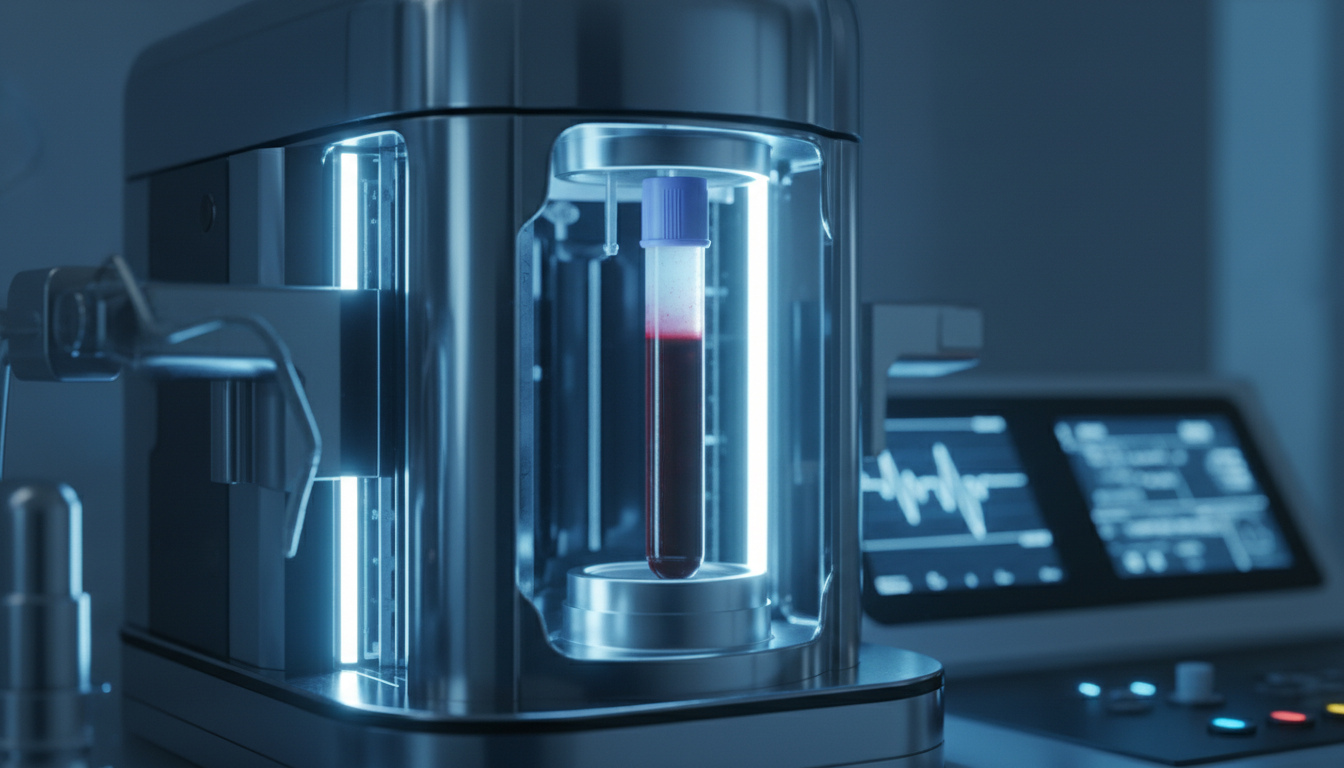

Study published on April 22, 2026 shows that a routine blood test can reveal the risk of Alzheimer’s years before the first symptoms — and the marker is something doctors have been measuring for decades without knowing its potential
A blood test that millions of Brazilians take every year for their check-up may be hiding information that no one knew how to interpret.
Researchers published a study on April 22, 2026, in the journal Alzheimer’s & Dementia, linking elevated levels of neutrophils — defense cells that appear in any complete blood count — to a significantly higher probability of developing Alzheimer’s dementia years before the first symptoms.
In other words, your next routine blood test may already contain a warning that no doctor has read until now.
-
From Painting Houses in the U.S. to Producing Beyoncé and Paul McCartney Shows, Entrepreneur Opens Luxury Hotel in Brazil’s Trancoso with $8 Million Revenue Goal

-
Massive 109-Meter, 5,500-Ton Ship Built to Supply Energy in War Crossed the Atlantic, Powered Rio in the 1950s, and Was Sunk in Pará to Protect Tocantins Riverbank

-
Brazilian Domestic Worker Lived 55 Years Without a Salary, Had Welfare Benefits Controlled by Employer
-
Scientists Convert Common Plastic into Synthetic Graphite for Electric Car Batteries, Paving the Way for High-Value Recycling





What the blood test reveals about Alzheimer’s — and why no one noticed
Neutrophils are the most abundant immune cells in human blood. Furthermore, they participate in the body’s first line of defense against infections.
In a common complete blood count, the laboratory already counts and reports the quantity of neutrophils. However, until now, elevated levels were interpreted only as a sign of infection or acute inflammation.
What the new study demonstrates is that persistently elevated neutrophils can be a sign of something deeper: chronic inflammation in the brain that precedes Alzheimer’s.
Thus, the world’s most common blood test gains a layer of interpretation that medicine had never explored for dementia.

The numbers behind the discovery
The study, published in Alzheimer’s & Dementia, identified that patients with elevated neutrophil levels had a significantly higher probability of developing dementia years later.
Consequently, the discovery adds to other recent advances in the early detection of Alzheimer’s.
For example, a parallel study by the University of California San Diego analyzed 2,766 women between 65 and 79 years old over up to 25 years of follow-up. Researchers discovered that another blood marker — the protein p-tau217 — can predict the risk of dementia up to 25 years before the appearance of the first symptoms.
In Spain, the Complutense University of Madrid tested p-tau217 in approximately 200 volunteers over 50 years old and achieved an accuracy rate of 94.5% in the early detection of Alzheimer’s.
- Neutrophil study: published on 22/Apr/2026 in Alzheimer’s & Dementia
- p-tau217 UCSD study: 2,766 women, prediction up to 25 years prior
- p-tau217 Spain study: ~200 volunteers, 94.5% accuracy
- FDA approved test: Lumipulse, 91.7% accuracy in positives, 97.3% in negatives
- Estimate: 42% of people >55 years old in the US may develop dementia
The FDA has already approved the first blood test for Alzheimer’s
The discovery of neutrophils comes at a crucial moment. In fact, the FDA — the United States regulatory agency — has already approved the first commercial blood test for the detection of Alzheimer’s.
The test, called Lumipulse G pTau217/β-Amyloid 1-42 Plasma Ratio, measures the ratio of phosphorylated tau protein and beta-amyloid in the blood of adults over 55 with symptoms.
According to approval data, the test is accurate in 91.7% of positive cases and 97.3% of negative cases, compared to PET scans and lumbar punctures — invasive and expensive exams.
“Blood biomarkers are reshaping how we identify and understand Alzheimer’s disease,” declared Carrillo, a researcher associated with the approval.
The responsible company is Fujirebio Diagnostics. However, the test is not yet available in Brazil — Anvisa has not commented on an equivalent approval.
What changes for those who get a blood test every year in Brazil
The potential impact of this line of research is enormous. To give an idea, the complete blood count is the most requested blood test in the Unified Health System (SUS).
Millions of Brazilians already have neutrophil data stored in laboratories. Furthermore, the cost of a complete blood count is a fraction of what cerebral PET scans or lumbar punctures cost.
In practice, if the association between neutrophils and Alzheimer’s is confirmed in larger studies, Brazil would have a population screening tool ready for use — without needing new equipment or special training.
For those with a family history of Alzheimer’s, the possibility of anticipating the diagnosis by years — or decades — using a blood test that is already part of the routine is something that completely changes the perspective.
This discovery connects to other research on the human body that reveals previously unknown functions, such as that doctors cut a tissue for centuries without knowing it was an organ.

Furthermore, research on early disease detection via biomarkers is advancing on several fronts. For example, another recent study showed that an insomnia medication preserved 40% of the hippocampus and reduced Tau protein — precisely the protein that the FDA test can now detect in the blood.
In other words, advances in Alzheimer’s prevention are converging from multiple directions: from routine complete blood counts to existing medications.
The caveats that researchers make a point of highlighting
Despite the enthusiasm, scientists recommend caution in interpreting the results.
Firstly, elevated neutrophils indicate probabilistic risk, not a definitive diagnosis. That is, not all people with high neutrophils will develop Alzheimer’s.
Furthermore, the study does not prove causality — only statistical association. Therefore, it is still necessary to investigate whether the inflammation measured by neutrophils directly contributes to neurodegeneration or merely accompanies the process.
Similarly, existing studies focused predominantly on women (such as the UCSD’s WHIMS) and specific populations in Europe and the United States. Consequently, validations in more diverse populations — including Brazilians — are still necessary.
Even so, the convergence of three independent lines of research — neutrophils, p-tau217, and the FDA Lumipulse test — points in a clear direction: soon, a simple blood test could be the first barrier against Alzheimer’s.
Could the complete blood count you get every year already contain information that could change the course of your health — and no one is reading it?
According to CNN Brasil, the FDA’s approval of the test marks the beginning of a new era in the early detection of Alzheimer’s — and the complete blood count could be the next step.


