Portuguese
  Spanish



Billionaire states that AI and robotics can create abundance, but Brazilian reality still requires financial planning
A statement with significant economic impact was made by Elon Musk in January of this year, attracting international attention. The entrepreneur, considered the richest man in the world, stated that saving money for retirement might become useless in the coming decades, should artificial intelligence and robotics completely transform the global economy. This statement is based on the view that technology can reduce the importance of traditional work and even money itself. This scenario demonstrates a bet on profound changes, but still contrasts with the reality faced by millions of people today.
Artificial intelligence takes center stage in the prediction
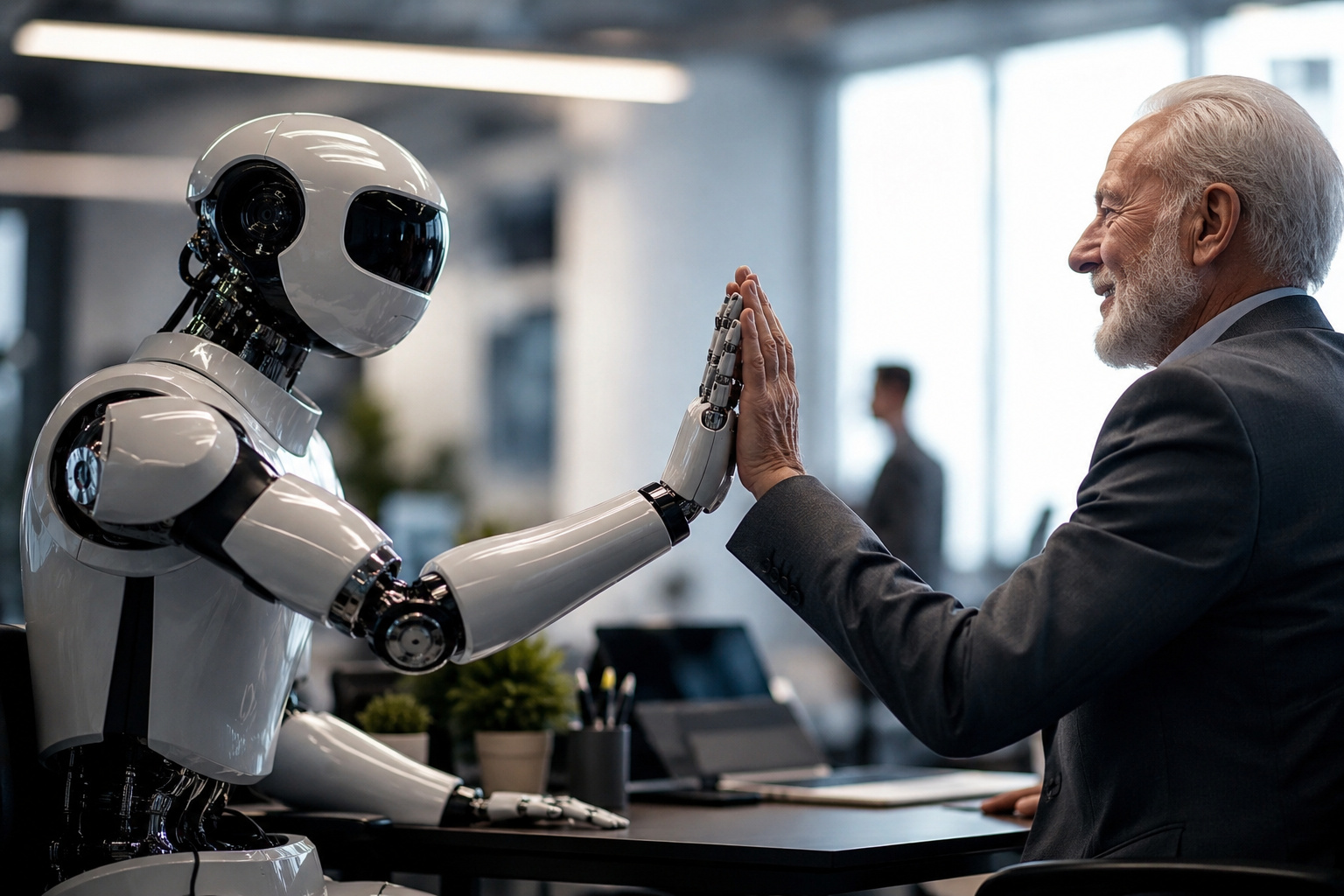
Musk’s projection is directly linked to the accelerated development of artificial intelligence and, therefore, involves a structural change in the functioning of the economy. According to the entrepreneur, by the end of this decade, AI systems could surpass combined human intelligence. Humanoid robots could also become more numerous than people on the planet. In this context, a large part of jobs, especially office jobs, would be replaced by machines, while productivity would increase to levels capable of reducing resource scarcity.
Total abundance would change relationship with work and money
The scenario described by Musk points to a phase of “total abundance,” where goods and services would be widely available thanks to technological advancement. In this model, long-term financial planning, including retirement savings, could lose some of its current meaning. The idea also includes guaranteed access to high-quality housing, healthcare, and education, regardless of income or savings. Thus, work would cease to be a central necessity and would become a personal choice, made more out of interest than obligation.
-
Panasonic Shifts Strategy in the U.S., Focuses on AI Data Center Batteries as Global Energy Demand Surges

-
Brazilian Entrepreneur Develops Device to Provide Companionship and Health Monitoring for Elderly, Alerting Families to Potential Health Issues

-
AI Customizes Burgers for Individuals and Impresses in Blind Test with Over 100 Participants, Matching or Surpassing Fast-Food Chains’ Approval Ratings
-
AI Revolutionizes Digital Entrepreneurship by Enabling Lean Startups and Rapid Scaling


Social risks are also part of the discussion
Despite the optimism, Musk himself acknowledges possible side effects linked to such a broad transformation. A society where work no longer plays a central role may face crises of purpose and social impacts that are difficult to predict. This point broadens the debate, as the replacement of human functions by machines involves not only productivity, but also identity, income, and social organization. Therefore, the entrepreneur’s vision divides experts and remains in the realm of hypotheses.
Brazil still faces low retirement preparedness
While Musk’s prediction remains uncertain, Brazil faces an immediate challenge related to retirement. Surveys show that about 78% of Brazilians do not financially prepare for this phase of life. Among the main reasons are lack of disposable income, unemployment, and other short-term financial priorities. The Brazilian social security system also faces increasing pressure, with projections indicating that the social security deficit could exceed R$500 billion in the coming years.
Financial planning remains essential
Financial experts emphasize that there is still no concrete evidence of the current economic model being replaced in the short term. High informality, an aging population, and dependence on benefits linked to the minimum wage increase social security challenges. Even with technological advancements, financial planning continues to be considered essential.
Given this scenario, what seems more likely: an economy of abundance commanded by robots or the continuous need to plan for retirement with caution?