Portuguese
  Spanish


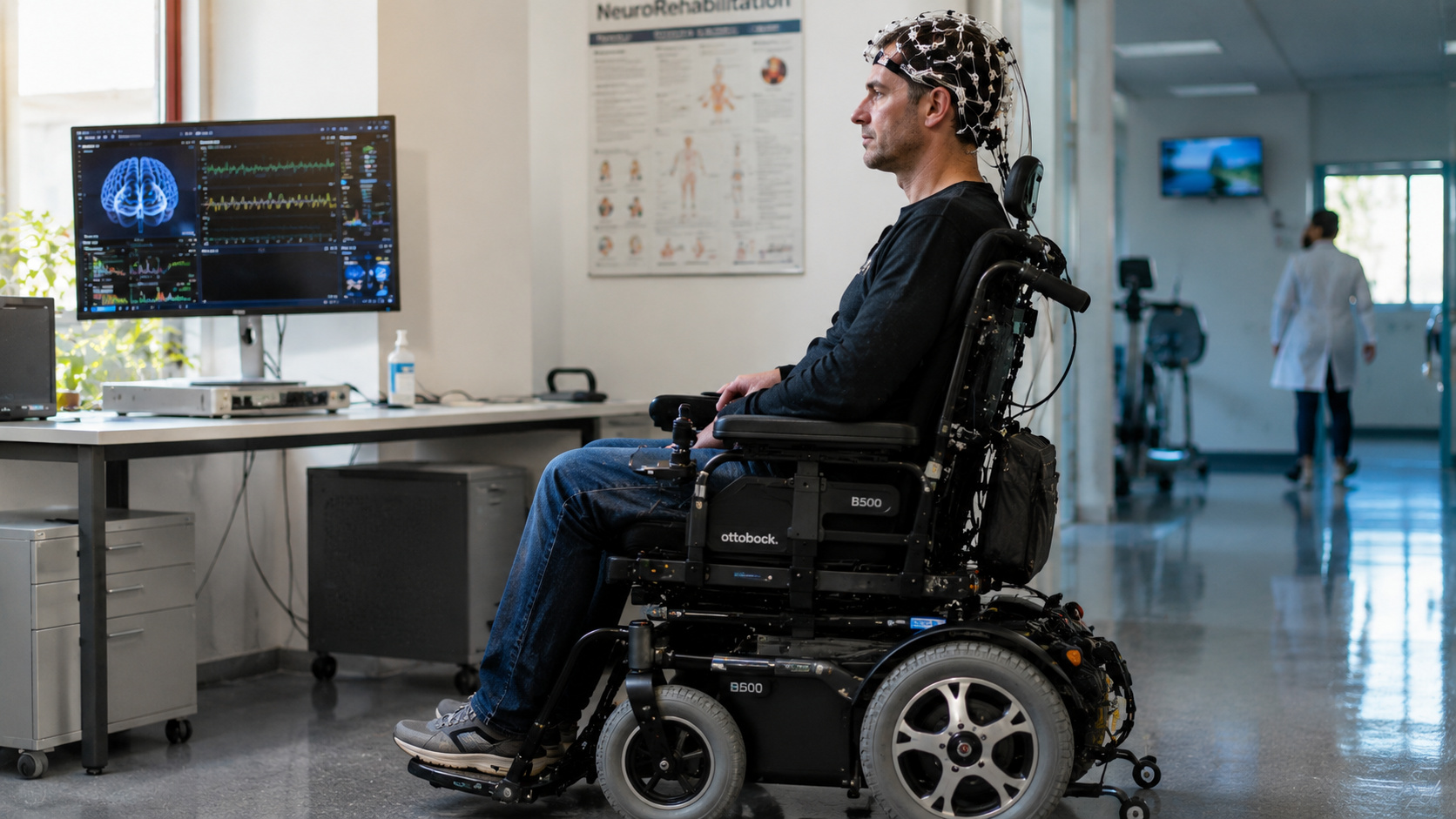

Brain-computer interface system approved in China can interpret neural signals in real time and has already been tested on patients with paralysis, epilepsy, and neurodegenerative diseases.
China has taken a historic step in the global race for neural technology by approving the world’s first commercially used brain implant. This advancement puts the country ahead of the United States in a sector that has been widely associated with Neuralink, Elon Musk’s company.
The information was published by the scientific journal Nature and echoed by international technology and science media in May 2026. According to the report, the Chinese ecosystem is already operating at an advanced stage in the development of brain-computer interfaces, with completed clinical trials, products close to market, and systems functioning with artificial intelligence support.
-
The ‘tsunami’ of investments directed at Artificial Intelligence (AI) and semiconductor companies, which prioritize security and more predictable profits, has been a determining factor in the declining trajectory of Bitcoin.

-
Samsung eyes strategic chip factory in South Korea and could shake up the global AI landscape with advancements in HBM memories and advanced packaging.

-
Nvidia makes agreements in South Korea for AI factories and takes data centers, advanced chips, and global cloud to another level by 2027
-
ChatGPT reveals which human job it would choose if it could really work


Furthermore, the Chinese government has set an ambitious goal: to transform the country into a world leader in neural interfaces by 2030. The plan includes the creation of at least two or three globally relevant business groups in the sector, with technical goals expected by 2027.
How the brain implant approved in China works
The so-called brain-computer interfaces are not exactly new. For at least a decade, researchers have been using this type of technology on patients with paralysis, neurological injuries, and degenerative diseases.
However, the recent major leap happened thanks to the incorporation of artificial intelligence into neural systems.
According to Li Haifeng, a neurocomputing researcher at the Harbin Institute of Technology, the new language models have drastically increased the ability to interpret brain signals.
In practice, this means that the system not only captures electrical impulses emitted by the brain. It can also interpret these signals with enough precision to:
- generate speech;
- move cursors;
- control equipment;
- operate electronic devices;
- trigger digital commands in real time.
One of the companies leading this advancement is NeuroXess, a Shanghai-based startup.
The company developed a system capable of decoding Mandarin in real time at an impressive speed of 300 characters per minute.
For comparison, a native speaker typically produces about 220 characters per minute during a regular conversation.
The system was tested on a 35-year-old patient diagnosed with epilepsy.
Patient controlled appliances using only thought
Another test conducted by NeuroXess caught the attention of the international scientific community.
According to the report published by Nature, a 28-year-old man with a spinal cord injury managed to control appliances using only thought.
The patient moved a cursor on the computer exclusively through brain activity captured by the neural implant.
The system works with sensors positioned over the cerebral cortex. The implant is located on the skull and connected by wire to a module installed in the chest area.
This module collects, processes, and transmits the neural data captured by the sensors.
Furthermore, researchers state that accuracy has significantly increased thanks to artificial intelligence algorithms used in processing brain signals.
China bets on large volume of neural data to accelerate technology
Experts point out that one of China’s greatest advantages in the neural interface race is access to a vast amount of patient data.
According to Meicen Sun, a researcher at the University of Illinois at Urbana-Champaign, the size of the Chinese population and the more flexible regulatory environment facilitate the massive collection of neural information.
This creates a cycle considered strategic:
- more data;
- more efficient AI models;
- better products;
- greater adherence;
- even more data for training.
On the other hand, the advancement also raises important debates about privacy and security of brain information.
The Chinese government published ethical guidelines for the sector in 2024. The rules require documented consent from participants and approval by ethics committees for conducting tests.
Even so, experts state that there is still no global consensus on how brain data should be protected on a commercial scale.
Brain-controlled wheelchair to be launched in June
The technological race between China and the United States also involves international cooperation.
The Chinese company Maschine Robot, based in Beijing, is working in partnership with MIT’s Human-Computer Interaction Laboratory and Stanford’s Cognitive Neuroscience Laboratory.
According to Tony Zhang, co-founder of the company, one of the biggest current challenges is precisely building neural databases large enough to train artificial intelligence models.
This happens because brain activity varies greatly between individuals.
The company’s next product will be a wheelchair controlled by brain signals, primarily aimed at patients with amyotrophic lateral sclerosis.
The launch is scheduled for June 2026.
The system uses a headband capable of capturing neural activity. Additionally, it combines brain reading with eye tracking to determine the direction of the wheelchair’s movement.
This solution reduces some of the limitations associated with invasive brain implants.
The clinical trials were conducted in partnership with the Beijing Union Medical College Hospital.
Global technological race enters a new phase
The Chinese advancement in the neural sector significantly changes the global technological landscape.
Until recently, much of the world’s attention was focused on Neuralink, a company founded by Elon Musk in the United States.
Now, however, Chinese companies are at the forefront with products already close to commercialization and practical applications working in real patients.
According to information released by Nature and reported by Época Negócios in May 2026, the brain-computer interface sector could become one of the most strategic of the next decade.
Experts believe these technologies could transform areas such as:
- medicine;
- accessibility;
- communication;
- mobility;
- neuroscience;
- artificial intelligence;
- assistive robotics.
Meanwhile, the debate on ethics, privacy, and brain security promises to grow along with the accelerated evolution of this new technological frontier.
Would you have the courage to use a brain implant capable of connecting your mind directly to computers and equipment?