





 Portuguese
  English
  Spanish
  5 min of reading


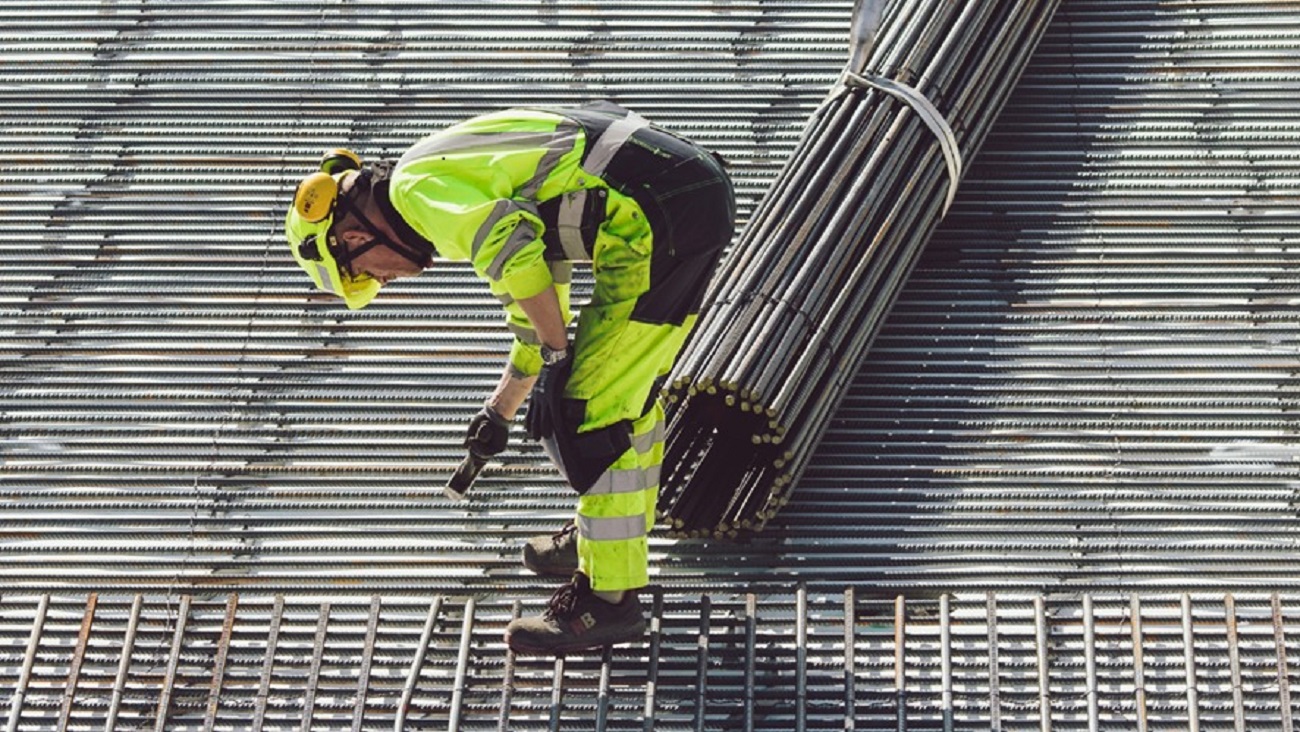
Do You Know What the Main Types of Steel Are and What Their Applications Are in Civil and Industrial Construction? With various applications, steel alloys are an essential part of society.
Thus, from steel cable conveyor belts in the industrial sector to parts of civil construction, the metal is fundamental for many uses.
That is, it offers a better cost-benefit for the construction and manufacture of various products. But what are the main types of steel and their applications? Find out more in this article!
Types of Steel and Their Compositions
To begin, you need to understand that every steel has a basic element in its composition: carbon. However, for the metal to achieve its properties for industrial use, it is necessary that it also contains other components.
-
Santa Catarina invests R$ 1 billion against the risk of El Niño, accelerates work on dams, cleans rivers, delivers 641 bridges and 126 water trucks, and prepares 295 municipalities for heavy rains, floods, and landslides still in 2026.

-
Building a 95-square-meter house in 2026 can start at around R$ 185,000 at the reference base and exceed R$ 330,000 in high standard, but the final cost depends on the land, finishing, fees, and the region, with the South of the country being among the most expensive in Brazil.

-
A small church built in 7 weeks in 1961 stands surrounded by skyscrapers in Balneário Camboriú, the city with the most expensive square meter in Brazil, accommodating only 60 people and defying decades of verticalization and luxury on the coast of Santa Catarina.
-
Satellite images analyzed by Reuters reveal that China is building a vast network of over 80 launch platforms, bunkers, and communication centers in the Xinjiang desert near its nuclear silos, in an effort that analysts say aims to ensure the capability to retaliate in the event of an attack.


In this way, other metals can be added to its chemical composition, such as chromium, nickel, copper, and others. This allows for the manufacture of new types of steel with different compositions.
Carbon Steels
One of the most common is carbon steel itself, created by alloying iron with carbon. Thus, with just over 2% of this element in its composition, it has a more “pure” form, without significant amounts of other metals.
In summary, this type of steel brings some residual elements, such as phosphorus or silicon. But in very low quantities, they do not alter the properties of this type of steel.
Additionally, it is worth noting that among the types of steel, this is one of the most produced, with approximately 90% of production worldwide.
Alloy Steel
However, other types of steel are also created from the combination of iron and carbon. Thus, they give rise to types of steel with different chemical and mechanical properties.
In practice, the addition of new elements can assist in the application of steel in different sectors and industries. Therefore, the components used in its creation will define where it will be applied.
It is common for some elements to be added in a steel alloy, such as: chromium, manganese, molybdenum, nickel, tungsten, and vanadium.
The elements are used for various purposes, such as increasing the resistance and durability of the metal, or allowing it to be used at higher temperatures. Additionally, alloy steel can be divided into the following categories:
- low alloy steel: when the sum of the elements used in the alloy does not exceed 5% of the total metal;
- high-strength low alloy steel: created with a carbon content of less than 0.25%. Furthermore, the total content of the other elements must be less than 2%.
- medium alloy steel: when the sum of the content of the elements applied in the alloy is between 5% and 12% of the created metal;
- high alloy steel: when the sum of the contents of all the elements used in the composition of the alloy is at least 12% of the total material.
Galvanized Steel
Another type of steel is galvanized steel. In summary, it undergoes a galvanizing process to achieve greater resistance.
The process involves immersing the material in molten zinc. Thus, it ensures greater resistance to corrosion, making it suitable for manufacturing pipes and beams.
Galvalume Steel
Although it has a similar name, galvalume steel is an alloy composed of aluminum, silicon, and zinc. Also resistant to corrosion, this is one of the types of steel with the longest lifespan.
That is, compared to galvanized steel, it has a lifespan four times longer. Therefore, it is widely used in industrial and military production.

Types of Steel and Their Applications
However, in addition to composition, the types of steel also vary by the application given to them. That is, a common classification for the metal is its intended use. Whether for industrial use or in civil construction, steel has various applications.
Continue reading to learn more about the types of steel and their applications.
Structural Steels
One of the most common applications of steel is structural. Due to its mechanical strength, structural steels support large loads. In practice, these are carbon steels or compositions with small amounts of other metallic elements.
Thus, it is quite common to find them especially in reinforced concrete structures. That is, due to their high resistance to compression, they are embedded in the structures, allowing for greater resistance against tension.
Another characteristic is their ability to adhere to concrete, with deformations that are compatible with this type of material.
Stainless Steel
Another type of steel that has a well-known and common application is stainless steel. Stainless steels are simply the production of the metal with the addition of chromium and nickel.
Thus, it is made in a blast furnace, starting from pig iron. This makes it more resistant to atmospheric corrosion and other chemicals.
This results in stainless steel having various applications, whether in industrial use or civil construction. Ideal for piping, creating components, and equipment, it also has a very characteristic shine.
Moreover, this shine is maintained for a long time with simple cleanings. Withstanding high temperatures, it is also used in the production of ovens and combustion chambers.
Steels for Mechanical Construction
For mechanical construction, steel is used in the manufacture of forged parts, shafts, gears, and other components.
In summary, in this type of application, low-alloy carbon steel is applied in numerous products. All of this is due to the resistance that the material presents, ensuring safe use and a long lifespan.
Steels for Casting
Finally, we can also highlight the types of steel used in casting. Widely used in the production of cast steel parts, it uses a process where liquid steel is poured into molds.
Thus, it takes on the shape of the mold in which it was applied, solidifying shortly thereafter.
Conclusion
Thus, it is possible to note that the various types of steel present diverse characteristics and applications. In general, the intended use depends on the needs of those who manufacture or use the metal.






Be the first to react!