





 Portuguese
  English
  Spanish
  3 min of reading
  0 comments


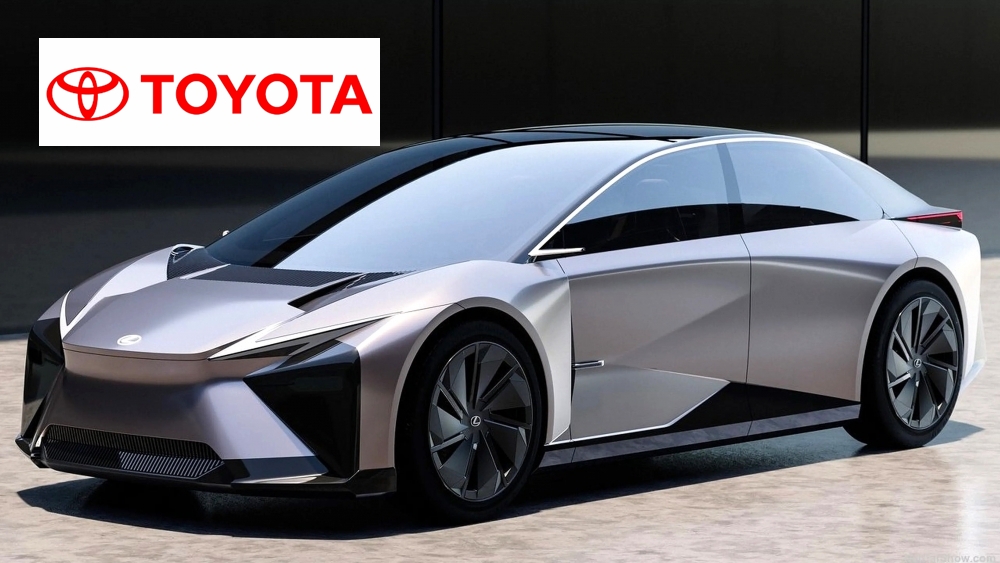
Toyota Announces Construction of Its First Electric Vehicle Factory in China, Directly Entering BYD’s Territory and Expanding Its Market Presence.
Toyota, the global leader in vehicle manufacturing, is preparing to take on the Chinese giant BYD in its own territory. According to the reputable Japanese economic newspaper Nikkei, the Japanese automaker will build its first factory exclusively dedicated to electric vehicles in China by 2027.
This initiative aims to strengthen its position in the world’s largest automotive market and expand its presence in the electric vehicle segment, where it currently faces challenges.
Toyota Targets Market Dominated by BYD
Despite its global dominance in sales, Toyota is underperforming in the Chinese market, particularly in the electric vehicle segment.
-
Man pays only R$ 17,500 for a 2021 Hyundai Creta at auction, finds SUV covered in mud and with a stalled engine, but discovers the problem was much smaller than everyone imagined.

-
Cheaper than the JAC T60 Plus: with a 1.5 flex engine, 1.6 option with 138 hp, CVT-type automatic transmission, 360 camera, panoramic sunroof, and 10-inch central unit, this used Chinese SUV tries to convince those looking for a complete package: meet the JAC T40 Plus 2022.
-
Man spends 20,000 hours and 7 years building a functional wooden supercar with a Cadillac V8 engine, 20 types of wood, and a reported top speed of 320 km/h.
-
With a compact design and performance above expectations: 1.5 flex engine with up to 136 hp, 6-speed automatic transmission, 445-liter trunk, and four airbags make the Ford Ka Sedan Titanium 1.5 Automatic 2020 a well-equipped used car.


BYD, its main competitor, leads the sector with about 36% market share and monthly sales exceeding half a million units.
The construction of this new factory is part of Toyota’s strategy to close this gap and increase its competitiveness in the local market.
The factory will be located in the outskirts of Shanghai, an area that already houses major automakers such as Nio and the SAIC Group, owner of the MG brand.
This will be Toyota’s first 100% operated factory in China, a significant milestone, as the company until now has produced vehicles in the country in partnership with local manufacturers.
Focus on the Lexus Brand
Interestingly, the new factory will not produce Toyota-branded vehicles but will be dedicated to manufacturing electric cars for Lexus, the group’s luxury division.
According to sources cited by Nikkei, the strategy aims to align with Toyota’s global plan to manufacture 3.5 million electric cars per year by 2030, meeting the growing demand for premium electric vehicles in China.
This decision reflects the group’s intent to strengthen Lexus’s presence in the Chinese market, where consumers are increasingly interested in luxury vehicles with sustainable technologies.
The move also demonstrates the strategic importance of the premium segment for the automaker’s long-term plans.
Partnership with BYD Continues
While preparing to operate independently with its new factory, Toyota continues to maintain its collaboration with BYD.
Recently, the two companies launched models such as the Toyota bZ3c, an electric SUV, and the bZ7, an electric sedan, both tailored exclusively for the Chinese market.
These vehicles are produced in joint factories, highlighting the complex relationship between competition and cooperation that characterizes the automotive sector in China.
Challenges and Opportunities
Toyota’s decision reflects the urgency to adapt to the rapid changes in the global automotive market.
With the increasing demand for electric vehicles and pressure for a transition to cleaner technologies, the automaker recognizes the importance of competing directly with companies like BYD in strategic markets.
Still, significant challenges remain. In addition to strong local competition, Toyota will need to invest heavily in infrastructure and technology development to meet the expectations of Chinese consumers, who are among the most demanding in the world.
The construction of the new factory marks a decisive step, but it also requires rigorous planning to ensure success in such a competitive market.
By 2027, Toyota will have to prove that it can not only compete but also carve out space in a territory where its main rival already reigns supreme.
With the arrival of the new factory, Toyota promises to further energize the global automotive market, reinforcing its commitment to innovation and sustainability in the sector.




-

-

-

14 people reacted to this.