Portuguese
  Spanish


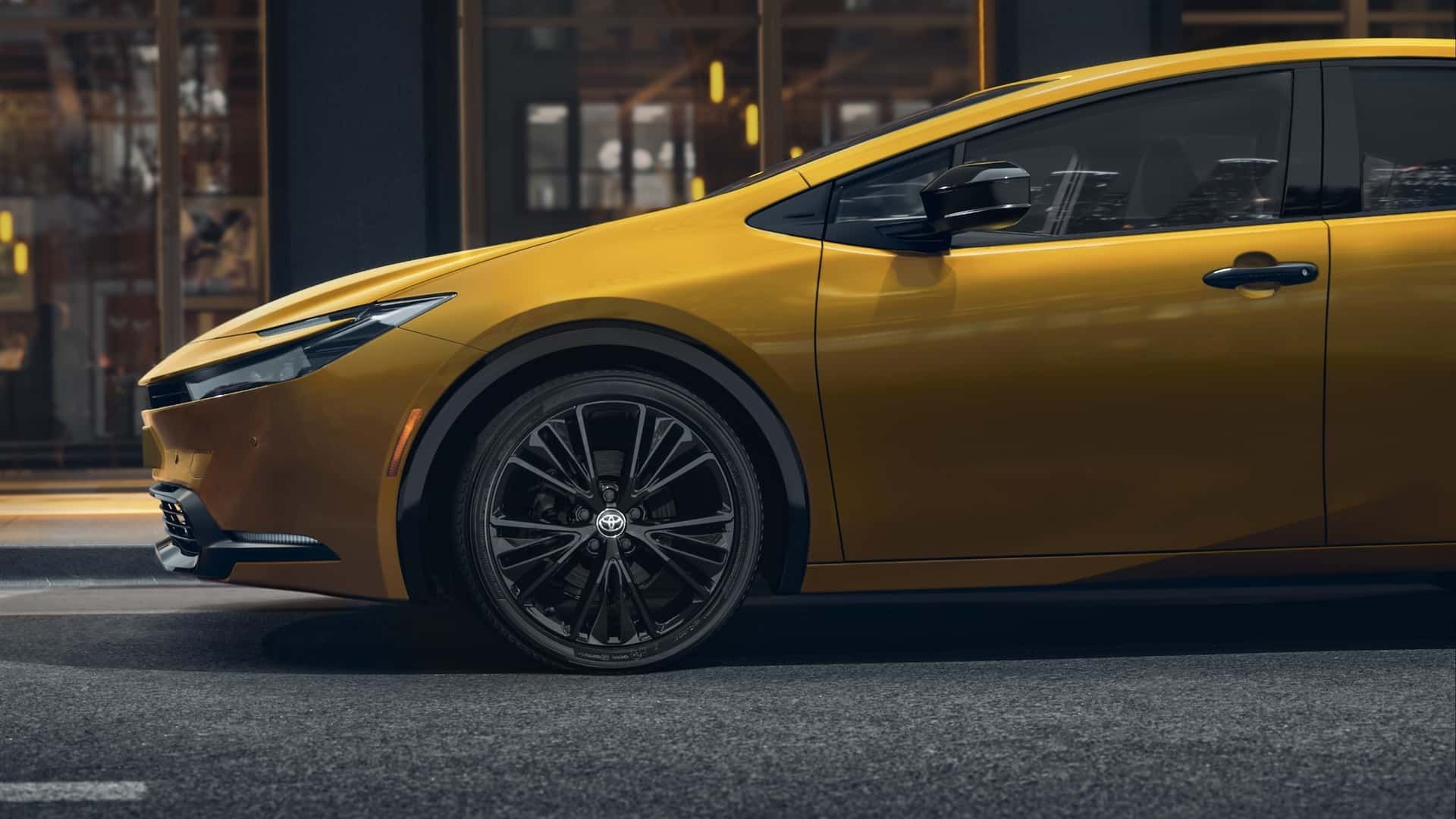


Plug-in Hybrid Flex Prius Will Be Displayed at Fenasucro & Agrocana in Sertãozinho, Combining Electrification and Ethanol with a High Efficiency and Low Emissions Proposal. Prototypes and Activations Promise to Show Practical Applications of the Technology to the Public.
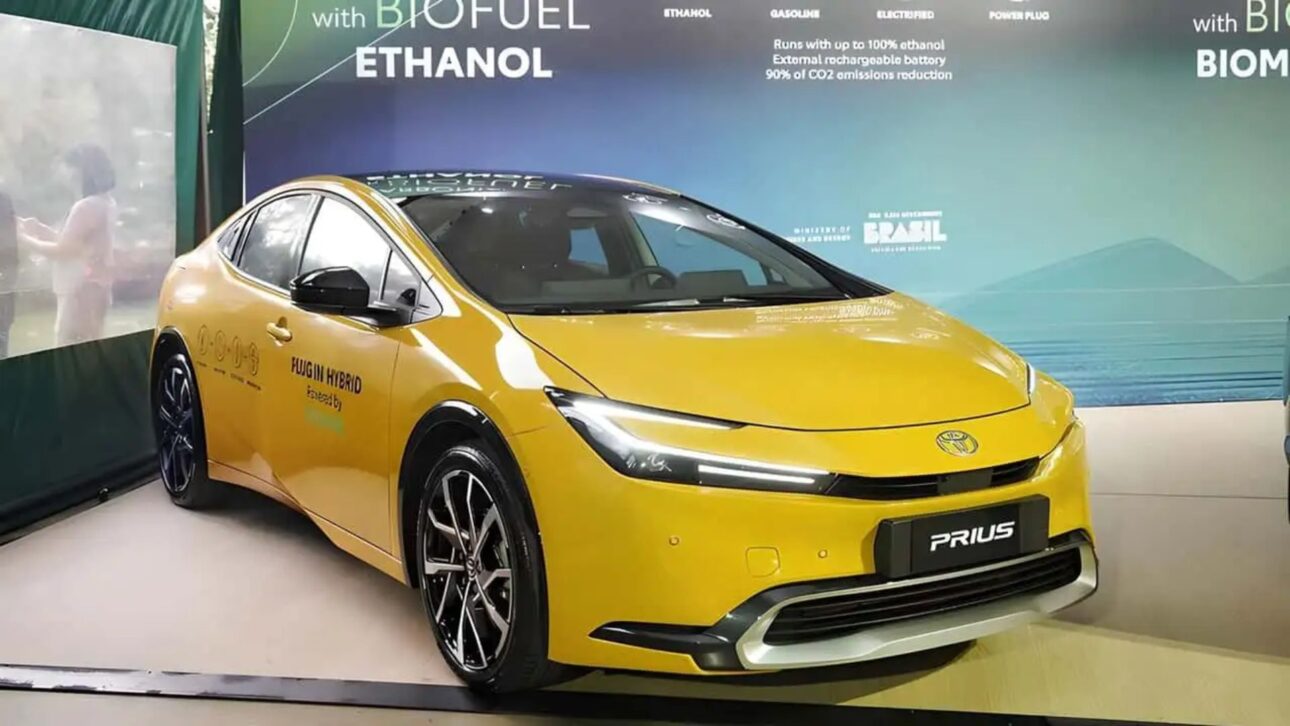
Toyota do Brasil will present, from August 12 to 15, at the Fenasucro & Agrocana 2025 event, in Sertãozinho (SP), the prototype of the Plug-in Hybrid Flex Prius.
This model combines electric charging from the socket with a combustion engine capable of running on gasoline or ethanol.
According to the manufacturer, when fueled with ethanol and with a fully charged battery, the technology can reduce CO₂ emissions by up to 90%.
-
Hilux’s little sister: Toyota relaunches the Land Cruiser 70 in the 2027 lineup with over 40 years of production, a 2.8 turbo diesel engine with 201 hp and 51 kgfm, a six-speed automatic transmission, and a renewed retro look.

-
Automatic, economical, and known for reliability: with a 1.5 engine of up to 110 hp, CVT transmission, seven airbags, and fuel consumption of up to 15.9 km/l, this used hatchback appears as a rational alternative to Polo, HB20, and Onix; meet the Toyota Yaris XLS 2020.
-
He surpassed the Tera, Creta, and Tracker: With a TSI engine of up to 150 hp, 6-speed automatic transmission, and a 373-liter trunk, the Volkswagen T-Cross was the best-selling SUV in June, with 11,753 registrations.

-
It looks factory-made, but it came out of a workshop: a mechanic from Pernambuco builds a handcrafted “mini Toyota,” drives it through the streets, and the video goes viral on social media, leaving residents astonished.

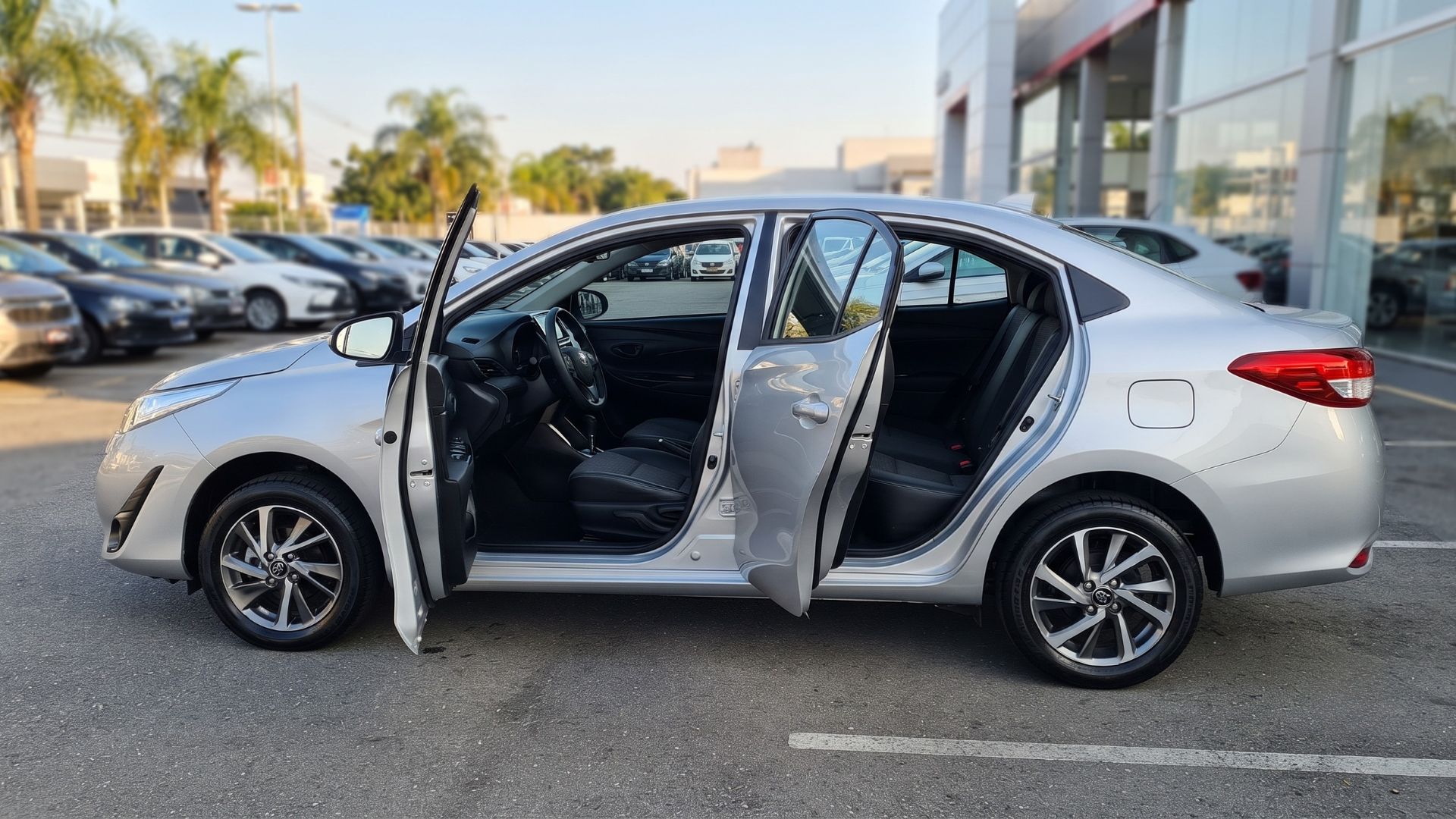


Fuel consumption can exceed 25 km/l with ethanol under conditions of electric support.
This initiative is part of Toyota’s global “multipathway” strategy, which seeks decarbonization solutions tailored to the specific conditions of each market.
In Brazil, the focus is on ethanol as a low-carbon biofuel, a well-established alternative.
Toyota’s booth will be 150 m², featuring technological demonstrations, exhibition of national models (Hilux, SW4, Corolla Cross Hybrid Flex Full) and practical experiences, such as using vehicle energy to make coffee.
International Technical Specifications of the Plug-in Hybrid Prius
Although the Brazilian prototype has not yet had its complete technical data released, versions offered in other countries allow for projecting its possible characteristics.
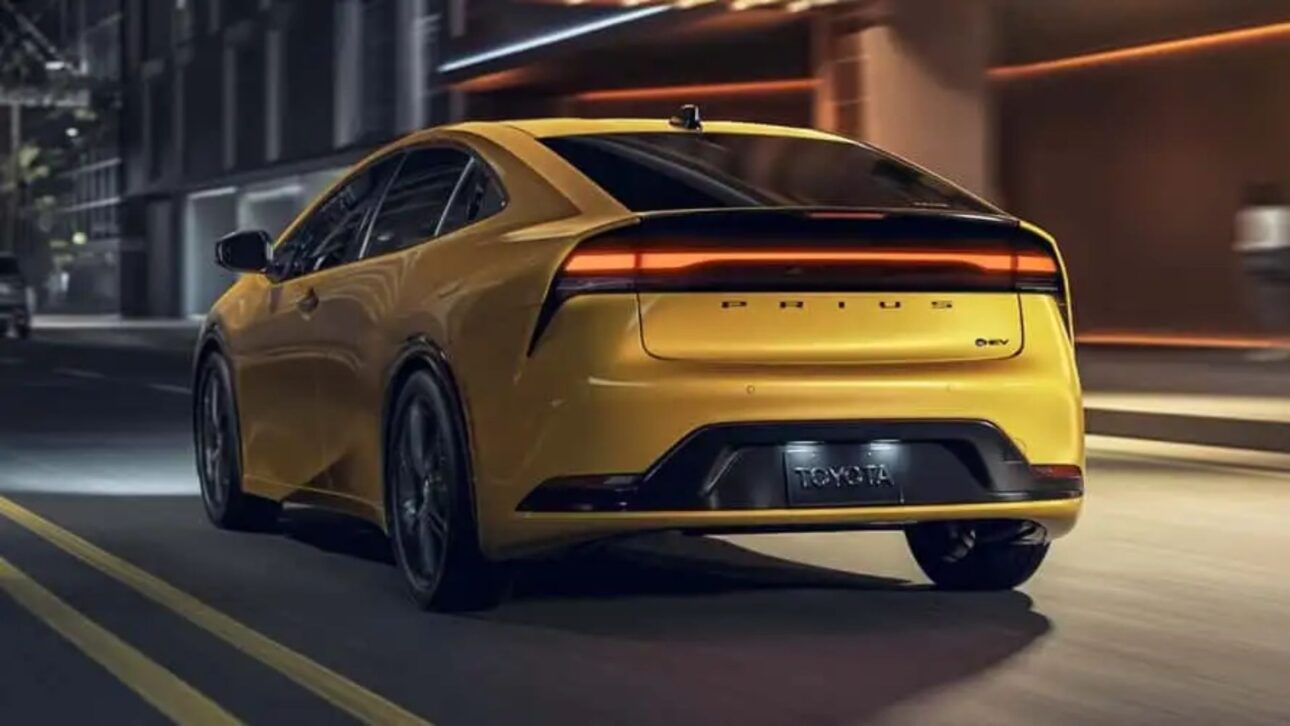
In the United States, the model now called Plug-in Hybrid Prius (formerly Prius Prime) has a 13.6 kWh battery, an estimated electric range of about 71 km, and a combined power of 220 hp, with acceleration from 0 to 96 km/h in approximately 6.6 seconds.
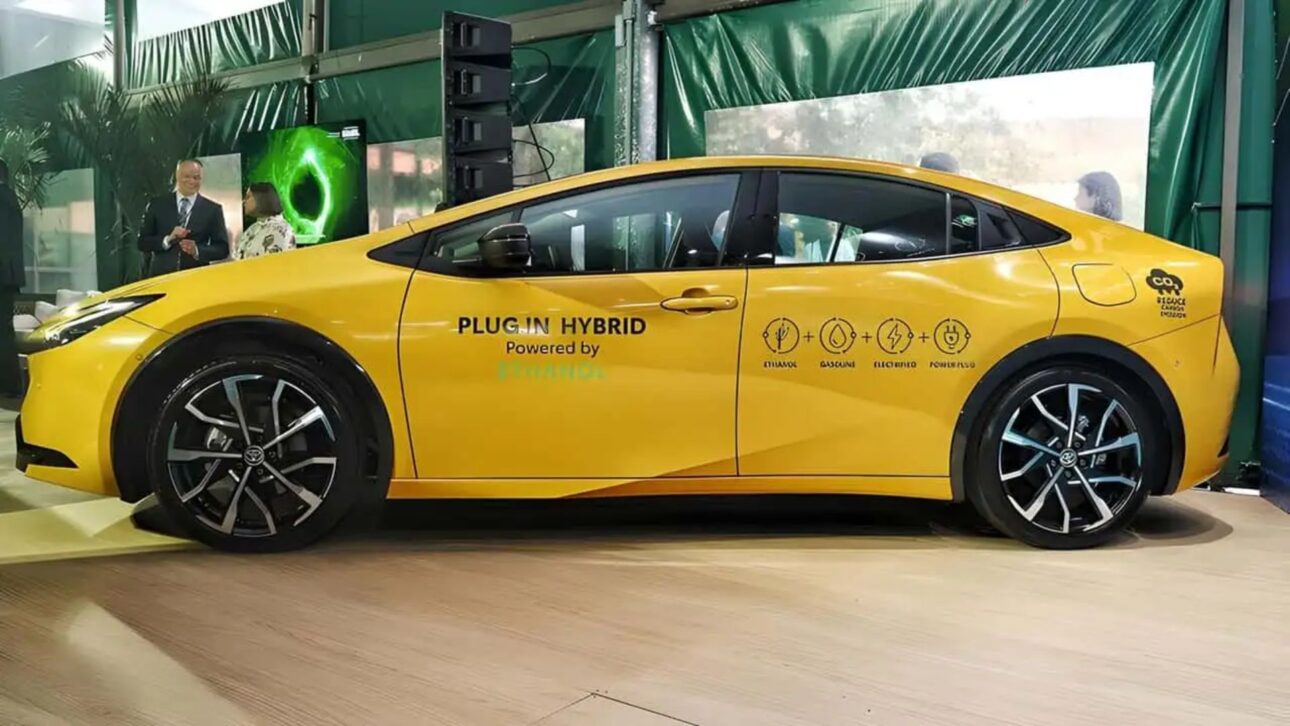
According to global Toyota data, a recent PHEV version offers a system with 164 kW (223 PS) of maximum power and an efficiency of 26.0 km/l with 19″ tires, reaching 30.1 km/l with 17″ tires.
Fully electric driving can achieve 87 km with 19″ tires and 105 km with 17″ tires.
In models sold in North America, the estimated average electric range is 64 to 72 km, combined consumption between 52 mpg UK or MPGe, charging capacity in about 4 hours using a 240 V outlet, a fuel tank of approximately 40 L, and estimated annual emissions around 1.5 to 1.6 tons of CO₂.
Environmental Impact and Economic Benefits for Brazil
The introduction of the Plug-in Hybrid Flex Prius reinforces Toyota’s commitment to electrification aligned with the Brazilian energy matrix.
The use of ethanol, a widely available renewable fuel, combined with electric propulsion, promises high efficiency and significant emission reductions — potentially up to 90%.
Context of Toyota’s Strategy in Brazil
This prototype is another step for Toyota in the country.
Since 2019, the brand has integrated flex hybrid technology in the Corolla and Corolla Cross.
The investment of R$ 11.5 billion by 2030 also includes the production of two new flex hybrids (HEV), the first being the Yaris Cross, scheduled for launch in October of this year.
Participation in the Ethanol Debate
In addition to the technological showcase, Toyota will participate in the panel “Global Expansion of Ethanol” at Fenabio 2025.
The event will feature Rafael Ceconello, Director of Government Affairs at Toyota do Brasil, addressing the evolution of flex hybrid engine technology and other solutions aimed at carbon neutrality.
Experimentation and Interaction Space
The booth goes beyond mere exhibition.
Toyota will conduct demonstrations of using vehicle energy to power equipment — such as making coffee — illustrating the versatility of a plug-in hybrid in everyday life.
Do you see the Plug-in Hybrid Flex Prius as a practical solution for daily life, or would you prefer to wait for battery electric models with more accessible prices?