





 Portuguese
  English
  Spanish
  3 min of reading


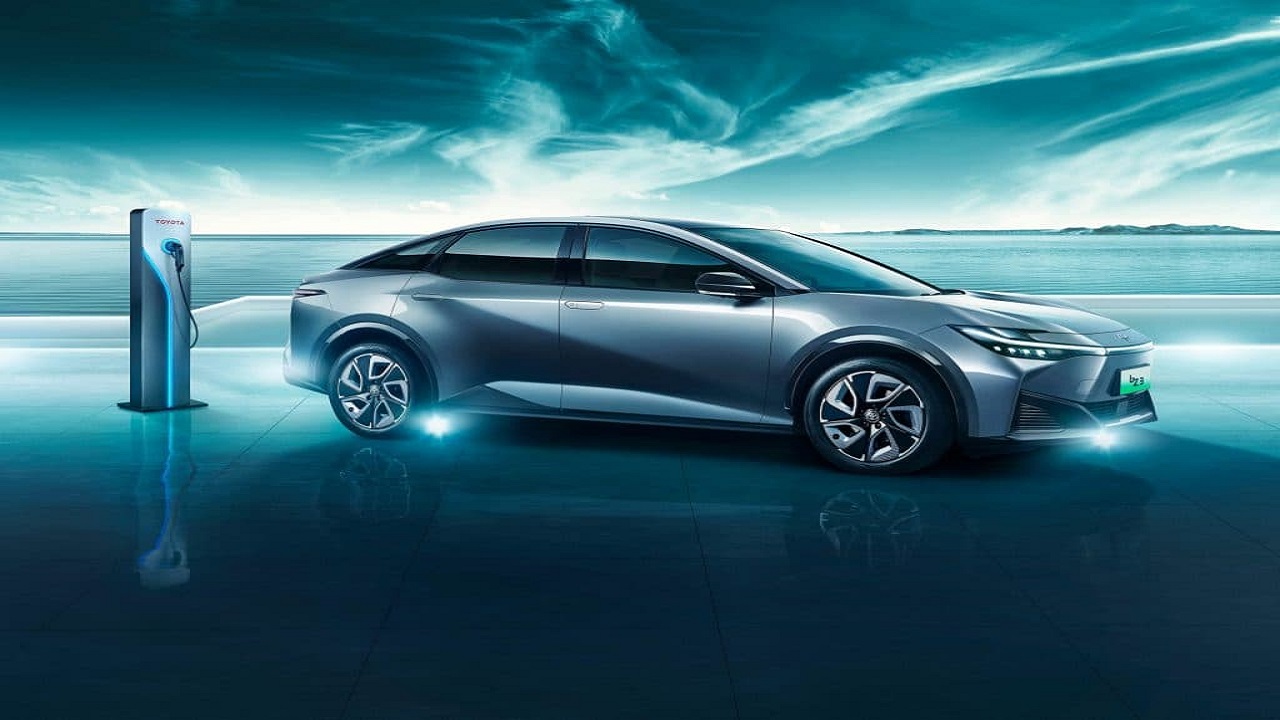
Toyota Is Leaving Hybrid Cars a Bit Aside and Has Decided to Focus on Electric Cars. After Closing a New Partnership with BYD, the Japanese Company Will Bring Its New Electric Vehicle with “Infinite Battery” to Market.
Toyota, a Japanese automaker known for hybrid cars, is now starting to focus on another sector, electric vehicles. The company’s news is the new bZ3 sedan. The vehicle, aimed at the Chinese market, arrived after the presentation of the bZ4x SUV.
Toyota Focusing on Its New ‘Infinite Battery’ for Electric Cars
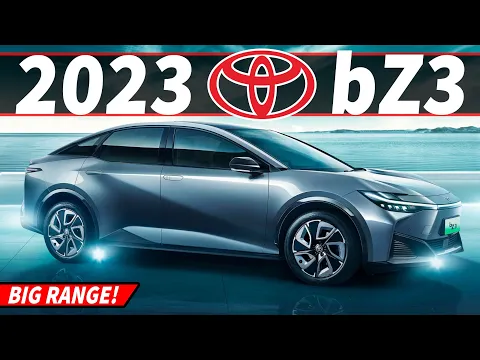

In China, Toyota has a partnership with another giant in the vehicle market, BYD. The company’s model combines Toyota’s electric vehicle platform with Chinese lithium iron phosphate batteries, which has confirmed the launch of its cheapest electric car in Brazil.
The bZ3 uses BYD’s Blade technology, which divides the cells into blades. This process makes it possible to store 50% more energy than other common batteries, in addition to making the electric car safer, as it is more resistant to fires.
-
XPeng receives 24,863 orders in just 12 hours, sees GX hybrid SUV become a craze in China, and now races against queues of up to 35 weeks to deliver the model most desired by buyers.

-
Ford Fusion 2014 impresses with comfort and a 240 hp turbo engine, but an owner’s survey shows an annual expense of R$ 17,717 with IPVA, insurance, maintenance, tires, and fuel.

-
With a new 2.2 turbo diesel engine of 200 hp, 45.9 kgfm torque, eight-speed automatic transmission, and fully recalibrated suspension, the Fiat Titano Ranch 2026 reduces the 0 to 100 km/h time to 9.9 seconds, addresses the main criticisms of the model, and establishes itself among the most competitive mid-size pickups in Brazil.

-
Rare pickup truck in Brazil is startling due to its size and price: Ford F-350 Platinum imported from the USA features a V8 Power Stroke, 24-inch tires, luxury seats, and the power to carry 3 tons in the bed or tow 18 tons as if it were a toy.



The boost in energy density gives Toyota’s vehicle a range of over 600 km, according to the automaker itself. Another highlight is the component’s lifespan, which even after 10 years of use, the infinite battery will still hold 90% of its maximum capacity.
Toyota’s Electric Car Has 244 Horsepower
Measuring 4.72 meters in length, 1.47 m in height, 1.83 meters in width, and 2.88 meters in wheelbase, the Toyota electric vehicle that features the ‘infinite battery’ will have two versions. The first has a power of 183 horsepower with front-wheel drive.
The other, which is even more powerful, has 244 horsepower, two electric motors, and all-wheel drive. The acceleration numbers for the Japanese automaker’s electric car have not yet been disclosed.
In the end, although it has received a battery with advanced technology, the electric car aims to be a more basic vehicle in the Chinese market, therefore, there are few distinguishing elements in the interior. One of them will be the inductive charger in the center console.
The bZ3 does not yet have an officially defined price, and according to information and suggestions from the Chinese media, the vehicle will be sold for the equivalent of R$ 160,000 in its most basic version.
Toyota Focuses on Developing Hydrogen-Powered Cars
In addition to working on the ‘infinite battery’ for electric cars, Toyota does not see electrification as the only solution for a more sustainable world. Proof of this is that in August of this year, the Japanese company closed a partnership with German BMW for the development of a hydrogen-powered SUV.
The German company firmly believes that hydrogen is a resource that should be explored within the vehicle market, and according to Pieter Nota, current head of sales at BMW, the company can start large-scale production of hydrogen cars as early as 2025. The first units of BMW’s new hydrogen-powered SUV, the iX5 model, are expected to enter the automotive market in mid-next year.
This forecast was scheduled for this year; however, the current global situation has led the German company to revise its plans and postpone the launch date of the first prototype. According to Toyota and BMW, the main advantage of vehicles powered by this fuel is their ability to be refueled quickly, which theoretically would take about 3 to 4 minutes.
BMW has not yet disclosed details regarding the range, but it claims that the vehicle has two 5.8 kg tanks, enough for long trips.





Be the first to react!