Portuguese
  Spanish


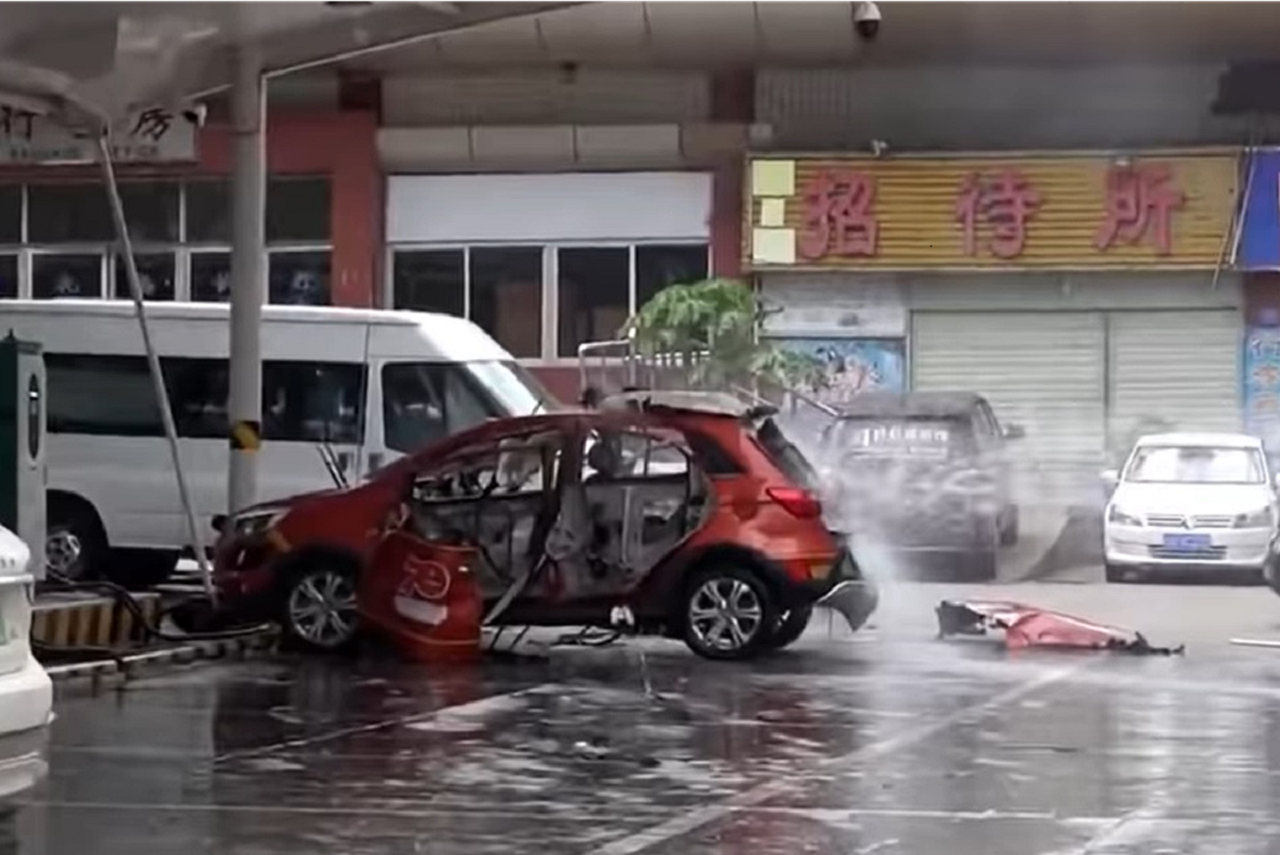

With High Incidence of Incidents Related to Fires and Explosions, Hybrid Cars Are Frequently Requested for Recalls
It has been reported for some time that hybrid models have more incidents of fires and explosions than electric cars. In fact, electric models aren’t as prone to catching fire – but there is the possibility, like any other vehicle – as with hybrid or combustion-only cars. According to data from the National Transportation Safety Board in the United States, hybrid vehicle models are the champions of fires and explosions.
Read Other Related News
Number of Incidents Recorded with Hybrid Cars
Electric cars are being considered much safer than planes and combustion-powered cars. Even being 100% electric, studies and tests have shown that they are less likely to catch fire, with about 25.1 fires registered for every 100,000 units sold and delivered.
On the other hand, there are 3,474 fires recorded in hybrid models and 1,529 fires recorded in combustion-powered cars, also compared per 100,000 vehicles sold. Upon analyzing and verifying the high number of cars that caught fire, or only posed a fire risk and were recalled in 2020, research indicated that combustion-powered cars were at the top of the list.
-
End of an era in Brazil: beloved sedan by Brazilians is discontinued despite having a 2.0 engine with 151 hp, CVT transmission, 466-liter trunk, and up to 650 km of range.

-
New Law Proposal in Brazil Could Heavily Penalize Drivers: Dangerous Overtaking May Become a Serious Offense with Fines Increased Tenfold and a 12-Month License Suspension; Update on 2026 Progress

-
Electric Revolution: Watts W125 Motorcycle Offers 160 km Range, 90 km/h Speed, and Affordable Price Starting at $3,000
-
General Motors Replaces Over a Thousand Workers with 50 Cobots at Electric Vehicle Plant, UAW Union Criticizes Move Amid Industry’s Automation Push


Regarding recalls of electric cars, only the Hyundai Kona and Chevrolet Bolt EV models were recalled. The former had 82,000 units recalled due to suspected defective batteries that could cause short circuits or fires, while the latter had 70,000 units recalled.
Fires in Electric and Hybrid Cars Are Harder to Control
When the recall was conducted for the hybrid model minivan Chrysler Pacifica, with 27,600 units recalled, and the BMW group recall, where about seven different models were identified with possible problems but only 4,500 vehicles were recalled, it was discovered that the battery was likely to cause significant fires in hybrid models in 2020, just as in the 100% electric vehicles that were recalled.
However, according to tests conducted, both electric and hybrid cars share a common issue: the difficulty of controlling fires, mainly due to their batteries, as the vast majority are made of lithium ions.
Something that makes battery fires even more dangerous is the ease with which, even after the fire has been controlled, flames can flare up again more violently, making the process of containing the fire even more difficult, according to firefighting teams and other emergency services. Following reports like these, such teams are now receiving rigorous special training to handle fires in these types of vehicles.
Lithium-Ion Batteries Are the Main Cause of Fires in Electric and Hybrid Vehicles
According to Axel Hernborg, CEO of Tripplo Logistics, a software company located in Johannesburg, South Africa, electric cars may indeed catch fire less frequently than combustion cars; however, the duration and intensity of the flames make it much harder to control the fire, due to the use of batteries made with lithium ions.
Axel also emphasizes that even if the car is turned off for 24 hours, the batteries can still generate enough heat for a short circuit that could lead to a fire or even an explosion of the vehicle.