






 Portuguese
  Spanish
  3 min of reading
  2 comments


Toyota Revolutionizes with New Advanced Engine: Tested on Corolla Cross and Yaris, This Incredible Engine 1.6 H2 Promises to Make Electric Cars Obsolete!
Toyota revolutionizes with new engine of the Corolla Cross and Yaris that promises to leave electric cars behind! The Japanese automaker is advancing in the development of alternative propulsion methods, being a pioneer in the hybrid vehicle segment with the launch of the Prius in 1997. In addition to hybrids and electric vehicles, the brand has a strong commitment to hydrogen-powered vehicle technology.
Recently, Toyota designed an innovative combustion engine that uses liquid hydrogen as fuel, offering a promising alternative to electric cars in the quest for decarbonization. This engine, an adaptation of conventional combustion engines, operates on a distinct principle from that used in the Mirai, a sedan that generates energy from fuel cells that process gaseous hydrogen.
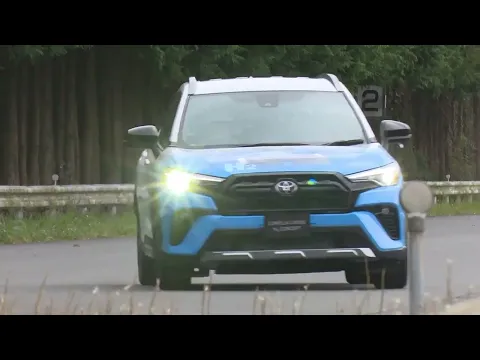

New Technology Applied to the 1.6 Turbo Engine of GR Yaris and GR Corolla Models, Already Tested on Corolla Cross
Storing liquid hydrogen in H2 engines requires low-pressure conditions and temperatures below -250ºC, although it allows for an energy density 50% higher than that of gas in the same volume.
-
Three doors, concept look, and FIPE value of R$ 62,524: The 2013 Hyundai Veloster delivers a 1.6 engine with 140 hp, a 6-speed automatic transmission, and a design that still seems too strange to go unnoticed.

-
A Land Rover that used to do 1.8 km per liter now does 8 km per liter after a 34-year-old Kenyan engineer installed an ECU he designed himself, which is already being ordered from Zambia, Canada, and Pakistan.
-
Cheaper than new HB20, Onix, and Argo, this German sedan offers a 510-liter trunk, a 2.0 naturally aspirated engine, a 6-speed Tiptronic automatic transmission, and well-known mechanics; the 2016 Volkswagen Jetta Comfortline still attracts attention in the used market.

-
A mechanic opened the engine compartment of an 11-year-old Ford to replace a part and found a wallet with money, gift cards, and the badge of the worker who had assembled that car at the factory.


This technology was applied to the 1.6 turbo engine of the GR Yaris and GR Corolla models, and has already been tested in the Toyota Corolla Cross, demonstrating the ability to emit only water vapor through the exhaust, with negligible nitrogen oxide emissions.
Adaptations in the Conventional Engine
Adaptations were necessary for the safe use of this fuel, such as a high-pressure injection system and reinforced components, due to the high flammability of hydrogen. Despite the advantages, the mechanics face challenges such as the high cost of fuel compared to gasoline and electricity, as well as the limited refueling infrastructure.
In motorsport, Toyota tested this technology with the GR Yaris in the World Rally Championship and the GR Corolla in endurance races, introducing the GR H2 Racing Concept prototype with the aim of competing at Le Mans. These tests also include applications on roads, with the Corolla Cross H2 running since 2022.
Although the energy density of hydrogen is extremely high, it does not produce as much energy as conventional fuels in combustion engines. The lack of official data on the power and torque of the 1.6 H2 engine prevents direct comparisons with other models, like the Toyota GR Corolla, but a similar converted engine, the V6 3.5 twin-turbo used in the HiAce, shows a significant reduction in performance.
Toyota Managed to Extract 24% More Power and 33% More Torque in GR Corolla H2 Endurance Race Models
However, Toyota and Yamaha are collaborating on the development of a V8 5.0 engine powered by liquid hydrogen, aiming to ensure robust performance in future models, including motorcycles.
Increases of 24% in power and 33% in torque have been achieved in the GR Corolla H2 racing models, indicating potential for continuous improvements.
Toyota Continues to Invest in This Technology as a Viable Alternative to Fuel Cell Systems
The cost, however, remains a significant barrier. A complete Mirai costs about US$ 50,000 without incentives, which can drop below US$ 30,000 with them. Toyota anticipates a 37% reduction in hydrogen system costs for the next generation, with the possibility of a 50% reduction if 200,000 units are sold by 2030.
Toyota continues to invest in this technology as a viable alternative to fuel cell systems, but still faces significant challenges, including the development of technologies for water electrolysis and the expansion of the refueling network. The company is determined to explore this option without committing exclusively to a single solution.
I would love to know if you have ever owned a Toyota or if you are considering buying one. Share with us in the comments section your experience with the brand. Don’t forget to leave 5 stars and activate CPG notifications to keep up with all the news in the automotive world. Until next time!




Passei boa parte da minha vida com automóveis da Volkswagen, mais os meus últimos carros foram da Toyota e só tenho elogios, marca confiável, recomendo.
Parece que são amadores com pouca instrução, não revisam o tema, “absoleto”é um ataque a língua portuguesa.