






 Portuguese
  Spanish




Visual update brings European compact SUV closer to RAV4, expands hybrid offer with up to 130 hp and keeps unique all-wheel drive in the segment, as well as strengthening technology package with larger screens and more refined finishing compared to the model sold in Brazil.
The Toyota Yaris Cross sold in Europe has undergone a visual update that brings it closer to the brand’s recent design language, reinforcing the resemblance to the new RAV4 and enhancing the SUV’s appeal in the compact utility segment.
In addition to aesthetic changes, the renewal preserves the 1.5 hybrid system with up to 130 hp and maintains the all-wheel drive AWD-i option, while the GR Sport version reinforces the sportier positioning within the European lineup.
Even sharing the name, the two Yaris Cross available in different markets follow quite distinct proposals, reflecting specific strategies from Toyota to meet local demands with different levels of sophistication, finishing, and technological offerings.
-
Fiat Strada Becomes Top Seller in June, Surpassing Onix, Polo, Hilux, and T-Cross with 107 HP Engine and 732 km Range.

-
Suitcase-sized hydrogen engine spins at 25,000 rpm, nearly doubling the efficiency of conventional cars and replacing exhaust smoke with water vapor

-
1983 Chevrolet Runs Over 100,000 km Without Gasoline, Powered by Wood Chips, Reaches 125 km/h in Airport Test

-
Workshop Converts Giant Tractor Tire Tricycle into a Three-Wheel Drive Hybrid with 36,000-Watt Electric Motor Capable of Climbing Hills




While the European model derives directly from the Yaris hatch and uses the GA-B platform, the Brazilian SUV adopts its own project focused on cost-effectiveness, emphasizing robustness, interior space, and adaptation to everyday use.
Redesigned front brings SUV closer to RAV4
At the front, the main transformation appears in the replacement of the traditional front grille with a new honeycomb-patterned piece, integrated into the visual ensemble and aligned with the most recent identity adopted by the Japanese brand.

With this change, the SUV gains a wider and more robust appearance, visually approaching the larger Toyota utilities, especially when observing the front ensemble in direct comparison with models like Corolla Cross and RAV4.
Just below, the bumper now features a lower area in black and elements that reinforce the sense of height and presence, creating a more solid visual reading that is coherent with the vehicle’s proposal.
At the same time, the headlights maintain their external shape but now incorporate LED daytime running lights in the main assembly, modernizing the lighting without drastically altering the original design.
At the rear, there are practically no noticeable changes, maintaining the already known design and preserving the visual identity that contributed to the commercial success of the model since its launch.
GR Sport version reinforces a more aggressive proposal
Within the European line, the GR Sport version enhances the sporty appeal of the Yaris Cross by adopting visual and dynamic solutions inspired by other models from the Gazoo Racing division.
In this configuration, the SUV receives an exclusive bumper, specific 18-inch wheels, and adjustments to the suspension that favor firmer responses, without compromising the expected comfort for urban and highway use.
The set is complemented by distinctive visual details, such as exclusive finishes and contrasting color combinations, reinforcing the sporty identity without deeply altering the mechanical proposal of the model.
Interior keeps large screens and improves finish
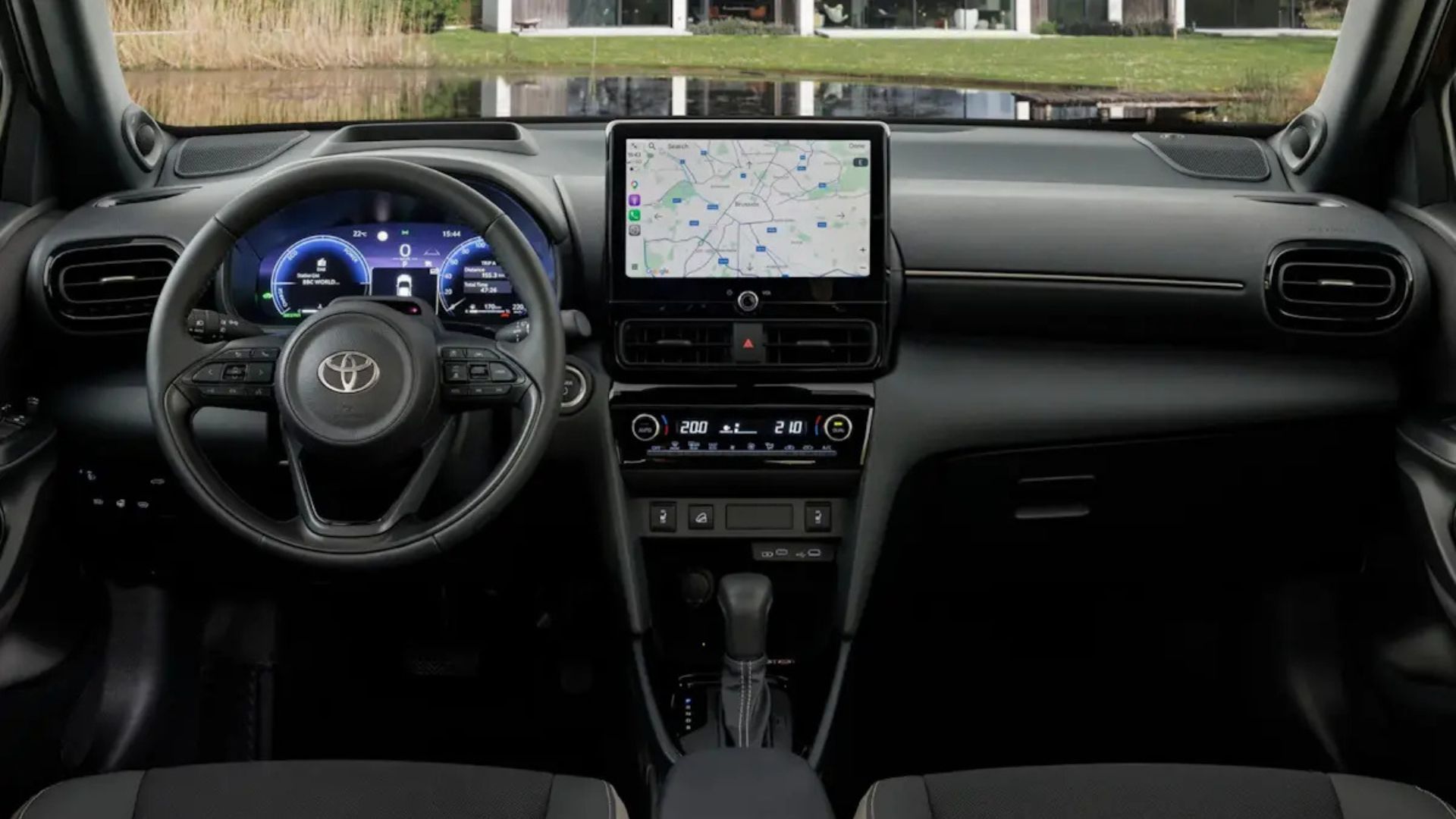
Upon entering the cabin, it is noticeable that the already known base has been maintained, but specific refinements contribute to elevating the perception of quality and technology in the SUV’s interior environment.
In the more complete versions, the 12.3-inch digital instrument panel and the multimedia center of up to 10.5 inches stand out as the main technological elements, offering connected navigation and wireless integration with smartphones.

Additionally, changes in materials and finishes make the interior more sophisticated, with the application of new coverings and platinum-tone details distributed throughout the dashboard and doors.
This set reinforces the proposal of a compact utility vehicle with a level of refinement above the average of the segment, especially when compared to models aimed at emerging markets.
Hybrid engine reaches 130 hp in Europe
Under the hood, the European Yaris Cross continues to prioritize energy efficiency, highlighting the 1.5 hybrid system offered in two distinct configurations within the range.
The Hybrid 115 and Hybrid 130 versions deliver, respectively, 116 hp and 130 hp of combined power, consolidating the model as one of the most accessible electrified options within the brand’s lineup.
In the more powerful configuration, the adoption of the fifth generation of the hybrid system ensures an increase in power and torque, as well as quicker responses in accelerations and recoveries, improving overall performance without compromising consumption.
Differences in relation to the Brazilian Yaris Cross
When compared to the model sold in Brazil, the contrast becomes evident in both the proposal and the technical specifications offered to the consumer.
Currently, the national Yaris Cross features a 1.5 naturally aspirated flex engine with 122 hp, in addition to a flex hybrid version that delivers 111 hp of combined power.
In this scenario, the more powerful European model surpasses the Brazilian hybrid, although it does not exceed the national aspirated version in absolute power numbers, highlighting different approaches within the same line.
Even so, the European package stands out for offering a broader combination of technologies, including more advanced electrification, traction options, and superior finish in certain versions.
4×4 Traction is a rare differential in the segment

Among the most relevant technical differentials, the presence of AWD-i all-wheel drive stands out for being uncommon in compact SUVs with an urban proposal and a focus on efficiency.
In the case of the European Yaris Cross, this system is available in the Hybrid 130 version, increasing grip and stability in different usage conditions, especially on low-grip surfaces.
On the other hand, the GR Sport version does not feature this resource, being offered exclusively with front-wheel drive, which reinforces its greater focus on style and dynamic behavior on asphalt.
Global strategy explains differences between markets
The differences observed between the European and Brazilian versions directly reflect the strategies adopted by Toyota to cater to audiences with distinct profiles and expectations.
While the Brazilian market prioritizes cost, robustness, and versatility with flex-fuel engines, the European scenario demands a higher level of electrification, embedded technology, and more diversified options within the range.
This positioning is also reflected in the commercial performance of the model abroad, where the Yaris Cross has consolidated itself as one of the brand’s main products in the region.
With approximately 200,000 units sold in 2025, the SUV became Toyota’s best-selling vehicle in Europe, justifying the update focused on visual and technological evolution.
The combination of compact dimensions with a robust appearance and an advanced technological package reinforces the European model’s proposal, which continues to position itself as an urban alternative with attributes typical of larger SUVs.


