






 Portuguese
  Spanish





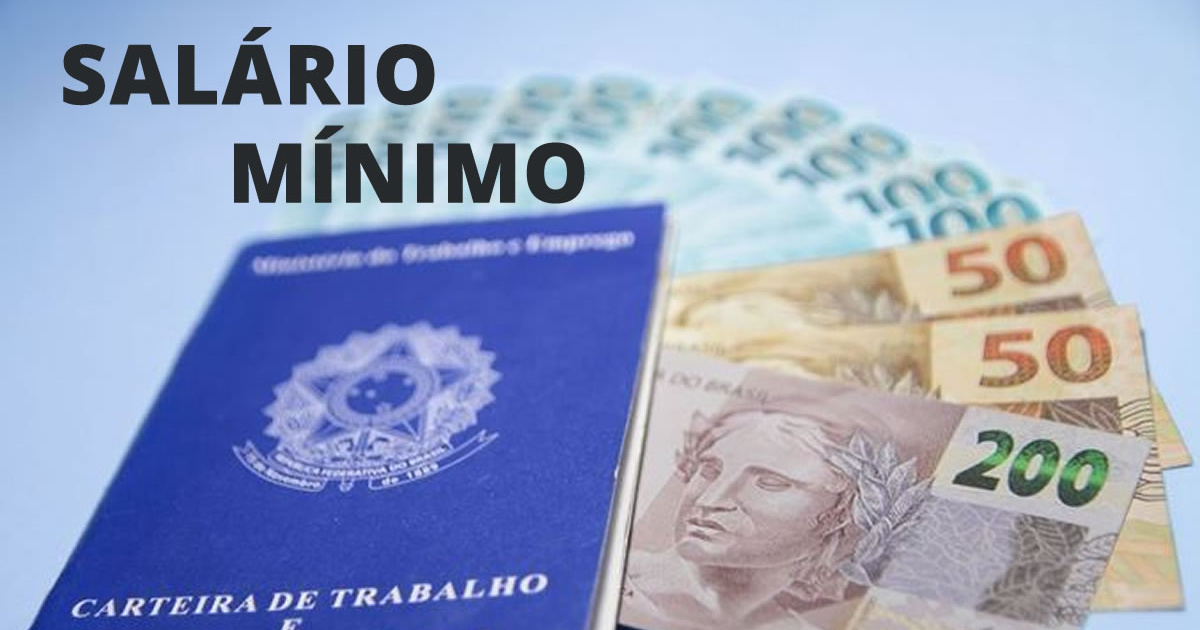
Government Projects Minimum Wage of R$ 1,631 in 2026, with Adjustment That Repays Inflation and Guarantees Real Gain to the Worker, Impacting Social Benefits, Pensions, and the Public Budget.
The Federal Government projects that the minimum wage will reach R$ 1,631 in 2026, with an adjustment that repays inflation and ensures real gain.
The estimate is in the Annual Budget Law Project (PLOA) sent to Congress, which uses as a reference the rule in force since 2023: correction by the INPC of the previous year plus the growth of GDP two years prior, with a limit of up to 2.5% of real increase.
If confirmed, the amount will exceed the minimum of R$ 1,518 in 2025.
-
Major Appliance Manufacturer Closes Factory in Argentina, Shifts Production to Brazil, and Restructures in Latin America with Mexico Closure, Investing Up to $165 Million

-
China to Revive $3.6 Billion Mega-Dam Project in Myanmar, Stalled Since 2011, Promising 6 GW Capacity and Completion in Eight Years

-
Foreign Company Wins Auction for Brazil’s First Immersed Tunnel, a $1.3 Billion Project with $14 Million Contract Under Federal Investigation

-
China’s Century Megaproject Wows the World: Massive Water Transfer Network Moves Water from Wet South to Arid North, with Ambitious Plans in the Tibetan Plateau Involving Giant Tunnels at Altitudes up to 4,000 Meters



How the Government Arrived at the Projection of R$ 1,631
The budget document uses macroeconomic parameters officially disclosed for 2026.
Among them, projected inflation of 3.6% and GDP growth of 2.44%, an index that also guides the real gain allowed by the valorization policy.
The combination of these components results in the adjustment percentage that leads to the estimated minimum value.
The document sending the PLOA details these assumptions and serves as a basis for calculating mandatory expenses linked to the minimum wage.
Valorization Rule: Inflation and GDP with Cap on Real Gain
The permanent valorization policy was reestablished by law in 2023.
Since then, the calculation fully considers the INPC of the previous year, preserving purchasing power, and adds the performance of the GDP from two years prior to define real gain.
In 2024, Congress approved and the Executive sanctioned limits that maintain real increase between 0.6% and 2.5%, according to fiscal space.
Thus, the formula preserves the predictability of the minimum wage and connects its evolution to economic activity.
What Changes for Those Who Receive Wages and Benefits
The increase in the minimum wage has an immediate impact on the salaries of formal workers earning the minimum and on the benefits linked to it.
Pensions and retirement benefits of one minimum wage from the INSS are adjusted to the new value, while benefits above the minimum follow the variation of the INPC.
The BPC fully follows the minimum wage.
In 2025, for example, those earning the minimum rose from R$ 1,412 to R$ 1,518, a movement that also adjusted assistance benefits and the salary bonus calculated on the minimum wage.
Fiscal Impact and on Company Payroll
For the public budget, the adjustment of the minimum wage increases mandatory expenses.
Social Security, BPC, and PIS/Pasep bonuses have the minimum wage as a reference, which pressures spending when there is a real increase.
According to PLOA estimates, the economic team considers the dynamics of GDP and inflation to project revenues and accommodate this advance in the accounts.
In the private sector, especially among micro and small enterprises, the adjustment requires reprogramming of personnel costs and charges, with distinct effects by sector according to margins and productivity.
Procedure in Congress and Possibility of Adjustment
The figure of R$ 1,631 is a starting point.
The budget proposal goes through the Joint Budget Commission and the Plenary of Congress, where it may receive changes.
In addition, the final value of the minimum wage for 2026 depends on the effective INPC of 2025 and the consolidated data of the GDP of 2024.
If inflation is above or below the estimated, the government recalculates the minimum wage to comply with the valorization rule.
After the approval of the LOA and the consolidation of the numbers, the value is formalized by a presidential decree.
When the New Value Takes Effect
The corrections of the minimum wage come into effect on January 1 of each year.
The new value appears on the payslip paid in February, referring to work performed in January.
This was the case with the minimum of R$ 1,518 in 2025, and the same dynamic applies to the value that will be defined for 2026.
What Is Behind the Real Gain
The idea of real gain is to make the minimum wage advance beyond inflation when the economy grows, sharing part of the GDP results with those earning the minimum and with beneficiaries indexed to it.
At the same time, limiting the real increase to up to 2.5% seeks to maintain fiscal predictability, given the multiplier effect of the minimum on a broad base of benefits and incomes.
By setting a cap, the law aims to prevent jumps that abruptly increase mandatory expenses, but without giving up the recovery of purchasing power in a positive activity scenario.
Why the Value Might Still Change
Projections serve to plan, not to set definitive numbers.
The INPC of 2025 will only be known after the end of the year, and revisions to the GDP of 2024 may occur until the release of consolidated data.
Changes in these indicators alter the final calculation and, consequently, the value of the minimum wage.
Therefore, the R$ 1,631 remains as the technical estimate of the PLOA until the publication of the decree that will define the minimum for 2026.
Effects in Daily Life: Consumption, Credit, and Prices
Higher salaries and benefits tend to sustain the consumption of essential goods and services, with a more visible impact on local commerce and small providers.
At the same time, some companies adjust prices to replenish costs, which may reduce part of the real gain in the short term.
Banks and retailers, in turn, recalibrate limits and credit offers considering the official minimum income.
The intensity of these movements varies according to the context and sector competition.
What to Observe Until the End of the Year
The processing of the PLOA, inflation reports, and updates on the 2026 scenario will be decisive for the final value.
The Secretariat of Economic Policy, the Central Bank, and IBGE will publish data that may confirm or adjust current projections, keeping the focus on the combination of INPC and GDP provided by law.
Along this path, any changes in revenue and fiscal space also enter the government’s planning calculations.






E mais de 1600 e 1800 e alguma coisa
É a prova que o nosso poder de compra tá perdendo valor. Daqui a pouco o salário mínimo vai ser 5 mil e as pessoas achando que tá rico.