






 Portuguese
  Spanish
  3 min of reading
  0 comments


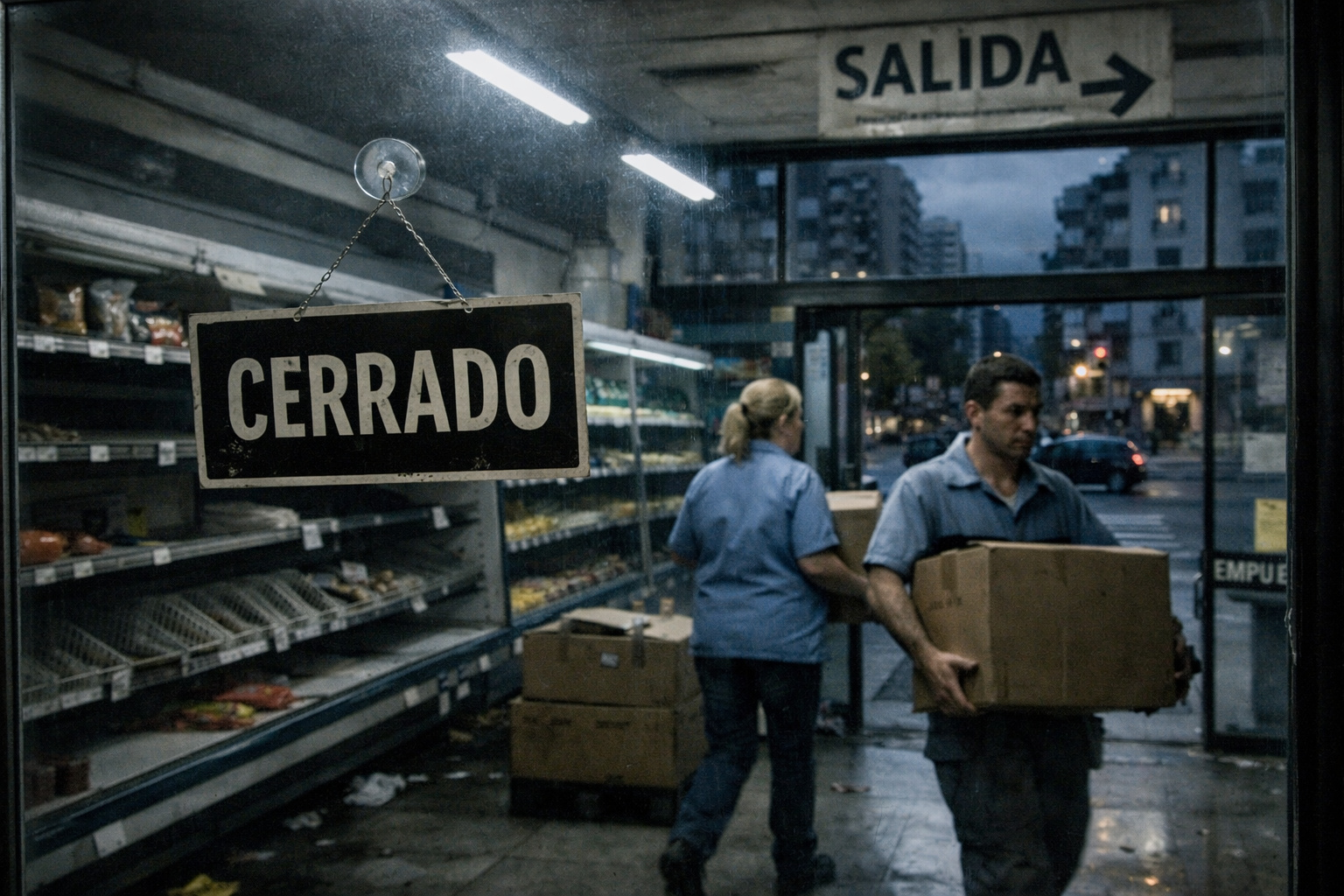
Severe financial crisis leads company to reduce operations, close units, and face domino effect impacting employees, suppliers, and the retail sector
The information was disclosed by the portal “ND Mais”, based on data from the company itself and sector reports, revealing a worrying scenario that goes far beyond a simple operational adjustment. The traditional supermarket chain Caromar, known for its operations in the cleaning and perfumery segment in Argentina, collapsed after facing one of the biggest financial crises in its recent history.
Firstly, it is important to highlight that the company recorded a significant drop of approximately 42% in revenue, a factor that triggered a series of internal and external problems. Furthermore, the retraction in consumption further aggravated the situation, drastically reducing cash flow and compromising the business’s sustainability.
Sales drop, aggressive competition, and domino effect accelerated Caromar’s collapse
Given this scenario, Caromar was forced to make drastic decisions. As a direct consequence of the crisis, the chain announced the closure of several stores and the layoff of over 100 employees. For comparison, the company had about 500 workers at the peak of its operations. However, currently, just over 200 employees remain active.
-
FIRJAN’s mega plan of R$ 526.3 billion for Rio de Janeiro aims to revive Brazil’s largest industry, with two-thirds of the investments going to oil and gas.

-
China signals an increase in beef imports, Brazil has already consumed 70% of the 1.106 million ton quota and seeks to renegotiate the tariff that jumps from 12% to 55%, while demand from the US also skyrockets.
-
Food inflation rose 302% in 20 years in Brazil, but the supermarket changed: purchasing power yielded 87% more mortadella and 31% less fruit, and ultra-processed foods took over the cart.
-
Petrobras sells the first batch of 3,800 m³ of aviation fuel made with certified soy, capable of reducing emissions by up to 70%, in an unprecedented project that anticipates the aviation sector’s requirements expected for 2027.



At the same time, the company began to face difficulties with suppliers, which generated an extremely damaging chain effect. Initially, there was a reduction in product supply. Subsequently, this caused a drop in sales. Finally, the worsening financial crisis made operational collapse inevitable.
Another crucial point was competition with prices below cost, a practice known as dumping. In this context, Caromar could not compete with major market players, such as the giant Unilever, which even led to the closure of a detergent factory linked to the operation.
Furthermore, the company also supplied products to large retail chains such as Carrefour and Día. However, with the sharp drop in demand, these contracts lost relevance, further reducing revenue intake.
Billion-dollar debt and judicial recovery: what to expect from the company’s future
With the worsening crisis, Caromar’s financial situation reached critical levels. The company accumulated over US$1 billion in bounced checks — a value equivalent to approximately R$5 billion at the current exchange rate. As a result, suppliers began to demand advance payment, further increasing pressure on the company’s cash flow.
Consequently, there came a point when the company could no longer meet basic commitments, including salary payments. Faced with this, Caromar filed for judicial recovery in an attempt to avoid total bankruptcy.
Currently, the chain maintains reduced operations in cities such as Laferrere, Moreno, José C. Paz, Rosario, and Neuquén. However, the future is still uncertain. The judicial process foresees credit verification until the end of May, while negotiations with creditors are expected to extend until 2027.
On the other hand, industry specialists warn that Caromar’s case is not isolated. In fact, various retail segments have been facing similar difficulties, driven by a drop in consumption, increased competition, and increasingly tighter margins.
Thus, the collapse of the chain serves as a warning to the entire market, demonstrating how economic, operational, and strategic factors can quickly transform consolidated companies into critical cases.




Be the first to react!