





 Portuguese
  English
  Spanish
  4 min of reading
  0 comments


Transpetro Advances with New Bidding to Renew the National Fleet, Boosting the Shipbuilding Industry and Expanding Logistics Capacity in Fuel Transport on Strategic Routes in Brazil
Transpetro, a subsidiary of Petrobras, announced on Monday (20) a new bidding for barges and push boats, marking a strategic move to strengthen the Brazilian shipbuilding industry and expand the transport of fuels by inland and coastal waterways.
According to a report published by Petronotícias, the notice provides for the acquisition of 18 barges and 18 push boats, focusing on inland navigation and logistical efficiency.
Transpetro Initiative: Logistical Expansion with Focus on Inland Navigation
This announcement represents an important turning point in national logistics, with direct impacts on the economy, sustainability, and job creation. Transpetro bets on inland navigation as a solution to Brazil’s logistical challenges.
-
Petrobras completes 1,300 hours of work and 15 km of subsea lines to connect the Búzios 90 well to the P-79 — the platform is ready to produce 180,000 barrels per day and is just awaiting ANP approval.

-
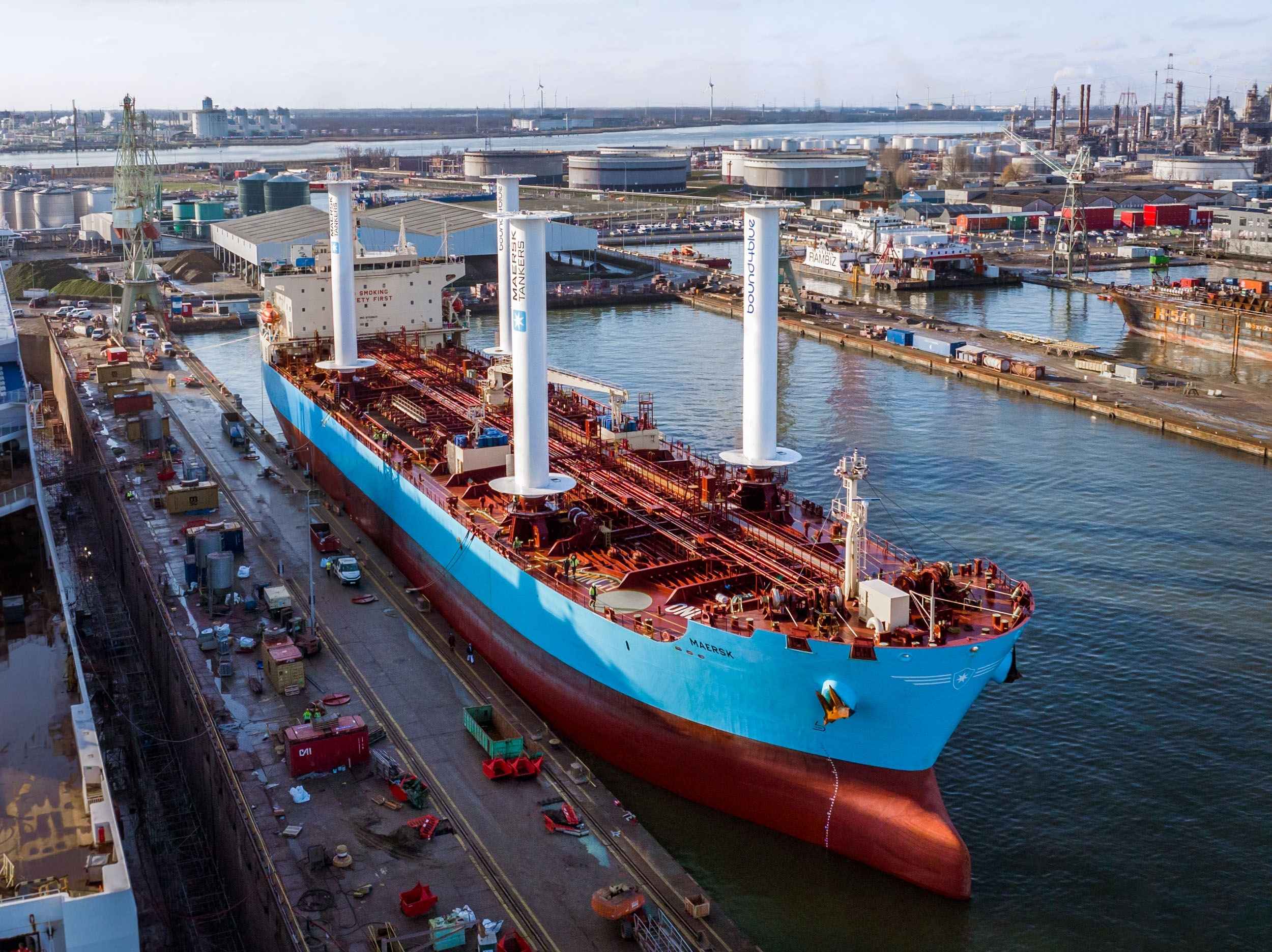
Four 24-meter suction sails that generate up to 7 times more lift than traditional sails have been installed on a Maersk oil tanker. The autonomous system can reduce consumption by up to 20% and is already recording savings of up to 5.4 tons of fuel per day at sea, with annual cuts potentially reaching thousands of tons on a single vessel.
-
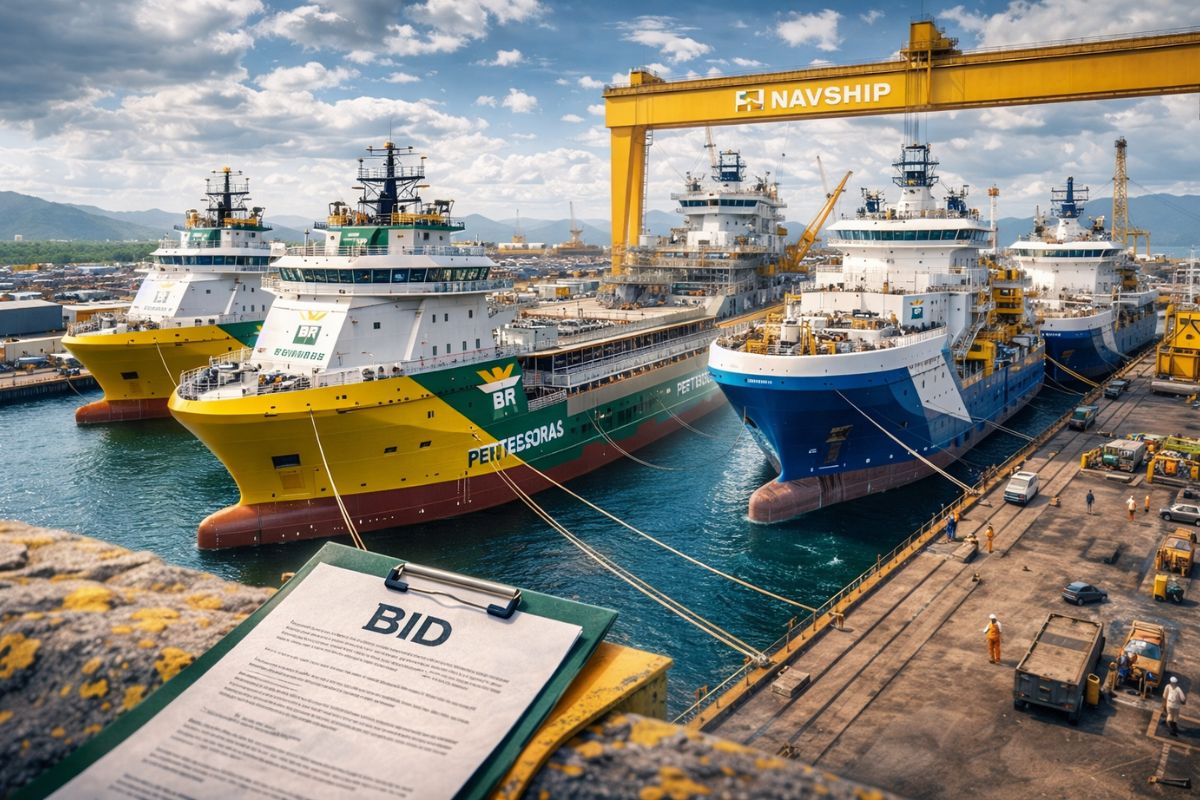
After the announcement of US$ 2 billion for six PSVs, Petrobras may order four RSV vessels in Navegantes in April, with the BID published and Navship mentioned, but awaiting the release of funds.
-
Named after the province closest to Taiwan, China’s third aircraft carrier weighs 80,000 tons, carries 50 stealth aircraft, and uses electromagnetic catapults that launch 12 fighters per hour.

The new fleet will be dedicated to the transport of petroleum derivatives and biofuels, especially in regions with limited road infrastructure. According to Transpetro’s president, Sérgio Bacci, the project will position the company as one of the largest barge operators in the country in the coming years.
The vessels will be distributed as follows:
- 10 barges with a capacity of 3,000 gross tons (GT)
- 8 barges with a capacity of 2,000 GT
This configuration may allow for greater operational flexibility, serving different routes and cargo volumes, as well as reducing logistical costs and carbon emissions.
Bidding for Barges and Push Boats: Opportunity for National Shipyards
The bidding for barges and push boats represents a concrete opportunity for Brazilian shipyards. The notice, available on the Petronect portal, establishes a 45-day deadline for submitting proposals. The expectation is that various national shipyards will participate, boosting investments and revitalizing industrial hubs.
Transpetro reinforces its commitment to the shipbuilding industry, offering continuous and predictable demands. This stability is essential for the revival of shipbuilding in the country, which has suffered retractions in recent years.
According to data from SINAVAL (National Union of Shipbuilding and Offshore Repair Industry), the sector employed about 40,000 workers in 2014, a number that fell to less than 15,000 in 2022. The new bidding could be the catalyst for the recovery of the Brazilian shipbuilding industry.
Transport of Fuels with Safety and Efficiency
The new fleet will be dedicated to the transport of fuels between the main ports on the Brazilian coast. The choice of inland and coastal modalities is justified by their energy efficiency and lower environmental impact. Studies indicate that inland waterway transport consumes up to 70% less fuel per ton transported compared to road transport.
Furthermore, the use of barges and push boats reduces the risk of accidents and leaks, promoting greater safety in the transport of hazardous products. Transpetro already operates with high safety standards, and the fleet expansion reinforces this commitment.
Job Creation with Transpetro Investment
The bidding is expected to generate thousands of direct and indirect jobs. The construction of the vessels will require skilled labor, stimulating industrial hubs in states such as Rio de Janeiro, Pernambuco, Bahia, and Rio Grande do Sul. According to estimates, shipyards such as Atlântico Sul (PE), Enseada (BA), and Mauá (RJ) are potential candidates for executing the contracts.
In addition to jobs in construction, there will be demand for professionals in operation, maintenance, and logistics of the vessels. This includes sailors, technicians, engineers, and managers, contributing to the qualification of the national workforce. The Transpetro initiative is a driver of regional and social development.
Transpetro Seeks Technological Sustainability in the Shipbuilding Industry
Transpetro plans to incorporate sustainable technologies in the new vessels. According to company statements, the projects should include more efficient propulsion systems, emission controls, and remote monitoring. This approach aligns with the environmental goals of Petrobras, which seeks to reduce its greenhouse gas emissions by 25% by 2030.
The adoption of sustainable practices also meets international requirements, such as the standards of the International Maritime Organization (IMO), which establish strict limits on emissions of sulfur and nitrogen oxides. Technological innovation will be a competitive differentiator for the new fleet.
Potential of Inland Navigation in Brazil
Brazil has over 40,000 km of navigable waterways, but only 20% are commercially used. Transpetro’s entry into this segment could stimulate the development of new routes and port infrastructure.
Regions such as the Amazon, Pantanal, and northeastern interior have great potential for the expansion of inland navigation. The initiative could also encourage public-private partnerships for the modernization of river terminals, dredging of rivers, and multimodal integration.
Thus, the country moves towards a more balanced and sustainable transport matrix. Inland navigation is a strategic asset still underutilized in Brazil.
Paths for the Future of Brazilian Logistics
The bidding for barges and push boats launched by Transpetro on October 20, 2025, represents a milestone for Brazilian logistics. With a focus on inland navigation and fuel transport, the initiative mobilizes the national shipbuilding industry, creates jobs, promotes sustainability, and strengthens the country’s energy security.
By investing in innovative and sustainable logistical solutions, Transpetro reaffirms its strategic role in Brazil’s development. The expectation is that the results of this bidding will translate into concrete benefits for the economy, the environment, and society.








-

Uma pessoa reagiu a isso.