Portuguese
  Spanish


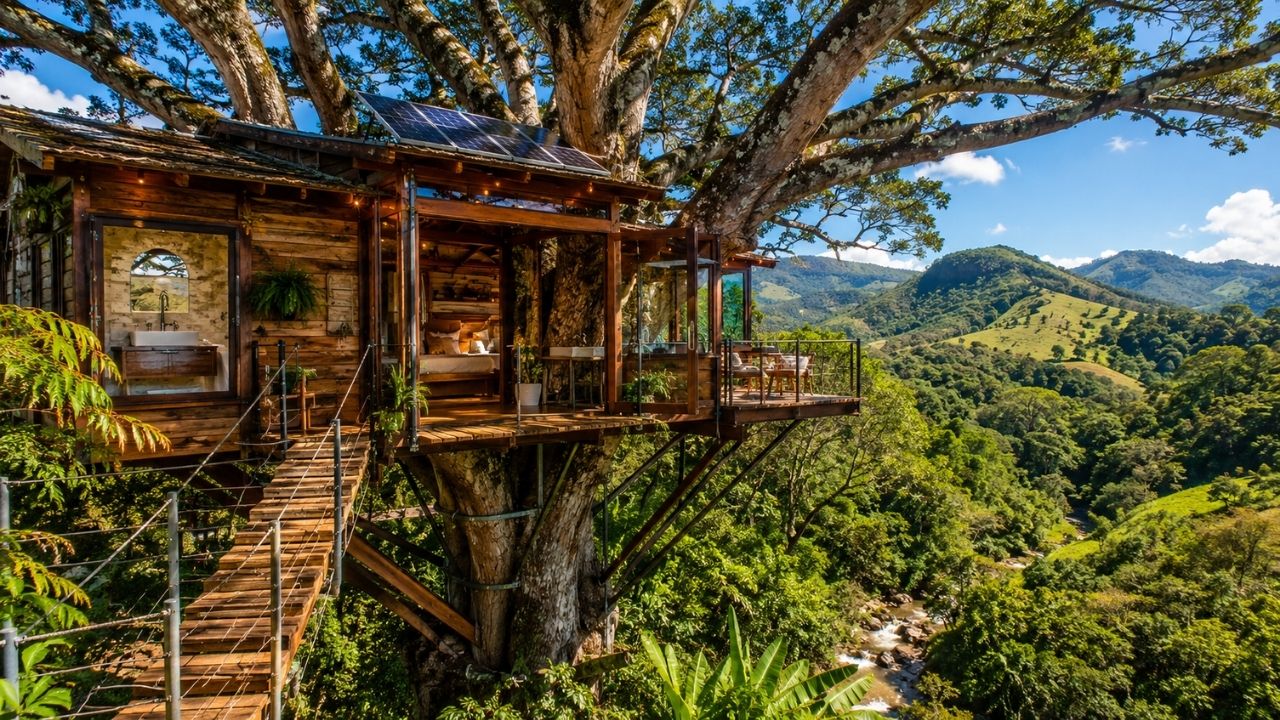

The treehouse was built on a more than 100-year-old jatobá in the Serra da Mantiqueira and includes a bathroom, energy, sewage with biodigester, reused materials, structural fittings, and a lodging proposal that preserves the natural movement of the tree while bringing visitors closer to nature without losing basic comfort.
The treehouse built on a centennial jatobá in the Serra da Mantiqueira attracts attention in 2026 for functioning as a real lodging, after about a year and a half of construction and almost three years since the start of the project, with a bathroom, energy, sewage system, and a structure designed to follow the natural movement of the tree.
With information from the channel Chico Abelha, the project surprises because it combines creative improvisation, material reuse, and structural care. Instead of rigidly attaching the construction to the trunk, the structure was designed to follow the natural sway of the tree, respecting its movements and reducing aggressive interference with the jatobá.
Structure was made to follow the movement of the tree

The treehouse was built on a jatobá described as centennial, in an area of the Serra da Mantiqueira. The person responsible for the work says the idea arose from observing the size of the tree and realizing that it seemed to be “waiting” for a construction among its branches.
-
U.S. City Builds Tiny Home Village on Water Company Land to House 136 Homeless People: Inside the Social Housing Units

-
Woman Turns Shipping Container into Home, Embraces Rural Life to Cut Monthly Expenses to Just Over $330
-
France Revamps 530 Social Housing Units with Large Balconies and Glass Facades Without Demolishing Existing Buildings

-
Facing high rent, couple transforms parents’ garage into a fully functional apartment, creating a complete home at a fraction of the market cost.



The most important detail is in how the structure relates to the tree. The house was not treated as a fixed work on common ground, but as a suspended construction over a living organism, subject to wind, humidity, growth, sway, and natural movements.
Therefore, the system uses fittings and locks that allow some flexibility. The logic is similar to structures that need to absorb movement, like bridges and walkways, avoiding excessive rigidity in points that undergo variation.
This care helps explain why the house moves slightly along with the jatobá. If it were attached too rigidly, it could suffer cracks, displacements, or damage over time. The solution was to keep the construction firm, but not completely locked against the tree.
Accommodation has bathroom, electricity, and sewage system

Despite its rustic look and location amidst the forest, the treehouse functions as a real accommodation. The space features electricity, an electrical panel, bathroom, and sewage, resources that dispel the idea of an improvised cabin just for a quick visit.
The bathroom is one of the most striking features because it shows the level of adaptation made to transform the structure into a habitable place. There is a toilet, ventilation, and connection to a treatment system, something essential for accommodation installed in a natural area.
The sewage was not simply discarded on the land. The mentioned system involves a biodigester, septic tank, and treatment, within a declared concern for preserving the nature surrounding the property.
This detail changes the perception of the project. The treehouse does not rely solely on the visual charm of the jatobá but also on practical solutions for wastewater, comfort, and responsible use of space.
Reused materials appear in doors, glass, and details

Another striking feature of the construction is the use of reused materials. Doors, glass, copper pieces, and other elements were incorporated into the project from leftovers, renovations, and materials that already existed elsewhere.
This choice gives personality to the treehouse and reinforces a more artisanal proposal. Instead of buying everything new and standardized, the project made use of available pieces and adapted each item to the limited space between the branches.
The result is a construction with a unique appearance, made by layers of practical decisions. External cabinets, reused doors, ventilation solutions, and improvised details help show how the space was resolved as challenges appeared.
There are also elements related to bioconstruction, such as the use of clay, bamboo, and techniques applied in internal parts. This reinforces the connection between the accommodation and a more natural aesthetic, suitable for the environment of Serra da Mantiqueira.
Humidity, ventilation, and maintenance are part of the routine
Building a treehouse doesn’t end when the construction is finished. The environment itself requires frequent maintenance. Shade, humidity, the presence of branches, leaves, animals, and rain are part of the routine for those who maintain an elevated accommodation in a forested area.
Therefore, some choices were made to favor ventilation. Cabinets without doors, strategic openings, and constant attention to leaks appear as solutions to deal with a house that is exposed to the behavior of the tree and the climate.
Maintenance also functions as a reading of the structure. When doors start to jam or some part changes position, it may indicate that the tree has moved more, especially after strong winds or periods of higher humidity.
This monitoring is essential because the treehouse is not supported on static ground. It depends on the health of the jatobá, the adjustment of the joints, the staircase, the handrail, and the continuous observation of small structural signs.
Experience mixes comfort, height, and direct contact with nature

The accommodation is not recommended for every type of visitor. Those who are afraid of heights, uncomfortable with insects, wild animals, or forest noises might find the experience strange. The proposal is precisely to sleep in a space integrated with nature, not in an urban suite isolated from the environment.
The person responsible for the house usually advises guests about height, animals, care on the stairs, and expected behavior on site. This is important because the experience involves adaptation: there are sounds from the tree, natural movement, presence of animals, and a constant feeling of being within the landscape.
At the same time, this is the main attraction of the project. The treehouse allows sleeping surrounded by branches, observing the forest from above, and feeling the construction as part of the jatobá, not just as a room installed on wood.
This combination of basic comfort and natural immersion explains why the accommodation draws attention. It doesn’t try to hide that it’s in the forest; on the contrary, it turns this proximity into part of the experience.
Project shows another way of thinking about accommodation and construction


The treehouse in the Serra da Mantiqueira shows how a small construction can bring together engineering, emotional memory, reuse, and respect for the environment. The project was born from a personal idea but ended up becoming a real accommodation, listed on booking platforms.
The case also shows that building in a tree requires more than creativity. It is necessary to consider weight, movement, access, safety, sewage, ventilation, maintenance, and preservation. The beauty of the structure depends precisely on this balance between charm and responsibility.
At a time when unique accommodations are gaining strength in tourism, projects like this draw attention by offering something beyond the daily rate: an experience connected to the landscape, the wood, the silence, and direct interaction with nature.
The question remains whether this type of construction can inspire new forms of sustainable accommodation or if it should remain restricted to very specific projects, tailor-made for each tree and each terrain.
When the tree becomes part of the architecture
The treehouse built in the centennial jatobá shows that anaccommodation can be born from a more careful relationship with the place. Instead of cutting, leveling, and dominating the land, the project adapts to the trunk, branches, height, and natural movement of the tree.
What surprises is not just sleeping high up, but realizing that the construction depends on the living tree to exist. Bathroom, energy, sewage, and basic comfort make the experience viable, while the fittings and reused materials give the project its identity.
Would you have the courage to stay in a treehouse like this, with height, forest around, and structure following the natural sway of the jatobá? Or do you prefer more conventional accommodations? Leave your opinion in the comments.