






 Portuguese
  Spanish





High-Speed Rail Project Rio–São Paulo Consumed Billions Since 2007 and Never Got Off the Ground. Promise of 1h30 Travel Remains Without Forecast to Become Reality.
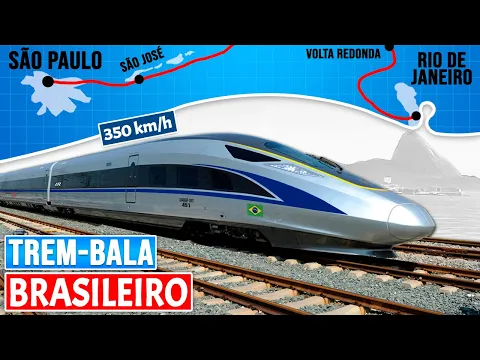
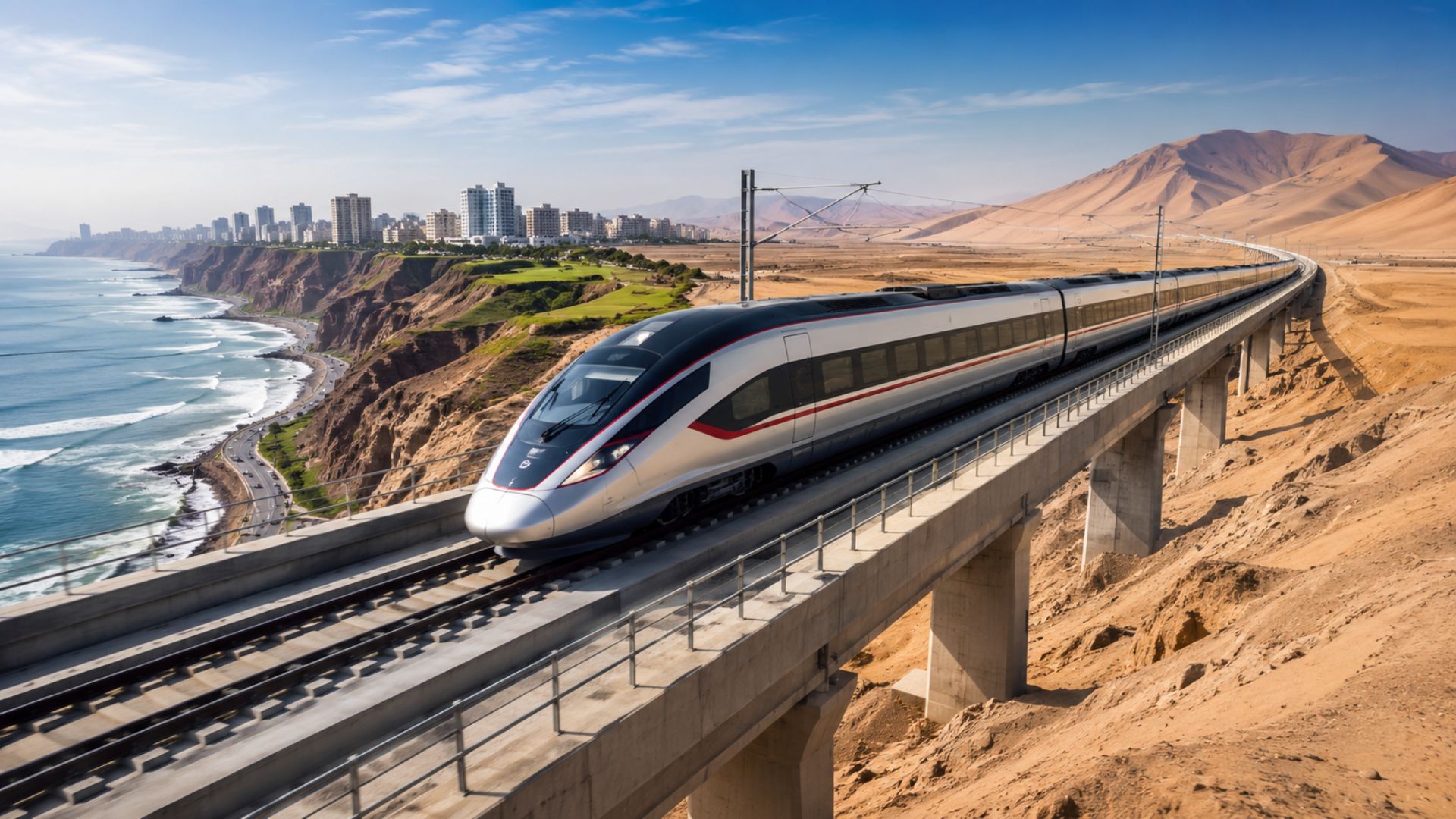
Brazil once dreamed of having a high-speed train worthy of Asian and European powers. Announced in 2007, during the presidency of Luiz Inácio Lula da Silva, the project anticipated a railway line of 511 km in length, connecting Campinas, São Paulo, and Rio de Janeiro. The promise seemed revolutionary: reducing the travel time between the two largest cities in the country from almost 6 hours by car to about 1h30 by train, with comfort, speeds of up to 350 km/h, and integration with airports.
It was the beginning of an ambitious plan to place Brazil on the map of nations with high-speed rail transport. But, nearly two decades later, the project remains only on paper.
Billions in Studies and No Work Begun
Between 2007 and 2017, the Brazilian government spent billions on feasibility studies, consultancies, and the creation of state agencies to advance the project. The ETAV (High-Speed Rail Company) was even created exclusively for this mission.
-
Railway returns to prominence in Brazil after STF approval: a R$ 25.2 billion project promises to save R$ 9 billion in freight, transport 50 million tons per year, and transform Sinop into a logistics powerhouse for agribusiness.

-
Retired trains leave European tracks and become tons of steel, aluminum, and copper in dismantling yards where recycling exceeds 90%, but batteries, composites, and electronics create a new frontier of railway waste.

-
The strategic railway of Santa Catarina will receive R$ 608 million, will undergo historic modernization, and could transform logistics between Mafra and the Port of São Francisco do Sul.
-
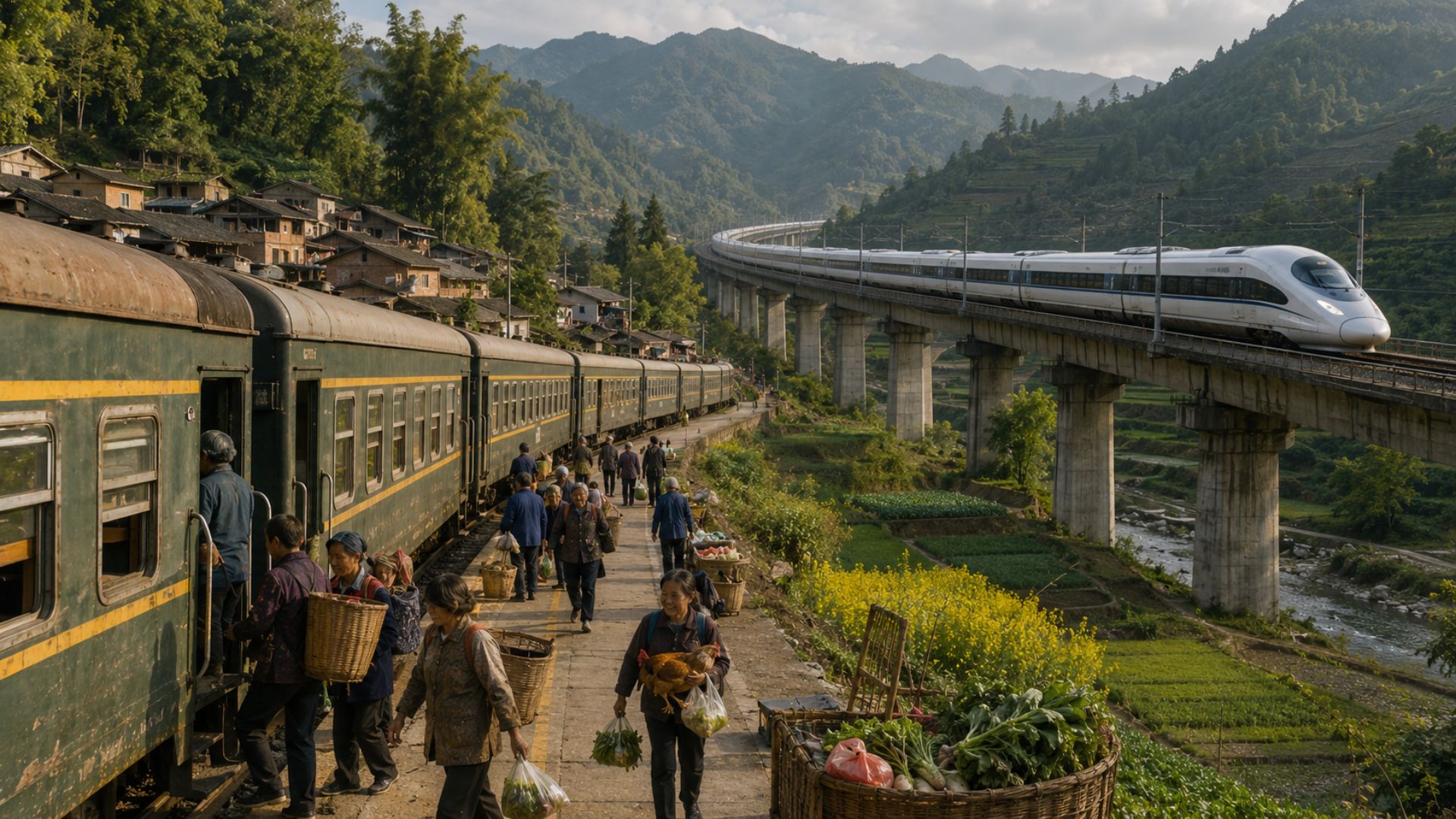
While showcasing bullet trains traveling at over 300 km/h, China maintains about 81 slow train lines that travel at 40 km/h, charge less than R$ 2 for a ticket, and cross remote villages carrying residents, students, and even chickens and vegetables to the market.



However, the bids failed. In 2010, no company submitted a proposal to build the section. The reason was clear: the astronomical cost, estimated at R$ 36 billion at the time, which was later revised to over R$ 60 billion.
With a lack of interested parties and increasing economic uncertainties, the project ended up being shelved. The ETAV was officially dissolved in 2017, burying the first concrete attempt at the high-speed train.
A Promise That Never Died
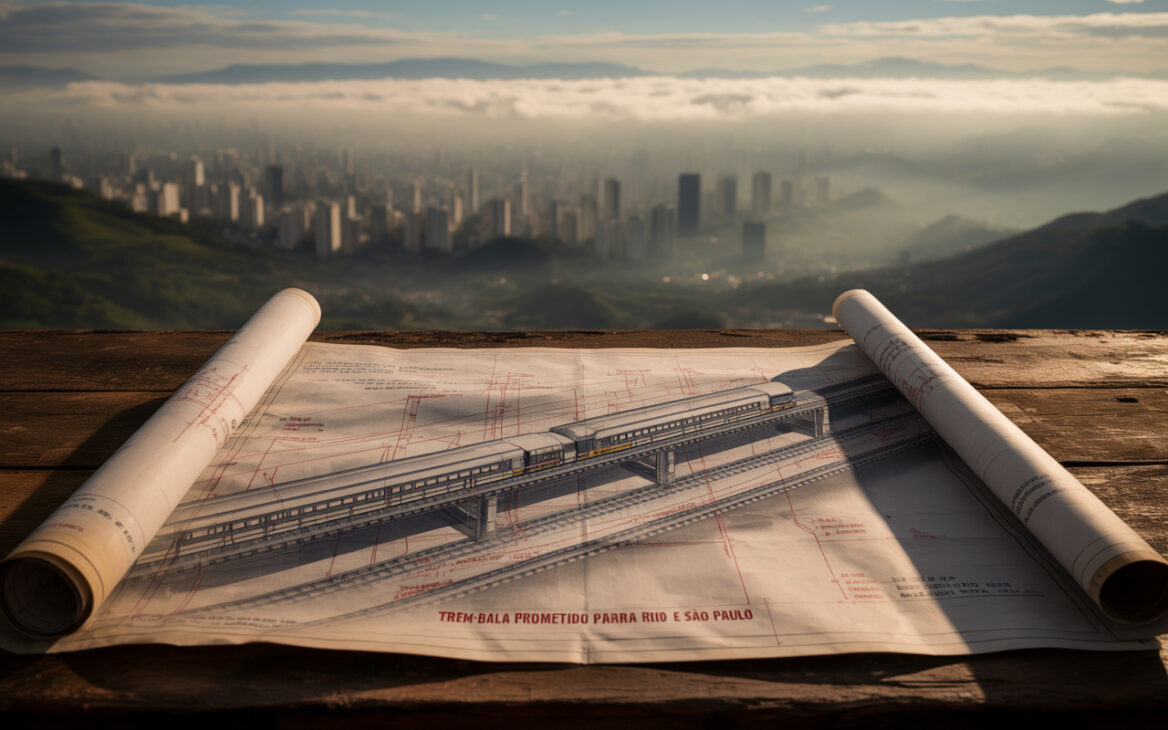
Despite the failures, the idea of the high-speed train never completely disappeared. In 2022 and 2023, new studies were once again mentioned in meetings of the BNDES and the Ministry of Infrastructure, anticipating a concession model to the private sector.
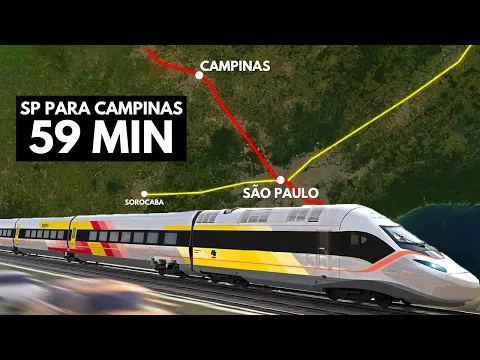
The discussions involve possible connections with the future intercity train of São Paulo, which would link Campinas, São Paulo, and Sorocaba. But in practice, no construction has begun.
The initial deadline for inauguration — 2014, during the World Cup in Brazil — has already passed more than a decade ago, and the promise remains a symbol of billion-dollar projects that never got off the ground.
The Impediments of the Project
Experts point to a series of obstacles that made the Brazilian high-speed train unfeasible:
- Extremely High Cost: estimated at up to R$ 60 billion, it would be one of the most expensive projects in the history of Brazilian infrastructure.
- Questionable Demand: there were doubts about whether the number of passengers would be sufficient to financially sustain the line.
- Bureaucracy: the bidding processes were poorly conducted and discouraged potential investors.
- Political Priorities: changes in government and economic crises left the project on the back burner.
- Aerial Competition: the Rio–São Paulo air bridge remains one of the busiest in the world, with tickets often cheaper than the projected train.
The Contrast with Other Countries
While Brazil struggles, countries like China, Japan, France, and Spain have expanded their high-speed train networks.
- China, which in 2007 had only 600 km of lines, now boasts over 42,000 km of high-speed railways.
- Japan, a pioneer with the Shinkansen since 1964, continues to expand its network using magnetic levitation technology.
- Spain has one of the largest networks in Europe, efficiently linking medium-sized cities and capitals.
These examples reinforce the sense of delay in Brazil, which remains dependent on congested highways and air transport to connect its largest metropolises.
A Distant Promise?
As of 2025, the reality is that there is no concrete forecast for the start of construction of the Rio–São Paulo high-speed train. The project is constantly recalled in debates about infrastructure, but remains a distant promise.
Meanwhile, with each new announcement of studies or intentions to resume, public disbelief grows.
Brazilian High-Speed Train: Promise That Never Got Off the Ground Is Already Called Ghost Works
The “Brazilian high-speed train” has become synonymous with ghost works — remembered more for the billion-dollar spending on studies than for any practical advancement.
Today, the main legacies of the project are technical reports, engineering designs, and a bitter reminder of how the country invested billions without even laying a meter of track.
The high-speed train Rio–São Paulo remains a symbol of waste of public resources and Brazil’s difficulty in realizing large infrastructure projects.
The dream of connecting Rio and São Paulo in under two hours remains alive only in the imagination. The project has already consumed billions, survives every government, and is still used as a campaign promise, but remains far from reality.
While the rest of the world advances in fast and sustainable solutions, Brazil remains stuck in traffic jams, crowded flights, and promises that never translated into tracks.









QUALQUER COISA QUE O PT TOQUE VIRA CORRUPÇÃO!
AFINAL QUEM TEM UM EX PRESIDIÁRIO COMO LÍDER , SÓ PODE SER ****
Ele é tão rápido q nem da pra ver.
Ora,ora as aéreas não vão deichar…..perder uma rota dessas….quantas burrice do autor,quanto do artigo…