Portuguese
  Spanish


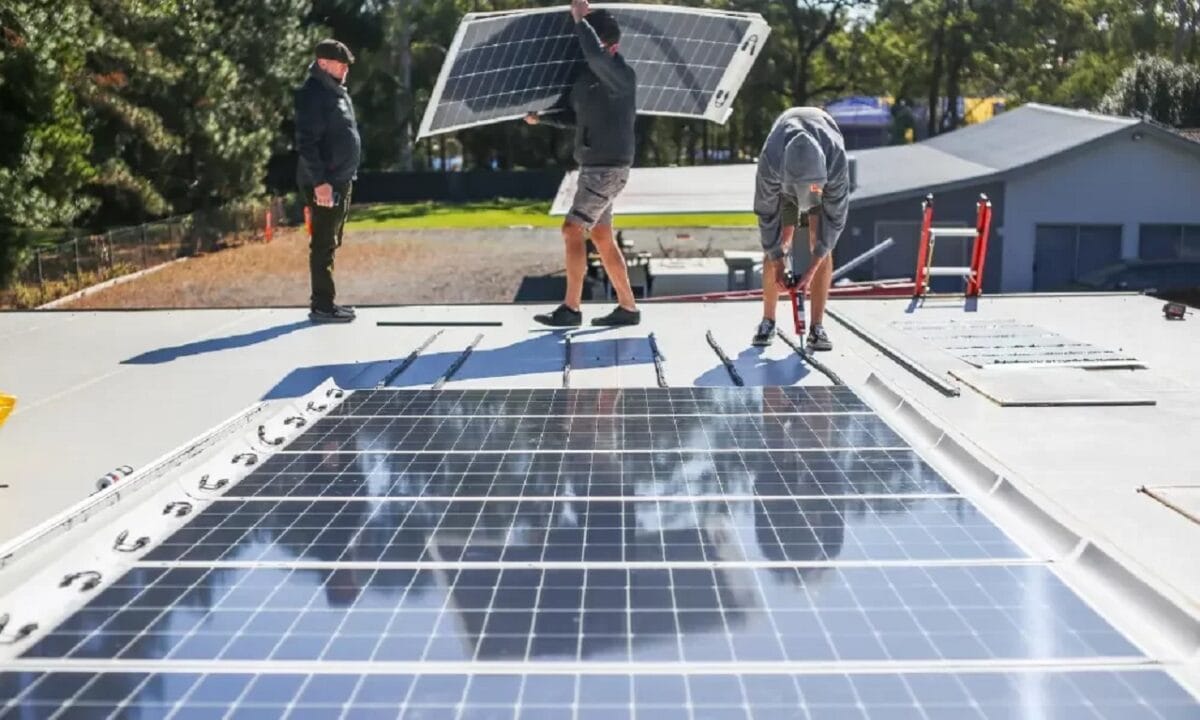

Trina Solar Launches Innovative i-TOPCon N-Type Solar Cell Manufactured in China, Boasting Impressive 25.8% Conversion Efficiency.
Trina Solar has started commercial production of its new Vertex N 610W solar panel with the i-TOPCon N-type cell at its Huai’na factory in China. The plant has a production capacity of 10 GW for the equipment, along with another 10 GW for the production of N-type TOPCon solar cells. According to Trina Solar, the new product uses 210 mm rectangular silicon wafers and has a conversion efficiency of 25.8%.
Check Out Some of the Main Advantages of the New Solar Cell Manufactured in China
The i-TOPCon N-type cell from Trina Solar is still compatible for use with trackers and is aimed at applications in commercial, industrial, and centralized generation plants. The photovoltaic module has dimensions of 2382 mm by 1134 mm, a standard recently adopted together by the leading manufacturers in the solar energy sector, as observed at the SNEC PV Power Expo, a solar industry fair held in Shanghai, China.
According to Trina Solar, this format has several advantages, including better space utilization in shipping containers.
-
Fired during apartheid and with a little borrowed money, an electrician started with a borrowed truck and transformed electrical services into a group connected to energy, real estate, and infrastructure in South Africa.

-
Wood has ceased to be just a construction material in Yale research and has become insulation for electrical transformers that face intense heat, aging, and increasing pressure from the renewable energy-powered grid.
-
More than 1,000 residents of a remote island in Kiribati now have clean water and electricity with solar systems operated by the community itself.
-
Ceará brings together 7 giants and R$ 66 billion to transform Pecém into the largest green hydrogen hub in Brazil, with final decisions expected by the end of 2026.



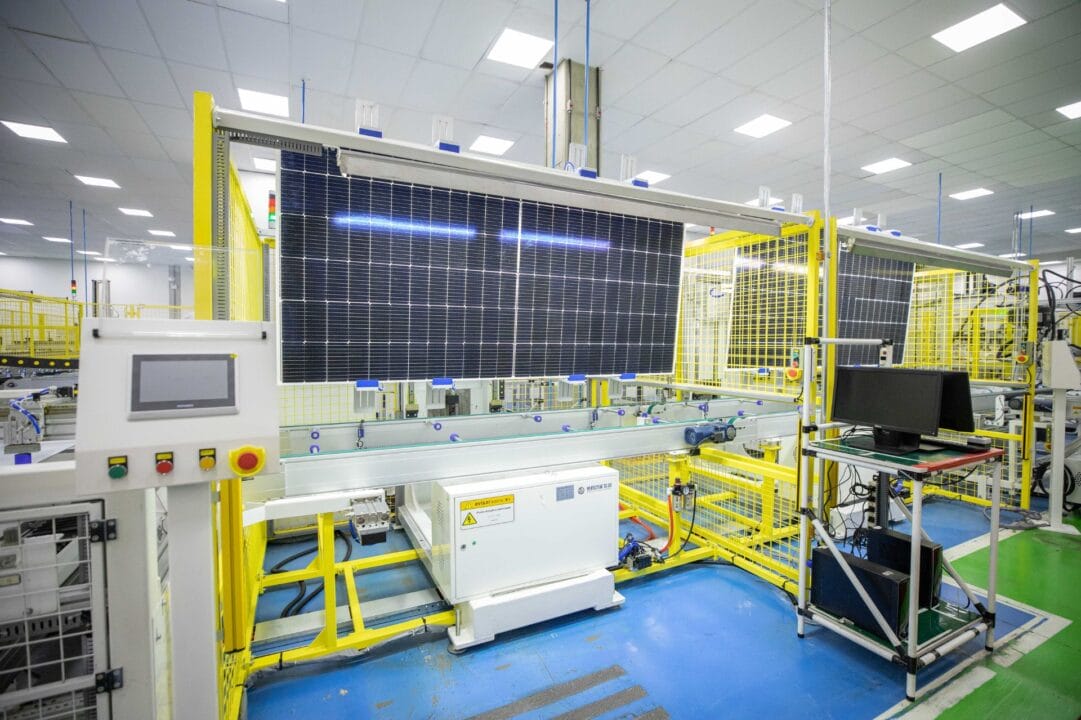
Official data from the Chinese government indicate that the production of photovoltaic cells grew by 63.2% between January and September, compared to the same period last year, totaling 384.28 GW. Just last month, the country produced 51.4 GW, an increase of 65.4%.
Understand How the New Solar Cell from Trina Works
TOPCon stands for tunnel oxide passivated contact, which means passivated contact with tunnel oxide. The structure of this cell consists of a thin layer of tunnel oxide sandwiched between a transparent conductive oxide (TCO) and a p-type crystalline silicon wafer.
The layer acts as a passivator, preventing the recombination of charge carriers on the surface of the solar cell.
Doping is a chemical process that involves the introduction of impurities into a silicon crystal, allowing for better electrical conductivity. This process can result in n-type or p-type semiconductors, depending on the material used. N-type refers to silicon doped with phosphorus or arsenic, while P-type refers to silicon doped with gallium or boron.
Trina Solar Announces New Unit in Brazil
The Trina Tracker, a subsidiary of the Chinese Trina Solar, announced in August the installation of a solar tracker factory in Salvador, Bahia. The equipment is used to enhance the energy generation of solar panels by tracking the sun’s movement during the day.
Brazil is the second country to receive a Trina Solar factory outside of China. The company also has a manufacturing unit in Spain. The new factory in Bahia is expected to become operational in the last quarter of this year.
Initially, the factory will have a capacity to produce 2.5 GW in trackers; however, it may be expanded as demand increases. Thus, the production capacity of the company’s trackers will see a 33% increase, rising from 7.5 to 10 GW annually.
According to Alvaro García-Maltrás, Vice President for Latin America at Trina Solar, in an interview, Bahia is a great hub, an excellent logistical point, and also a location where most large-scale projects in Brazil are being developed, and there is significant interest in the distributed generation market for the implementation of trackers.