






 Portuguese
  Spanish


White House Measure Imposes Record Tariffs on Brazil, India, China, South Africa, and Russia, But Blocs React by Expanding Bilateral Agreements in Local Currencies and Strengthening Strategic Cooperation
The President of the United States, Donald Trump, announced in August new punitive tariffs against BRICS countries, applying higher rates than those aimed at other nations, with the goal of politically pressuring Brazil, India, China, Russia, and South Africa. However, the measure is having the opposite effect: bringing the members of the bloc closer together and encouraging initiatives to reduce dependence on the dollar in international trade.
Record Tariffs Hit BRICS Countries
The new import tariffs include 50% for Brazil and India, as well as up to 145% for China, 30% for South Africa, and additional penalties on countries newly integrated into the BRICS, such as Egypt. Brazil has been specifically targeted by Washington as a form of pressure in light of the trial regarding the attempted coup attributed to former president Jair Bolsonaro.
In India, the White House applied half of the tariff as punishment for the continued purchase of Russian oil. China, the largest economy in the group, faces the risk of one of the highest rates ever imposed by the United States. Even historical allies, such as South Africa, are included in the trade sanctions package.
-
Brazil’s 2026 Tax Refund: Record 9.58 Million Filers in Largest Payout Ever, But a Key Detail on Priority Recipients Draws Nationwide Attention

-
Itaú Alters Hybrid Work Model, Increasing Office Days from 2028, Prompting Employees to Adjust to New Routine
-
Facing Labor Shortage, Japan Plans to Invest $34 Million to Attract Foreign Workers in Construction, Healthcare, Industry, and Commerce

-
Brazilian City Makes Remarkable Leap, Becomes 4th Wealthiest in the Country with GDP of R$ 134.1 Billion




According to DW, the measures have created an unexpected effect, providing BRICS with a “common incentive” to coordinate against dependence on the American economy.
BRICS Responds with More Internal Trade
In response, the countries of the bloc have expanded bilateral agreements in national currencies, intensified gold purchases, and started to review internal tariff barriers to stimulate trade among themselves. The movement aims to consolidate an alternative to the global financial system dominated by the dollar.
Analysts say that although the agendas of the members differ, external pressure creates fertile ground for pragmatic cooperation in trade, finance, and supply chains. According to studies by the Boston Consulting Group, there are already signs of a reversal of anti-dumping measures and steps toward a possible free trade agreement.
Moreover, projects like the creation of a BRICS grain exchange and the expansion of settlement mechanisms in local currencies are under discussion.
Modi Visits China After Seven Years
The impact of the tariffs has also accelerated diplomatic rapprochements. Indian Prime Minister Narendra Modi announced a trip to China, the first in seven years, to participate in a Shanghai Cooperation Organization summit.
During the meeting, Chinese President Xi Jinping will host Modi and Russian President Vladimir Putin, as well as leaders from around 20 Global South countries. Moscow is pushing for China, India, and Russia to resume trilateral talks, suspended for six years.
This move is seen as part of the effort to reduce historical tensions between China and India and strengthen the BRICS core against the West.
New Delhi Recalibrates Its Stance Toward Beijing
The 50% tariff imposed by the U.S. has led India to adopt cooperation measures with China. Among these actions are the resumption of direct flights, the easing of visas, and commercial negotiations aimed at importing rare earths.
China is responsible for over 85% of the global processing of these raw materials, essential for electric vehicles, energy transition, and defense technologies, priority sectors for New Delhi.
Despite the rapprochement, Indian suspicions regarding Chinese ambitions in Asia persist, especially due to the historical record of border disputes and the alliance between Beijing and Pakistan.
Brazil Strengthens Ties with China
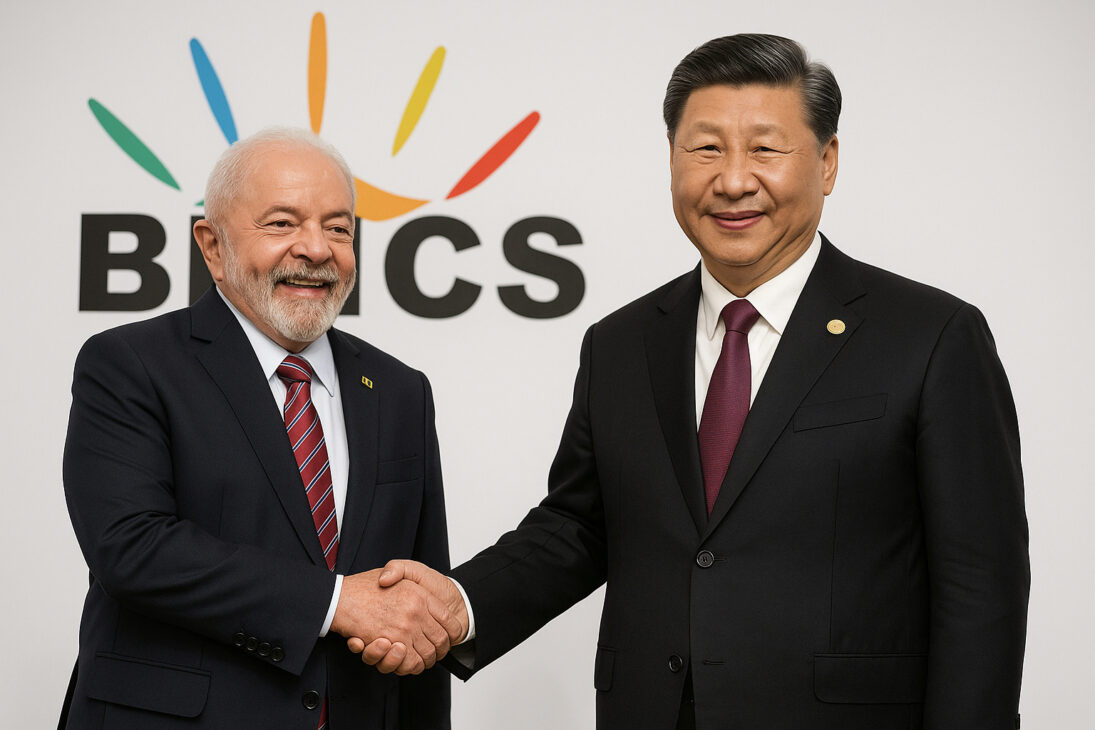
Brazil is also trying to benefit from the situation. In a recent call between Xi Jinping and Luiz Inácio Lula da Silva, measures to expand bilateral trade were discussed. Currently, China absorbs 26% of Brazilian exports, double what the United States purchases.
The Brazilian government is also advocating for a joint BRICS response to Trump’s sanctions, emphasizing the need to protect the national economy in light of tariffs that could harm strategic sectors.
According to DW, Lula stated that he intends to strengthen coordination among the countries to confront the escalating protectionist measures from the White House.
Russia and China Deepen Strategic Partnership
The strengthening of ties is not limited to diplomacy. More than 90% of bilateral trade between Russia and China already occurs in yuan and rubles, according to information from the Kremlin. The strategic alignment between the two countries was symbolized by Xi Jinping’s presence alongside Vladimir Putin at the Victory Day parade in Moscow.
This alliance reinforces the narrative that American tariffs contribute to hastening economic and political integration within BRICS.
South Africa Maintains Firm Position
South Africa has also confirmed that it does not intend to reconsider its commitments to the bloc, even in light of the sanctions. The country prioritizes reforms in global governance, technological cooperation, and the expansion of bilateral trade.
According to Sanusha Naidu, a researcher at the Institute for Global Dialogue based in Pretoria, the South African government seeks to assert political autonomy amid external pressure.
What is BRICS?


Divergences Still Persist
Despite the advancements, BRICS faces internal challenges. The expansion from five to ten members has increased the diversity of interests, which may limit long-term ambitions. The proposal for creating a single currency, for example, remains on hold.
Experts point out that intra-BRICS trade still presents more barriers than those existing between Western countries. Nevertheless, data show a faster growth of exchanges within the bloc compared to trade with the G7.
Intra-BRICS Trade Expected to Gain Strength
According to projections by Mihaela Papa, a researcher at the MIT Center for International Studies, trade among members is expected to become increasingly relevant. She anticipates incentive campaigns such as “Buy BRICS”, as well as the strengthening of settlement mechanisms in local currencies.
Although the dollar remains dominant, experts like Ajay Srivastava argue that parallel systems based on yuan, rupee, and ruble are expected to grow in the coming years, gradually weakening the supremacy of the American currency.
Do you believe that BRICS countries will actually be able to reduce dependence on the dollar in the coming years, or will these measures have limited effect?








No mundo global não tem que ter supremacia e sim diplomacia.