Portuguese
  Spanish


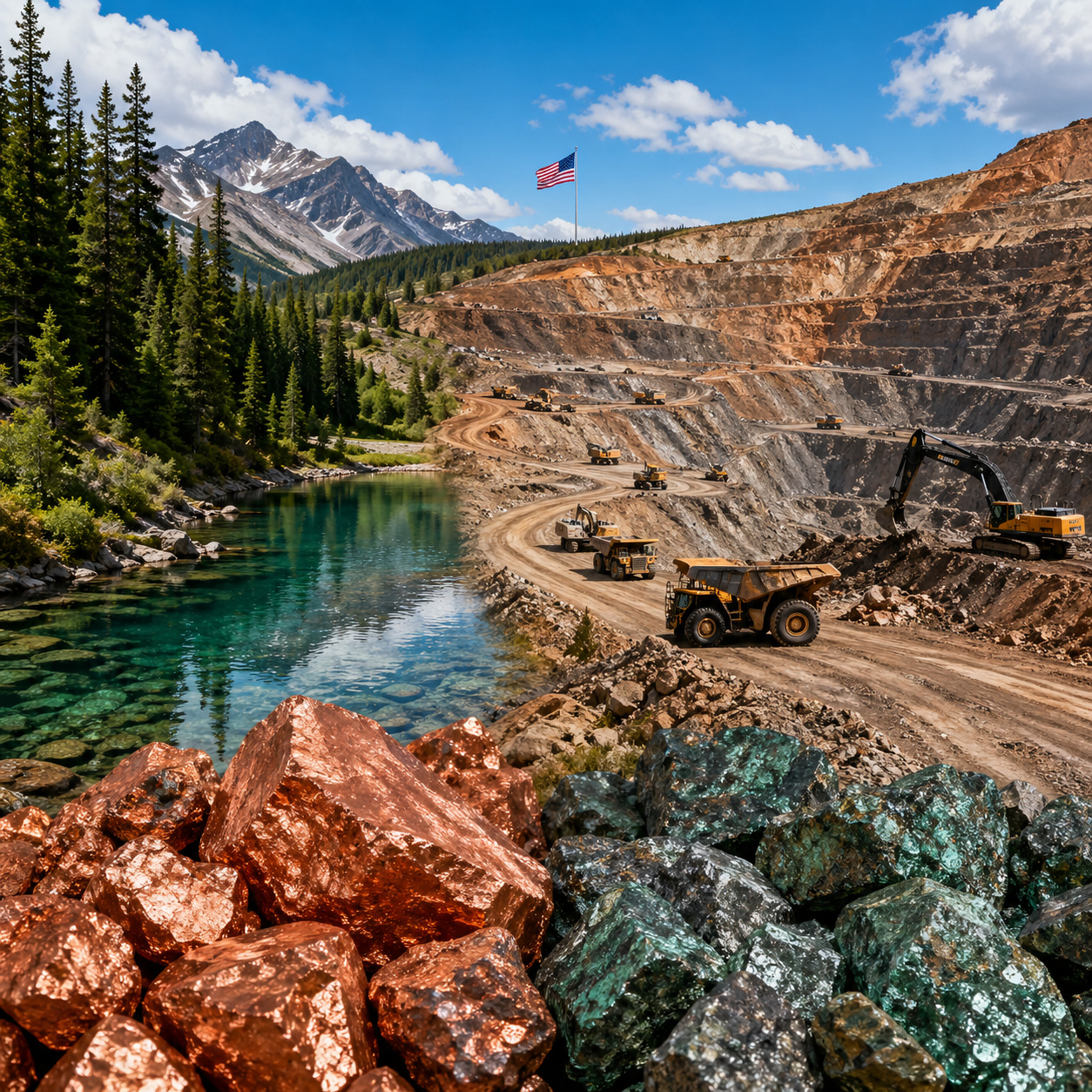

US Government reopens sensitive area for copper and nickel mining, reigniting dispute between critical minerals and environmental preservation.
On April 28, 2026, the United States government announced the suspension of a federal moratorium that restricted mining activities in areas near the Boundary Waters Canoe Area Wilderness, one of the most protected natural regions in the country. The measure, reported by the Associated Press on the same date, reopens the path for copper, nickel, and other strategic metal exploration projects in an area that has been at the center of environmental and economic disputes for years.
The decision directly alters the regulatory scenario previously established when the government had imposed a long-term restriction on mining in the region, citing risks to water, biodiversity, and tourism. By reversing this protection, the new move puts one of North America’s most controversial mining projects back into play.
Twin Metals Project returns to the center of the debate on critical minerals and environmental protection
With the change, the company Twin Metals Minnesota, linked to Chilean capital, gains a new opportunity to advance in obtaining licenses to explore copper and nickel deposits located in the Superior National Forest. These metals are considered essential for the global energy transition, being widely used in batteries, electrical grids, and clean energy technologies.
-
Mexico’s Giant Crystal Cave: A Deadly 58°C Underground Palace with 11-Meter Crystals Formed Over Nearly a Million Years

-
China Dominates Over 90% of Rare Earth Refining, Prompting Global Concerns: Canada and Japan Launch Billion-Dollar Plan to Reduce Dependency and Safeguard Batteries, Semiconductors, and Defense

-
Ancient Mines in Spain Reveal Tools and Metals That May Explain Bronze Age Trade with Scandinavia
-
XCMG Launches 240-Ton Mining Truck in Brazil, Promising Increased Productivity with Lower Fuel Consumption



The point of tension lies precisely in this duality: on one side, the growing need for critical minerals to sustain global electrification; on the other, the risk of environmental impacts in one of the most preserved regions of the United States.
The Twin Metals project has been facing regulatory and judicial obstacles since the previous decade, with advances and setbacks according to changes in government and environmental guidelines.
Region hosts one of the most sensitive freshwater ecosystems in North America
The Boundary Waters Canoe Area Wilderness is known for its network of interconnected lakes, rivers, and preserved forest areas. It is a highly sensitive ecosystem, where small changes can generate wide impacts.

The main environmental concern is related to water contamination, especially from acid mine drainage, a phenomenon associated with the extraction of metallic sulfides like copper and nickel.
This type of mining can release heavy metals and chemical compounds that spread through watercourses, affecting fauna, flora, and water quality.
Reversal of environmental policy reignites conflict between mineral exploration and preservation
The decision to suspend the moratorium represents a significant change in the United States’ environmental policy.
The previous restriction, adopted based on environmental impact studies, provided for a period of up to 20 years without new mining activities in the region.
By reversing this guideline, the government signals a greater priority for the development of mineral resources, especially those considered strategic for the economy and energy transition.
This change, however, does not eliminate the need for environmental licensing, which keeps the project subject to technical analyses and legal disputes.
Critical minerals gain prominence amid global energy transition
Copper and nickel are among the most demanded metals in the energy transition. Copper is essential for electrical grids, transmission systems, and electric vehicles, while nickel is widely used in high-energy-density batteries.
The growing demand for these materials has pressured governments to expand mineral exploration, including in areas previously considered sensitive.
This movement reflects a structural change in the energy sector, where the pursuit of decarbonization increases dependence on mining.
Project still faces regulatory and legal obstacles
Despite the reopening of the regulatory path, the Twin Metals project is not automatically cleared. The company still needs to obtain state and federal permits, as well as undergo detailed environmental assessment processes.
Environmental groups have already indicated they intend to challenge the decision in court, which could prolong the process for years.
This type of dispute is common in large-scale mining projects, especially in sensitive areas.
Debate exposes contradiction between energy transition and environmental impact
The case highlights a central contradiction of the energy transition. To reduce emissions and expand the use of clean energy, it is necessary to increase mineral extraction, which can generate significant environmental impacts.
This tension places governments in front of complex decisions, where long-term benefits need to be balanced with immediate risks.
The Boundary Waters region is also an important tourist destination, attracting visitors interested in activities such as canoeing, fishing, and ecotourism.
Any environmental alteration can directly affect this local economy, which depends on the preservation of the ecosystem.
This factor adds another dimension to the debate, involving not only mining and the environment but also communities and regional economic activities.
What is at stake with the reopening of mining in sensitive areas
The decision of the American government goes beyond a specific project. It can set a precedent for other regions, influencing how countries balance mineral exploration and environmental protection.
This type of movement can redefine public policies and industrial strategies in different parts of the world.
The reopening of mining in one of the most protected areas of the United States raises a direct question: to what extent can the search for essential minerals for the energy future advance without compromising ecosystems that take centuries to form?