Portuguese
  Spanish


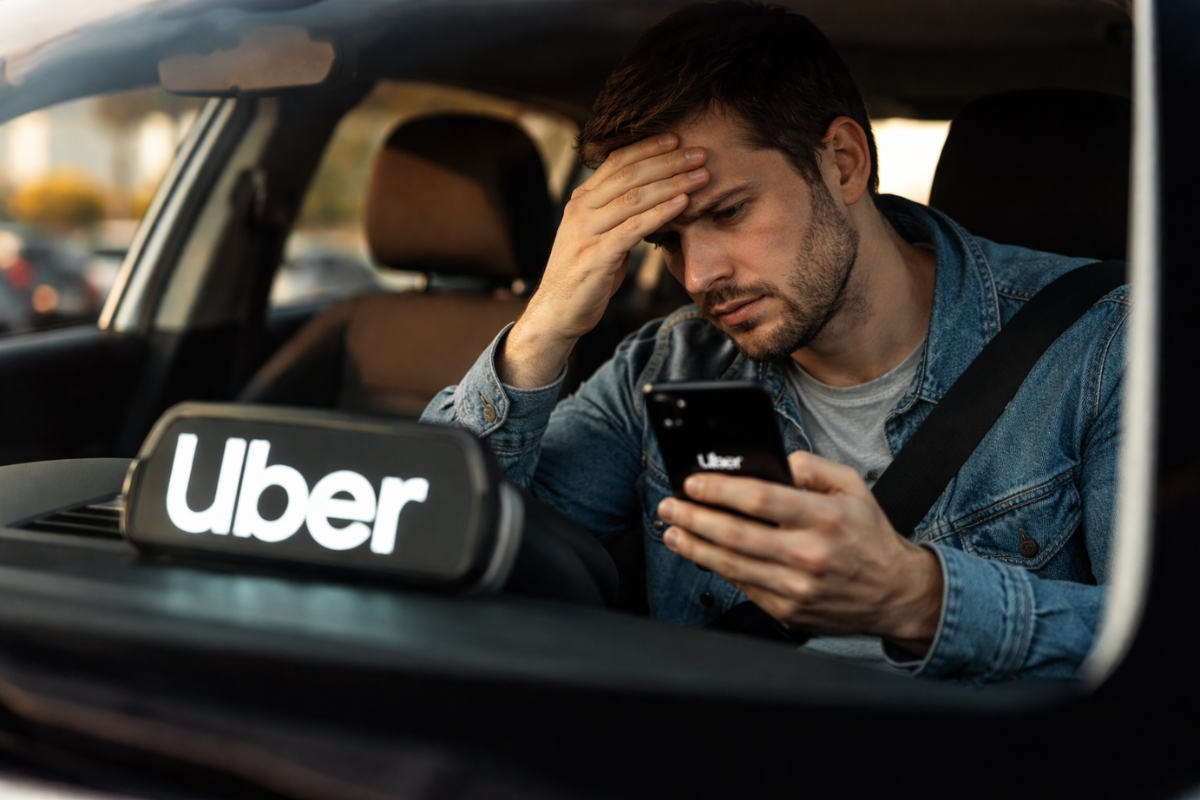

Driver Had Account Deactivated on Uber on the Paulista Coast After 4,421 Refusals and 769 Cancellations in a Month, with Direct Impact on Service Predictability
4,421 refusals in a month became the breaking point within the app’s operation. A driver had their account deactivated on Uber after a pattern of rejection and cancellation considered abnormal.
In the final period before the block, in addition to the refusals, they canceled 769 accepted rides. In app logistics, this kind of behavior weighs on response time and service stability.
Refusal Pattern Reached 4,421 in the Last Month
The sequence of rejections alters the distribution of calls and forces the platform to recalculate availability. This increases friction for those requesting rides and pressures the network when demand rises.
-
Bruno Guimarães, 28, Misses Crucial Penalty Against Norway in World Cup After Replacing Vinicius Jr.

-
Inspired by a school lesson on Africa’s water crisis, a young boy raised money through chores to fund a well that transformed a Ugandan community.

-
Brazilian Construction Worker Moves to France, Earns Up to €2,500 Monthly with Home Renovations, Gains Social Media Attention

-
US Navy Sinks USS Oriskany with 230 kg of C-4, Creating World’s Largest Artificial Reef in 37 Minutes





With 4,421 rejected rides, the volume becomes an operational factor, as it reduces the predictability of service in areas with lower supply.
Cancellations After Accepting Totaled 769 and Affected Wait Time
Cancellation after acceptance usually generates a greater impact because the passenger has already entered the service flow. The immediate result is prolonged wait and the need for new allocation.
In this case, there were 769 cancellations in the same timeframe, reinforcing a pattern that tends to be interpreted as improper use of the acceptance tool.
Driver Claimed Lack of Notice and Cited R$ 28 thousand
The driver reported that the account was blocked without prior notice and said that the justification received was “excessive cancellation rate,” without further detail.
They sought to return to the app and requested payment of R$ 28 thousand, but the account remained deactivated.
Platform Stated Three Warnings Before the Block
Uber informed that the deactivation occurred due to violation of policies and internal rules. It also stated that, over the course of a month, it sent three communications regarding the conduct via email, in-app message, and push notification.
According to ConJur, a Brazilian site for legal news and analysis, it was recorded that there was no evidence of failure in sending, as the platform’s operation automates this type of notification.
“Security” Justification Appeared and Did Not Change the Outcome
The driver acknowledged canceling rides “for security reasons.” Still, the app’s rules provide consequences when cancellations are repeated excessively.
For the operational logic, the priority is to protect the flow of service and reduce efficiency loss in the system.
The case reinforces that extreme numbers of refusals and cancellations can lead to permanent account blocking. For those relying on the app, the practical effect is clear: the platform tends to act when service predictability begins to decline.
At the user end, this tightens control over operational behavior and increases pressure for stability in app-based transport, altering the strategic outlook of the sector.