






 Portuguese
  Spanish
  5 min of reading
  0 comments


Skylon, The British Spaceplane With SABRE Engine, Promises Hypersonic Flights From London to Sydney in 2 Hours. Discover the Transport of the Future.
Imagine boarding a flight that takes off from a regular runway, crosses the stratosphere at hypersonic speeds, and lands smoothly on the other side of the planet — all in less time than it takes to watch a movie. This is the ambitious proposal of Skylon, a revolutionary spaceplane poised to redefine the concept of global mobility and aerospace transport. Powered by a hybrid engine called Sabre, the project aims to combine the best of both worlds: the vertical capability of a rocket with the efficiency and reusability of a commercial jet.
With support from the ESA (European Space Agency) and the UK Space Agency, Skylon is cited as one of the biggest bets in the new technological race for hypersonic travel and the transport of the future. In this article, you will understand how this innovation works, the current stage of the project, its technical challenges, and the transformative impact it may have on intercontinental travel and space exploration.
Skylon: The Spaceplane That Could Replace Rockets and Airplanes
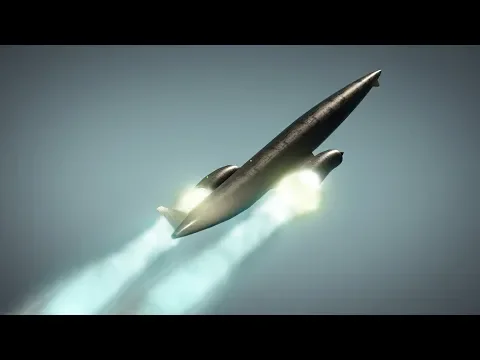
The Skylon is an unmanned, fully reusable space vehicle with an airplane shape and dimensions similar to a Boeing 737. Its major differentiator is that it can take off horizontally from a conventional runway, like any commercial aircraft, and achieve low Earth orbit or cross intercontinental distances at speeds exceeding Mach 5 — that is, five times the speed of sound.
-
Federal Police involved in the case to identify the person responsible for hacking the Civil Defense system, which sent ten false alerts, frightened residents of different capitals, and turned messages about real risks into notifications with “misanthropy” and even alien attacks.

-
Extreme drought causes ghost village to reappear at the bottom of the reservoir that supplies Athens, revealing houses, a school, and ruins swallowed since the 1980s as the lake shrinks and exposes the water crisis threatening the capital of Greece.

-
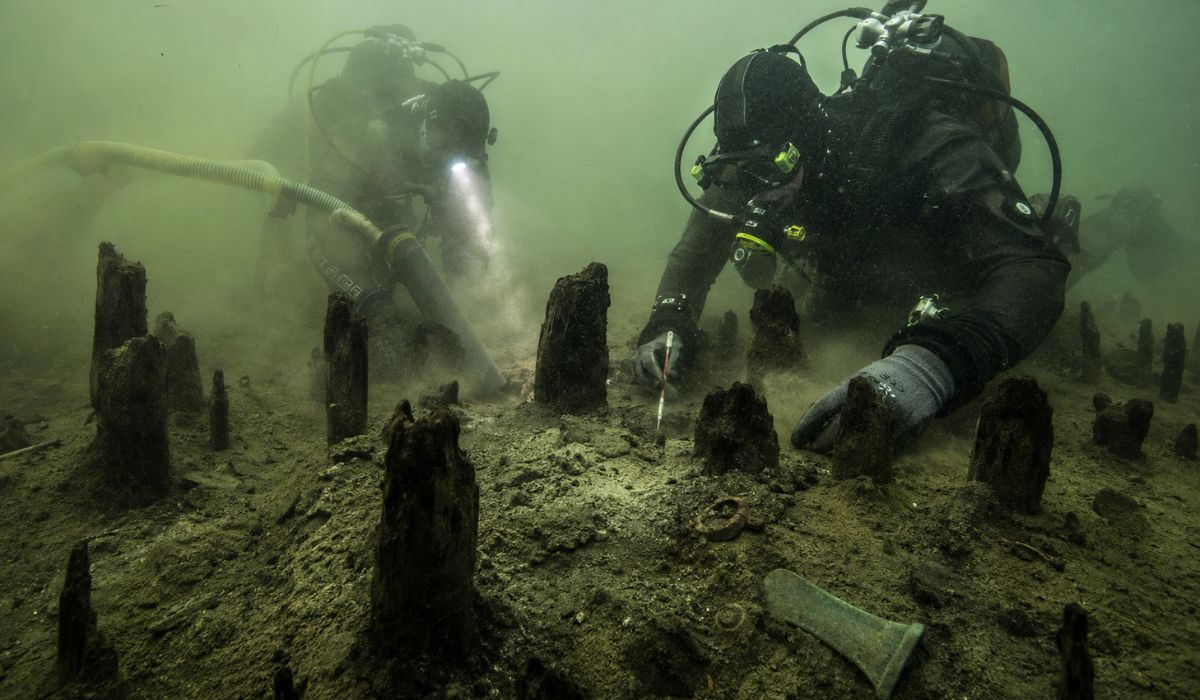
An entire village lay asleep at the bottom of a lake for 3,000 years: divers suction sediments in Italy and reveal more than 600 wooden stakes, bronze tools, and traces of a Bronze Age settlement hidden underwater.
-
They call it the “Shopee house” and even cardboard, but the R$ 20,000 house is a certified Wood Frame from Alea, financed by Minha Casa Minha Vida: understand if it’s worth more than masonry.



Developed by the British company Reaction Engines Ltd, based in Abingdon, the project was designed to meet both the demand for space transport (such as satellite launches) and the need to shorten global travel times to just a few hours.
According to official documents from Reaction Engines, Skylon could be the first vehicle in history to combine operational efficiency with orbital performance in a single stage, eliminating the need for disposable stages as seen in current rockets.

The Sabre Engine: The Key Piece of Hypersonic Travel
At the heart of Skylon is the innovative Sabre Engine (Synergetic Air-Breathing Rocket Engine), which combines elements of jet engines and rockets. Developed over more than 30 years by British aerospace engineers, the Sabre is a hybrid engine that operates in two modes:
Atmospheric Mode (Jet): Up to Mach 5, it captures oxygen from the air, instantly cools the flow with a pre-cooling system, and uses it for burning liquid hydrogen to generate thrust.
Rocket Mode (Space): Upon leaving the atmosphere, it begins to operate as a traditional rocket engine, burning liquid hydrogen and oxygen stored on board.
This dual capability allows for a significant reduction in the total weight of the aircraft, as the engine does not need to carry oxygen throughout the flight — unlike conventional rockets. This paves the way for a vehicle that can take off from commercial runways, is cheaper, and is reusable hundreds of times.
According to Reaction Engines, the Sabre has already been validated in high-speed tests with support from the ESA, UKSA, and the UK Ministry of Defence.
Hypersonic Travel: From London to Sydney in Two Hours
One of the most promising uses of Skylon is in hypersonic intercontinental transport. The estimated operational speed of the vehicle, at Mach 5 (about 6,200 km/h), could reduce currently long and exhausting routes to just a few hours.
For example:
- London – Sydney: from 22 hours to 2 hours
- New York – Tokyo: from 14 hours to 1h30
- São Paulo – Madrid: from 10 hours to 1h15
These times would be possible because Skylon would fly in the high stratosphere, where there is less air resistance and traffic, using the Sabre engine to achieve speeds and altitudes beyond the reach of commercial aviation.
Additionally, by taking off and landing horizontally, Skylon would require infrastructure similar to that of major international airports, without the need for vertical launch ramps like those used by SpaceX, Blue Origin, or NASA rockets.
Necessary Infrastructure for Future Transport
One of Skylon’s great attractions is its logistical simplicity compared to conventional orbital launch systems. According to Reaction Engines itself, each mission could be performed in just a few days, with minimal refueling and maintenance between flights — which brings it much closer to the routine of commercial aircraft.
The energy infrastructure required includes:
- Supply of liquid hydrogen, which would be the main fuel
- Reinforced runways of about 3 km in length
- Thermal safety systems and high-altitude traffic control
- Integration with aerospace communication networks for autonomous or remote flight
With this approach, Skylon aims to create a new category between commercial airplanes and spacecraft, promoting a revolution in aerospace and air transport infrastructures.
Institutional Support and International Validation
The Skylon project and the Sabre engine have been supported by various public and private institutions, including:
- UK Space Agency (UKSA) – funded Sabre engine tests with £60 million
- ESA (European Space Agency) – participated in the validation of the Sabre pre-cooling system
- BAE Systems – British defense giant that acquired 20% of Reaction Engines in 2015
- Boeing HorizonX – innovation arm of Boeing that also supported tests
- DARPA (USA) – U.S. Department of Defense agency interested in the technology for military use
This collection of institutional support and strategic partnerships confirms the international recognition of the viability of the Sabre engine and the Skylon concept as disruptive technology.
Environmental Impact and Comparisons with Rockets and Airplanes
The Skylon spaceplane could represent a more sustainable option compared to disposable rockets, as it is reusable, with low CO₂ emissions and no need for separable stages.
Technical studies indicate that:
- A Skylon flight would consume less fuel per kilometer than a Falcon 9 rocket
- It would emit about 30% less CO₂ per passenger compared to long commercial flights, as it operates outside the troposphere
Still, the use of liquid hydrogen as fuel presents challenges in storage and production, requiring clean sources to ensure the renewable and sustainable nature of the operation.
Skylon, with its revolutionary Sabre engine, is more than just a futuristic project: it is a concrete effort, funded and backed by some of the world’s largest aerospace institutions, to redefine the limits of the transport of the future.
By combining cutting-edge technology, sustainability, and operational agility, the spaceplane represents a new chapter in human engineering, with the potential to take passengers from Europe to Australia in two hours — and open doors to a new era of interplanetary connectivity.





-

1 person reacted to this.