






 Portuguese
  Spanish
  5 min of reading
  0 comments


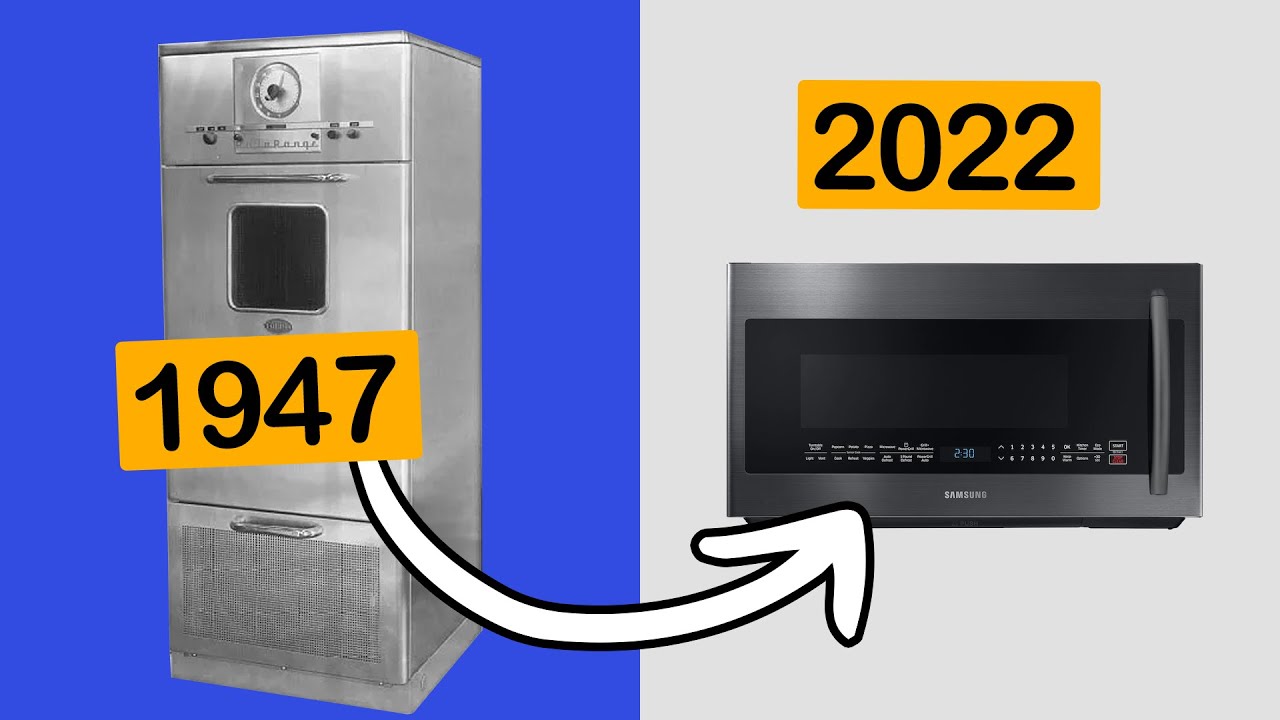
A Radar Accident During World War II Revealed The Power Of Microwaves, It Was Ignored At First And Decades Later Revolutionized Kitchens Around The World.
In 1945, at a Raytheon laboratory in the United States, engineer Percy Spencer was working on the development of radar systems based on magnetrons, high-power valves capable of generating electromagnetic waves at microwave frequencies. The context was World War II, and the goal was purely military: to improve radars for more accurately detecting enemy aircraft.
During a routine test, Spencer noticed something unusual. A chocolate bar that was in his pocket had melted without apparent explanation. At first, the fact seemed trivial, almost irrelevant. But the engineer suspected that the radiation emitted by the magnetron could be transferring energy to the food.
The phenomenon was invisible, silent, and at that moment, considered only a curious side effect of a military device. However, that seemingly banal observation would become the starting point for one of the greatest transformations of domestic life in the 20th century.
-
Helicopter Drops 180 Tons of Sand and Gravel on Swedish River to Revive Ecosystem Damaged by Decades of Exploitation

-
Brazilian Company Launches Retro Smartphone with 48 MP Camera, T9 Keyboard, and Privacy Features for Social Media-Free Use

-
Self-Taught Chinese Farmer Builds 5-Ton Submarine from Scrap, Launches It in Anhui River
-
Invisible Induction Technology Enables Wireless Power for Blenders, Coffee Makers, and Air Fryers, Reducing Countertop Cables




How Microwaves Heat Food Without Fire Or Resistance
Microwaves are electromagnetic waves, just like visible light and radio waves. In the case of heating food, they typically operate at a frequency of 2.45 GHz.


When these waves come into contact with polar molecules, especially water— they cause them to oscillate rapidly. This movement generates molecular friction and, consequently, heat.
Unlike conventional heating, which depends on thermal conduction from an external source (such as a flame or electric resistance), microwave heating occurs directly inside the food, as long as there are molecules susceptible to electromagnetic excitation.
What seemed like an accident with chocolate was, in fact, the practical manifestation of a powerful physical principle: the direct conversion of electromagnetic energy into thermal energy within matter.
From Military Laboratory To First Experimental Oven
Intrigued, Percy Spencer conducted further tests. He placed popcorn kernels near the magnetron and observed them popping. In another experiment, he used an egg, which ended up exploding due to rapid internal heating.
Raytheon registered the patent for the first microwave oven in 1945. A few years later, it launched the Radarange, the first commercial equipment based on the technology. However, it was far from being an affordable appliance.

The Radarange weighed about 340 kilograms, was nearly 1.80 meters tall, and cost thousands of dollars. It was intended for industrial kitchens, ships, and restaurants. Additionally, it required a water cooling system. What today fits on a domestic countertop began as a colossal, expensive, and technically complex machine.
The Technology Seen As Strange And Unpractical
During the 1940s and 1950s, the microwave oven was viewed with suspicion. Many consumers feared the effects of radiation, associating the term “microwave” with something dangerous or unstable. The idea of cooking without fire, without a hot plate, and without electric resistance seemed unnatural.
Moreover, the early models were expensive and inefficient compared to today’s standards. The equipment was treated more as a technological curiosity than as a practical solution for everyday life.
What started as a phenomenon observed in a military laboratory had not yet found its place in common life.
The Miniaturization That Changed Everything
The turning point occurred in the 1960s and 1970s when advancements in engineering allowed for a drastic reduction in the size and cost of magnetrons. The evolution of semiconductors, improvements in shielding systems, and mass production transformed the microwave into a viable product for the domestic market.
In 1967, Raytheon launched the first microwave oven for residential use. From then on, adoption grew exponentially, especially in the United States and Japan.
The technology that originated in a war context found its true market in domestic convenience. In just a few decades, it became one of the most common appliances on the planet.
Global Impact: A Silent Change In Food
Today, microwave ovens are present in millions of homes, offices, hospitals, and food industries. They not only heat meals but have influenced the entire food production chain.
The industry developed specific packaging, ready-to-eat meals, frozen dishes, and pre-cooking processes designed specifically for microwaves. Urban eating routines changed: quicker meals, single servings, and preparation in minutes became part of daily life.
What started with a melted chocolate changed cultural, logistical, and industrial habits on a global scale.
The Magnetron: The Invisible Heart Of The Transformation
At the center of this revolution is the magnetron, a device originally perfected for military radars. It converts electrical energy into high-power microwaves through the interaction between electric and magnetic fields in a metallic cavity.
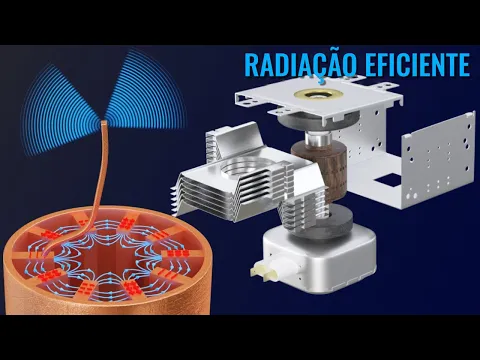
The robustness and efficiency of the magnetron were fundamental for the microwave oven to become economically viable. Without it, the domestic application of the technology would likely have remained unfeasible for decades.
This component, created to detect enemy aircraft, ended up redefining kitchens around the world.
From Marginal Invention To Daily Object
For years, the microwave oven was treated as a secondary invention, almost accidental. It did not arise from a clear domestic demand nor from a project aimed at cooking. It was born as a byproduct of military research.
This origin explains why it was initially considered irrelevant or even useless outside the war context. Change occurred when engineers and companies realized that the invisible technology had enormous commercial potential.
Today, the microwave is not just an appliance for heating food. It represents a classic example of how unexpected scientific discoveries can transcend their original purpose and redefine entire sectors.
The Invisible Lesson Behind The Melted Chocolate
The story of the microwave illustrates a recurring pattern in technological innovation: many transformative discoveries do not arise from grand plans but from attentive observations of unexpected phenomena.
If Percy Spencer had ignored the melted chocolate, perhaps the domestic application of microwaves would have taken much longer to be explored. What seemed like an insignificant detail revealed a physical mechanism with enormous practical potential.
Decades later, that invisible discovery left military laboratories and settled into kitchens around the world. A silent phenomenon, observed amidst war research, became part of the food routine of billions of people.
And it all started with something that, at that moment, seemed merely an irrelevant accident.





Be the first to react!