






 Portuguese
  Spanish
  4 min of reading
  0 comments


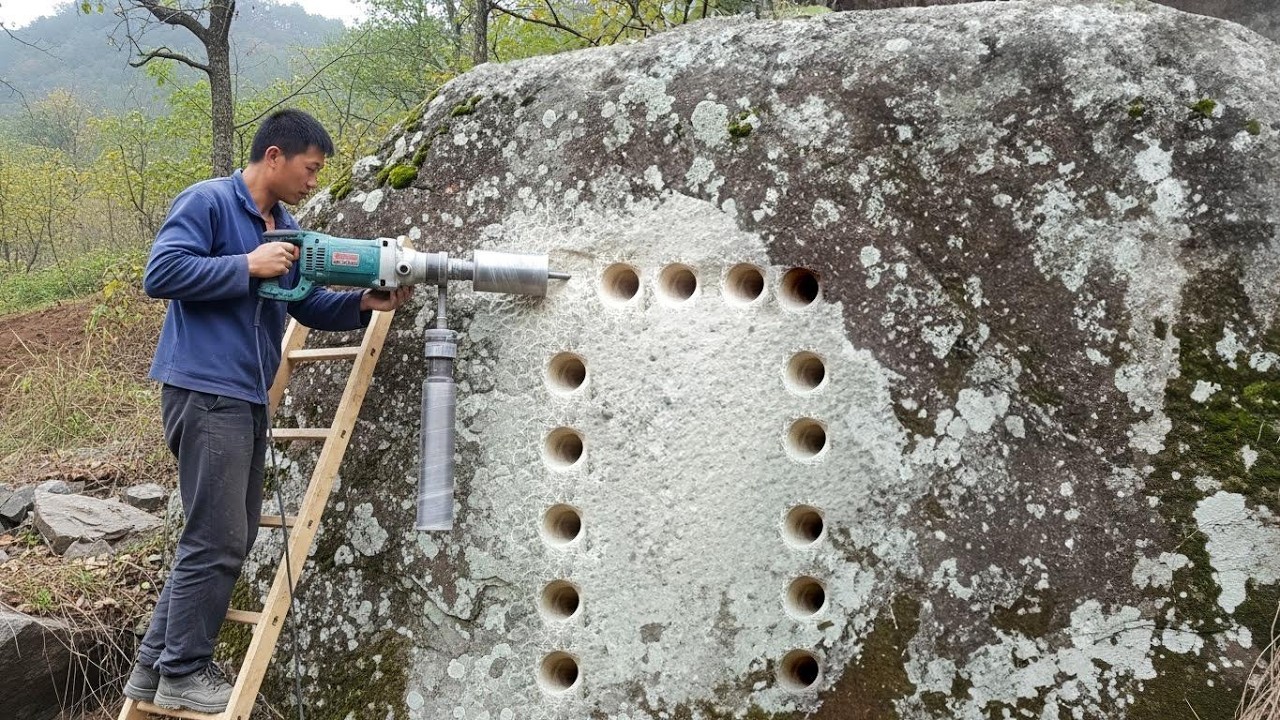
Man Carves A House Inside A Rock By Himself For 15 Months: Entry, Niches, Finishing, And Ventilation In An Off-Grid Shelter Worthy Of An Isolated Residence.
A recently published video caught attention due to its magnitude and unconventional method: a man transformed a giant rock into a habitable micro-house, working alone for 15 months, without heavy machinery, no team, and using only manual power tools, a sledgehammer, and a lot of patience. The result impresses with its scale and the improvised yet functional technique applied throughout the process.
Next, Click Petroleum and Gas – CPG details how this off-grid construction was possible, which structural stages are noteworthy, and why this type of project generates so much interest in alternative architecture communities.
Choice of Rock And Mapping Of The Underground Shelter
The process starts with the selection of the rock: a massive, isolated block, surrounded by vegetation, with space around it for circulation and removal of the excavated material. Without sophisticated geological studies, the builder conducts an empirical analysis of the stone’s hardness and defines the side where the entrance would be carved out.
-
The hydroelectric plants on the Madeira River, like Jirau, came for the energy, but now the drought wave has reduced artisanal fishing by 39% and emptied the tables of the riverside communities in the Amazon.

-
The Zuluk road has 32 zigzag curves at 3,400 meters in the Himalayas, originated as the Silk Route in Sikkim and became a military border where foreigners cannot pass.
-
Rio de Janeiro receives more than R$ 5.5 billion in sanitation, includes almost 1 million residents from communities in the formal customer base, and brings water, sewage, and proof of residence to regions historically neglected by urban infrastructure.

-
Via Mar promises to relieve BR-101 in Santa Catarina, but it will be the state’s first toll state highway and faces soft soil and rice fields that threaten the timeline.


Before any cutting, he outlines the geometry of the facade with chalk, marking contours and measurements for later drilling. It is at this moment that the project truly begins to exist: what was merely a monolith now carries the design of a door.
Cutting The Entrance With Drilling And Removal Of The Top Layer
Without explosives or industrial diamond saws, the work progresses using a heavy drill with a cylindrical bit.

Dozens of consecutive holes are made around the perimeter of the door, creating a controlled fracture line. Then, using a sledgehammer and a steel rod, the first section of the wall breaks away.
This method resembles ancient quarrying techniques and allows the removal of large blocks without collapsing the rest of the structure. After the door opening, the longest phase begins: excavating the interior.
Internal Excavation And Molding Of The House Walls
Inside the rock, he must transform a solid volume into a hollow, habitable space. To do this, he combines drilling, grinding, and scraping to remove layers of stone. The process occurs in cycles:
• drill → grind with sander → remove debris → repeat

The interior begins to gain depth, ceiling, and sides until it forms a kind of geometric cave. Meanwhile, wheelbarrows and shovels remove tons of pulverized material, mud, and fragments.
Construction Of Niches, Steps, And Ventilation Openings
For the space to function as a shelter, it’s not enough to just dig a hole. The builder creates side niches, internal steps, and small windows, all carved directly into the rock.
These niches serve as:
– built-in shelves (space-saving)
– structural support points
– air circulation areas
The carved windows ensure cross ventilation and natural lighting, essential to prevent excessive internal humidity.
Leveling, Finishing, And Installation Of The Door
After finishing the main volume, comes the finishing phase. He applies leveling layers with mortar to smooth out the roughness of the stone, level the floor, and reduce dust displacement.

The final step involves the installation of a metal door, sealed with expanding foam to prevent leaks, animal entry, and thermal variations. When closed, the construction camouflages with the terrain, maintaining total discretion.
What Impresses In The Project’s Improvised Engineering
The public’s interest is not just visual; there are structural and even cultural aspects involved:
• Controlled Excavation Method, without internal collapse
• Extremely Low Use Of External Resources, typical off-grid logic
• Utilization Of The Rock’s Thermal Mass, useful for thermal comfort
• Complete Handmade Process, documented from start to finish
Even without technical training, the builder replicated basic principles of mining, excavation, and primitive architecture.

An Off-Grid Laboratory For A Global Trend
Projects like this ride a growing trend: remote, minimalistic, and sustainable constructions that use few industrial materials and leverage natural resources.
In the global scenario, this category includes:
• underground houses
• rammed earth houses
• modernized caves
• berm houses
• tiny houses made of stone
The appeal comes from both engineering and philosophy: a way of inhabiting that is more integrated with the environment, with less reliance on public infrastructure.
A Project That Opens Discussion: Is It The Future Or Just Curiosity?
At the end of the 15 months, the rock that once was merely a solid mass transforms into a functional shelter, with an entrance, niches, ventilation, and finishing.
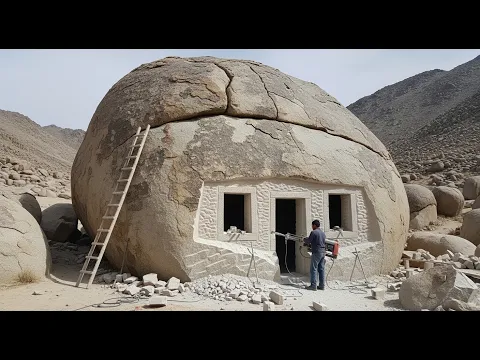

The video is popular not only for the outcome but for the question it raises: could this be an alternative model for remote living or just a difficult individual experiment to replicate?
From a technical standpoint, the project illustrates how simple techniques, persistence, and basic tools can have global repercussions. From a cultural perspective, it shows how the imagination of “going back to basics” and living with less continues to attract millions of people.
And you — would you spend 15 months of dust, drilling, and sledgehammering to create your own house inside a rock?





-

-

-

-

6 people reacted to this.